16 min read

Yan Diomandé: The History of Speed
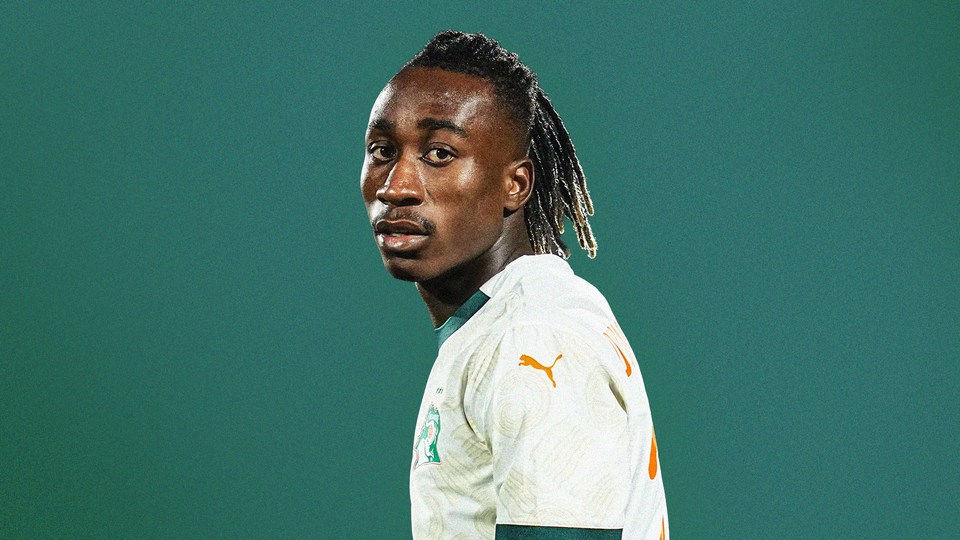
Emerging from the city of speed, a teenage Ivorian has become one of the world's most coveted wingers
Yan Diomandé: The History of Speed

In the freezing depths of a Michigan winter, during the early days of 1904, a 40-year-old industrialist named Henry Ford walked out onto the ice of Lake Saint Clair and built a racing track. The Ford Motor Company was less than a year old and its founder had something to prove. A few months earlier, a driver called Frank Day had been killed when Ford's premier racing vehicle - 'Arrow' - crashed during a race. Ford bought the machine back, rebuilt it in Detroit, and drove it onto the surface of the city's lake. Then he set a Land Speed Record: 91.37mph.

Ice is an imperfect surface for moving at speed because there are roughly a dozen different ways it can kill you. Ideally, to move very quickly in a straight line, you want a surface capable of generating more friction, less spin, and on which small steering adjustments don't risk catastrophic injury. You want something that can't collapse beneath you, that is available all twelve months of the year, and that runs in a near-perfect straight line for miles. Ideally, you want a beach.
This story was published in Volume I.

Unlock this article, and the full magazine - yours to download and keep, forever - by subscribing.

As a limited-time offer to celebrate the launch of Volume I., you can get your first month for 60% off. Join the club!

Vol. I for £2

Just sixteen days after Ford set his record, it was broken. A man named William K. Vanderbilt reached 92.3mph while driving a Mercedes 90. The speed wars of the early 1900s had begun and would unfold, largely, along the stretch of coastline Vanderbilt had set his record on, where he'd found acres of hard-packed sand perfect for moving fast: Daytona Beach. As the 1900s developed, the speeds at Daytona Beach ticked up at a rate that seemed exponential. Just twenty years after Vanderbilt's Land Speed Record, it had been raised to more than 200mph. Daytona became 'the world's most famous beach' because it was where the world's daredevils and pioneers went to go faster than anyone had ever gone before. In 1928, racer Frank Lockhart was killed while attempting to break his own record along the beach track. A year later, a mechanic named Lee Bible died when his own attempt ended in a swerve over the sand, a roll, and a fatal collision with a cameraman. "Death, fortunately, does not stop human activity," read the Daytona Beach News-Journal," […] even sport. The world would not progress if it did."

Daytona Beach soldiered on. In 1936, Malcolm Campbell clocked 276.8mph blasting across its sands, but that was the last record the beach would witness. Instead, that year, Daytona hosted a stock car race for the first time. In the years following, a Daytona repair shop owner called William S. France hosted and raced in several more and, after the culmination of the Second World War, founded an official body to organise them: the National Association for Stock Car Auto Racing, or NASCAR.

Today, motor vehicles are still allowed on stretches of Daytona's sand. Sadly, they are largely limited to 10mph. But speed has never faded from the identity of the city, a small stretch of Floridian coastline with a population of ~70,000; go just a little inland from the beach and you'll find one of the most famous race tracks in the world. Daytona International Speedway is home to the Daytona 500, the opening event of the NASCAR season and its most famous, as well as the 24 Hours of Daytona, which European readers will understand as '24 Heures du Mans, but in a big bowl.' The Speedway is built of concrete, not sand, but it is the direct descendant of the beach track, a cathedral for a city which cannot relinquish its obsession with going fast.

Daytona International Speedway is built directly next to the city's airport. If you walked south from the pit straight, and somehow vaulted all the mesh fences, you could walk across the runway, which in summer is a long, beige stretch between fields of burnt grass. Keep going, hop another fence, and you'd be on Bellevue Avenue, which runs perpendicular to the runway, presumably so sports car owners can attempt to race the incoming planes. And on the opposite side of that road, painted an incongruous royal blue, is DME Academy.

How or when Yan Diomandé emigrated to the United States is not entirely clear. We do know he was born in Abidjan, the capital of Côte d'Ivoire, in 2006. We know his parents brought him to Florida at some point during his childhood, and that he went to school in Yulee, Nassau County, a small CDP (census-designated place) just north of Jacksonville. We know he began playing football for his high school team, the Yulee Hornets, and that his success at that level landed him a place at an academy two hours drive south, in Daytona Beach. We know, at some point, he made that drive, down Bellevue Avenue, past the airport, with the cathedral of speed looming just beyond, and to that incongruous building in royal blue.

Diomandé arrived at DME Academy in 2022. The Academy's soccer program was, and still is, fledgling - it was founded in just 2016. The alumni page for their boy's basketball program cites 134 players committed to universities and colleges around the United States; the soccer program has just ten. Two of those ten were signed to teams in the MLS Next Pro. Seven committed to college placements. And one, sitting nondescript in the top row, joined a modest LaLiga club.

In 2023, while DME handled his formal training and education, Diomandé played for a nearby non-profit team called AS Frenzi, roughly 40 minutes inland from the International Speedway. 'AS Frenzi […] creates sports platforms and opportunities for youths with talents, but unfortunately lack the resources and mentorship to prolong their dreams to greatness (sic)', reads their charmingly unfinished website, which still includes Diomandé's picture as a current player. '[AS Frenzi's] vision is to showcase talented players who are diamonds in the rough, looking for that college recruit or professional soccer career.' With Diomandé up front (the website lists him as 'LM/RM/CF'), AS Frenzi reportedly achieved an undefeated season and won the UPSL Spring National Finals. The UPSL is unofficially considered the game's fourth division, one below MLS Next Pro and USL League One; Diomandé finished as the league's MVP and scored in all six rounds of the playoffs.

Spearheading AS Frenzi did not go unnoticed. In November of that year, Diomandé was offered his first professional trial, with Rangers FC in Scotland. Ibrox News labelled him an 'Ivory Coast sensation' before he lined up for Rangers B in a game with Monaco, which the Scottish side lost 3-1. Football Scotland claimed the winger 'impressed'. Clearly, not enough; he returned to Daytona, where he stayed with DME until November 2024, training in the shadow of the International Speedway and, presumably, with the distant sound of stock cars muffled only by the roar of the planes. Then, eight days after he turned 18, a small Spanish club called CD Leganés called. Another trial followed but this time the impression stuck. Diomandé signed a contract to join the LaLiga outfit in January, who cited his "speed, quality in the final third and vision." The boy from Daytona was heading to Europe. It was only right he took speed with him.

Yan Diomandé made his professional debut for CD Leganés in March 2025. By May, SCOUTED's alarm bells were ringing. Jake Entwistle, our Chief Data Scout, sounded the klaxon: in just 545 minutes for a relegated LaLiga side, an unknown Ivorian winger had averaged 6.1 Shot-Creating Actions per 90. The only other players under the age of 23 to have averaged above 6 in the season prior were Rayan Cherki, Michael Olise and Bukayo Saka. In a panicked frenzy, we sent Llew Davies to watch this mysterious winger, to confirm such numbers weren't just a ghost in the machine. Unbeknownst to us, other scouting teams - particularly, a renowned outfit from east Germany - were doing the same.

What Llew saw in Spain cemented Jake's suspicions: the kid was special. "The attributes I've highlighted here are exciting, potentially gamebreaking," Llew wrote. "A winger that can create separation from a full-back in every direction is valuable, particularly when they're producing something at the end of it […] don't worry that he's only been in Europe for six months – if you want to get ahead of the curve, you have to move early." Someone did. Marcel Schäfer was appointed managing director for sport at RB Leipzig in August 2024. The following season was one of the toughest in the club's short history: they finished outside of the Bundesliga's top six for the first time. Schäfer 's response was designed to "get back to the roots of what makes RB Leipzig so successful," he told Sky Sports over the summer; in real terms, that meant "young, hungry, high-potential players." In the summer window they signed SCOUTED favourites Rômulo Cardoso, Johan Bakayoko, Conrad Harder, and a clutch of other talents. Then, on July 16, they paid Yan Diomandé's €20m release clause.

"We saw the data and immediately knew that we had to take a detailed look at the player, both on video and in live matches," said Schäfer  to Bulinews, "and that’s what we did. Our advantage was that we were there before he had even played 200 minutes in the league. We already knew he had the profile we were looking for that summer […] it was a 100% match from our side […] we were even in touch with Jürgen Klopp and Mario Gómez, who saw the data and video clips, and everybody said ‘go, go, go.’." Speed, speed, speed: everything has happened to Diomandé at the breakneck pace he plays with. Just half a year into his first Bundesliga season - and still with less than a single full season of professional appearances to his name - Diomandé is now one of the planet's most prestigious and coveted attacking talents. 91.37mph, 92.3mph, 200mph and beyond - ninety years after Daytona saw its final record, the beach's speed is again the talk of the world.

Llew Davies first watched Yan Diomandé in May, when we sent him to confirm his data wasn't an erroneous glitch. Half a year later, we sent him back: this time not to Spain but Germany, to (virtually, of course) the old industrial city of Leipzig. There, he settled in to watch the games that have the scouting world so riled up. This is his report.

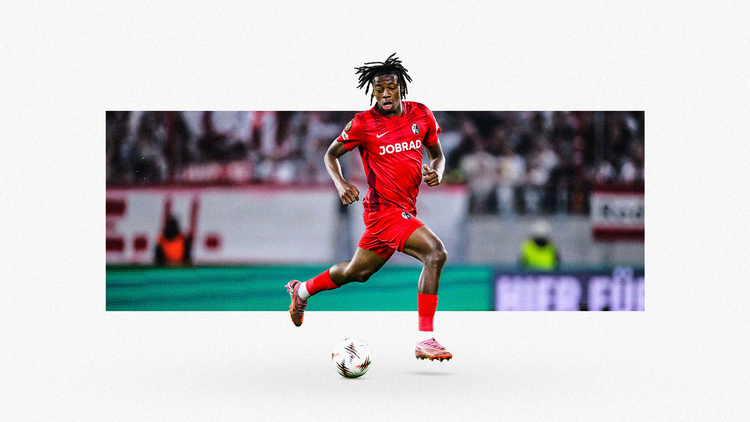
On the pitch, Yan Diomandé is extremely comfortable, confident and competent playing on either wing. His breakthrough with Leganés came from the left, a role he reprises while on international duty with Côte d'Ivoire, but RB Leipzig have predominantly used him on the right. It's rare for a winger to be truly two sided; many who boast that tag have a preference and the reality is disappointing. Diomandé is different.

His athleticism has been the single-most important factor in his seamless transition to elite-level European football. It's impossible to discern him, a newcomer, from athletes and attackers who have been on the scene for years. Most young players need to fill into their physiques to unlock their potential - something that comes with time, as well as specific strength and conditioning regimes - but Diomandé is mature for his age. He's of strong build already, with a muscular frame and an especially strong lower half. His legs are stretchy, thighs sturdy, core solid, and all those form the basis of the speed and agility that set him apart. They also make him difficult to shift off the ball, whether he's static or on the move.

His speed - at every stage, from first step to final stride - creates separation from defenders. His acceleration from standing starts, rattling through the early gears, gives him the early edge in races and duels; his top-end pace pulls him away from opponents over long distances. Even in the Bundesliga, where teams are used to running at full tilt to defend high lines and big spaces, it's common to see Diomandé pulling away from recovering defenders. He's a runner who can separate at every stage of a sprint: a machine built for land speed records.

One definitive indicator of an elite-level footballing athlete is their ability to change direction quickly and efficiently. One moment in a match against FC Bayern München stood out. As a teammate carries the ball toward him, Diomandé has to widen his position. He squeezes three flips of the hips into four seconds, flitting between backpedalling and sprinting, dragging his defender with him. After receiving the ball on the corner of the box, he zigs inside, zags outside, then flashes a ball across the six-yard box. The move should've resulted in the first goal of the game.

Dribbling and carrying are Diomandé's superpowers. Whichever prism you choose to assess him through - eyes, data, or ideally a mix of both - dribbling and carrying jump off the pitch and screen. Running with the ball is his go-to instinct as a player: he wants to drag opponents into dangerous 1v1s around the penalty area and disrupt defensive shapes with driving runs from deep.

All this usually ends in destruction. He jags both ways, creating opportunities to cross and shoot, forcing defences on the back foot and generating decisive situations. He starts and stops, then starts and stops and starts again: those changes in tempo, bursting and braking then bursting, are difficult for defenders to match, let alone contain. His change of tempo is brutal, a staccato punctuation: he drives at a defender with speed, deliberately slows down, sucks them in, then blasts past them again. He isn't always moving at top speed, and that's key: he's patient, subtle, and knows how and when to speed up; this jagged rhythm leaves no time for defenders to breathe. Even when opponents manage to get close to him, he has the physicality to ride contact, to bump past or win a foul. Even when static, he's difficult to move off the ball.

This all accentuates his two-sided, dual-wing threat, a threat possible because he's so comfortable with both feet. It's difficult to tell, on first watch, which his dominant actually is. He is an authentic two-way dribbler in the truest sense, able to drive to the byline with his right foot or duck underneath and open angles on his left. And his ball-striking maintains the level: he drills balls across goal with his right and cracks snappy shots off with his left. This is a significant factor in his ability to play off both wings: his threat is basically equal on either. And his directness, from anywhere, makes him a true attacking terror. You can feed him the ball well inside his own half and trust he drives possession into the final third, powering past defenders and riding challenges along the way. Six months since it first set the alarm bells a-ringing in SCOUTED HQ, his ball-carrying data is still extraordinary. Whether it's pure dribbling stats - the ability to go past an opponent challenging the ball - or carrying metrics - total distance, progressive distance or those ending in a shot assist - Diomandé is in the top 10%, to be extremely conservative, regardless of provider. For example, in his debut Bundesliga season, Diomandé is the runaway leader for successful take-ons and has covered more progressive carrying distance than any other player.

Yan Diomandé's dribbles and carries often sequence into shots. His first two goals in European football - for Leganés in LaLiga, against Espanyol and Real Valladolid - saw him rumble with the ball through traffic before cracking off clean finishes, one with his left and the other his right. Those were glimpses of what was to come.

His adeptness with both feet makes him difficult to defend as a shooter. Whichever foot defenders decide to show him onto, Diomandé has the snappy ball-striking skill to execute a finish: you can't push him onto a weak side. That he prefers simple shots aids him in this regard: he consistently strikes the ball well with his laces, driving it low and hard, and gets good purchase on his straight instep finishes when that's his contact of choice. He tends to favour accuracy over precision, prioritising hitting the target than finding the corners - and that will guarantee a strong baseline of goals, if not an extraordinary finishing record.

Like all the best attackers, he has what I call the 'shift-to-shoot' trait. He creates angles off either foot, pushing the ball out from underneath his and away from the immediate defender to rasp shots at goal, typically from the edge of the box. His explosive steps create enough separation for his compact action to swing through. That said, there is scope for the shift to be sharper and cleaner - which will be required if he ever gets to the Premier League, where pressure is intense and space is at a premium. While his time in European football has been limited, Diomandé has shown enough to consider him a promising finisher. Eight goals in 1,600 minutes across 27 appearances (at the time of writing) is a strong return for an 18-year-old. And there's plenty of margin for him to improve: he is constantly entering dangerous shooting positions.

Yan Diomandé's ability to eliminate and separate from defenders is already superb - but to unlock another devastating level, he could improve as an off-ball runner. His instinct, right now, is to receive the ball to feet. That makes sense: he is a dribbler first and foremost, he wants to turn, square up defenders, and take them on. He slides wide and drops down to take the ball off his teammates, but those movements to receive drag him away from where the real difference-makers ply their trade — on the last line.

Think Mohamed Salah. Liverpool's Egyptian has hit stratospheric heights because he's a killer on the last line with relentless, repeated runs. Perhaps the most pertinent example is Ousmane Démbélé: he too was a two-footed, dribble-first winger, like Diomandé, but his credentials hit Ballon d'Or level when he became a last-line killer at Paris Saint-Germain. He scored all kinds of goals - and racked up a tonne of assists - along the way, but plenty of them came from sniping runs off the shoulder and supporting in transition.

Diomandé has shown flashes of last-line ability in the Bundesliga. One of his three goals against Eintracht Frankfurt provided the best example: he displayed awareness and willingness to break beyond a high line, before rounding the goalkeeper. Another against Augsburg provided a fantastic snippet of his sniping abilities too, in which he found an incisive give-and-go to slice through a deep block. He needs more to prove he can hit the volume of a superstar. Becoming this kind of threat is not as easy as simply running fast in straight lines - there are nuances, little tricks of the trade, finer details that come with coaching and experience. Double movements are one: the deliberate action of showing to feet then ripping around for a ball in behind. But last-line threat is also about knowing which angles to hit and when to hit them, such as choosing to run off the back shoulder of a defender rather than darting across the front, or hanging out on the break to crash in at the far post. It's a killer instinct; it's knowing when, where and how to make the most of your athletic advantages to land the decisive blow. Watch for this to improve in the coming years: every time he takes a step forward, he'll enter a new tier of quality.

Elite-level athleticism, destructive dribbling and explosive ball-striking are offset by Yan Diomandé's sensible passing skillset. There's nothing flashy about the way he passes the ball: everything is efficient and logical. His completion rates are relatively high compared to other Big Five League wingers, underlining his sensible approach.

The detail of his passes around the box in particular are consistently of a rock-solid standard. You'd be forgiven for generalising that dribble-tastic attackers are quite fast and loose with the ball, sloppy in decision-making and execution, but that isn't the case here: Diomandé often makes the correct decision, and executes it. I especially like the weight with which he plays square or backward passes - making sure the ball gets to the target, rather than leaving them short or missing them entirely. It makes it easier for those arriving onto the ball to receive on the move or shoot or cross with their first touch. He's also adept at playing in overlapping and underlapping teammates, an underappreciated skill. Timing and weighting passes into lapping runners is more difficult than you think, but Diomandé has shown a propensity to deftly play them in to cross or shoot without need for much adjustment, striking up potent understandings with teammates.

His security adds value to the team. You can trust Diomandé to receive the ball and use it sensibly as a passer, rather than coughing up possession needlessly by being overambitious in selection or sloppy in execution. It gives his sides a platform in higher areas and a hook to play from. It allows teammates to make runs beyond or in support, and pins opponents back in their own half. I don't think Diomandé will ever become a Yamal-esque passer nor crosser, a winger capable of seeing and playing the barely-believable to unlock a stubborn defence, but neither do I think he needs to. His secure passing is a sturdy floor to his gamebreaking ceiling as a dribbler and shooter.

Defensive workrate is a must-have for modern wingers in a game obsessed with out-of-possession approaches. Some exceptions are made to varying degrees, but the general hard and fast rule is this: press hard, track back, double up, and be tough to play past or through. Unsurprisingly, Diomandé is a diligent defender - he wouldn't have played in a LaLiga relegation scrap straight out of the US if he wasn't. His athleticism is a driving factor here. His traits make him positive influence in this aspect, most notably his speed, to put players under pressure, and his stamina, to continually recover goal-side and help his full-back. The Ivorian has a clear team-first mentality already.

To conclude, Diomandé best fits the Gamebreaker Archetype, inspired by Mohamed Salah: an Archetype designed for multi-threat wingers able to break lines with their own running and create chances for others. A huge, huge fee is on the horizon.

END OF REPORT.


To reduce a young winger to speed alone seems an anachronistic and lazy stereotype. But so often, those players defined by speed are at its mercy. Yan Diomandé has mastered it. Speed moves to his rhythm, his cadence, flows through him like music. He knows when to eliminate it entirely and when to break the sound barrier. He carries with him Daytona's long heritage of speed freaks and daredevils but they, unlike him, rarely knew when to stop.

As he's flown around pitches from Florida to east Germany, his career has flown with him. Land speed records are set sequentially, and in the early 1900s they happened within days of each other, each attempt threatening to send a man moving faster than any had gone before. Rarely has history been set at such pace and rarely has a young man moved through the gears of professional football as quickly as Yan Diomandé. Even now there is the sense the world is scrambling to keep up. Markets are resetting and re-adjusting with the news there is a new superstar in Leipzig bubbling towards a nine-figure valuation. The race to become his third professional club will be intense and nobody quite knows where the start-line is, but cars are jockeying for position regardless. All we know for sure is that speed has defined Yan Diomandé's past, his present, and it sure ain't done with him yet.