6 min read

The Unicorn: Jérémy Jacquet
The Frenchman is one of the most coveted defenders on the planet - now, Liverpool have swooped
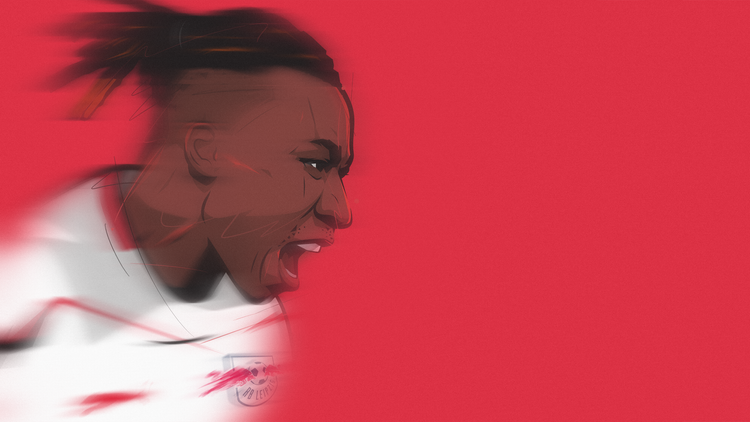
Red graphoc featuring a close up photo of Jérémy Jacquet playing for Stade Rennais

In the summer of 2025, Dean Huijsen and Ilya Zabarnyi - Bournemouth's first-choice centre-back pairing, aged 20 and 22 at the time - joined Real Madrid and Paris Saint-Germain for a combined €125 million, and netted a 135% profit for Bournemouth. The summer prior, French centre-back Leny Yoro moved to Manchester United for €65 million. This winter, a new young centre-back has moved to one of Europe's elite for a similar fee.

If these players are football's hottest commodity, it's because the position is perhaps the elite game's most taxing. Long gone are the days of booming headers, shin-kicking strikers and clearing lines; today, a centre-back is a pivot in possession, an auxiliary full-back, a lockdown one-v-one defender, a dynamic sweeper. Securing the position's standout talent is a vast investment of time and money and attention because the biggest clubs believe they are chasing not an array of specialists but a handful of fabled players who can do it all. These unicorns are rare, coveted, will all cost in excess of €60 million, and the next prospect is called Jérémy Jacquet - a 20-year-old France U-21 international currently playing at Stade Rennais but who, from this summer, will do so for Liverpool.
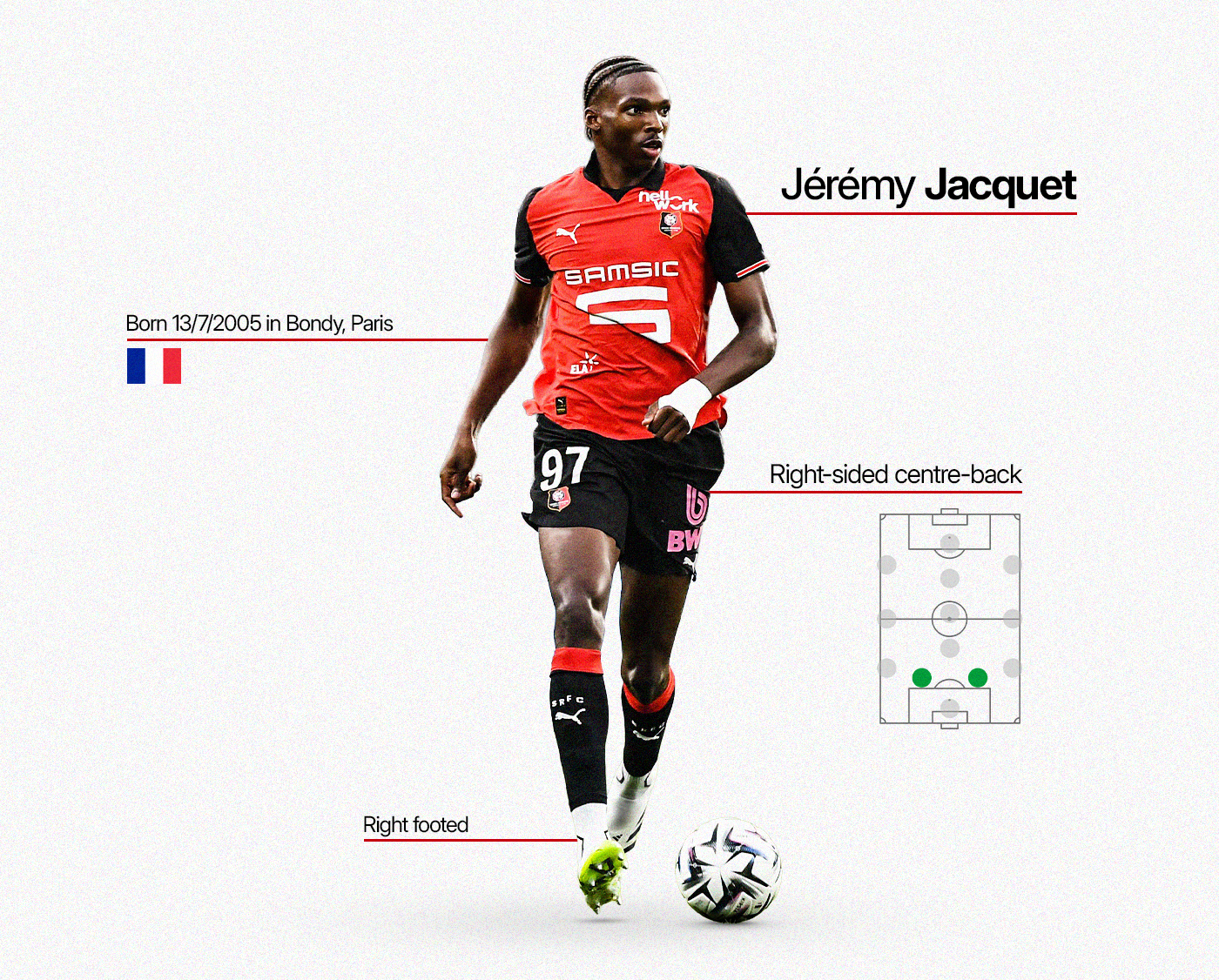
Player card featuring information on Stade Rennais' Jérémy Jacquet

This story is free to read - you just need to join SCOUTED to read it.

SCOUTED publishes full digital magazines on the future of football, packed with stories just like this one.

Join for free to unlock this story - or choose a paid subscription to read (and download) the entire magazine.

Join the club

Like so many of France’s best and most loved footballers, Jérémy Jacquet was born and raised in a banlieue of Paris. He hails from Bondy, the commune in the north-east of the city that produced William Saliba, Kylian Mbappé and numerous other top-level talents. And like so many Parisian hopefuls, Jacquet left at the age of 14 to further his footballing career. Rennes, a city roughly four hours west from Paris by road, is the home of Stade Rennais, a club famed for their exceptional academy and strong track record of developing Breton and capital talent. After a season with Rennes’ B team in the regionalised fourth tier of French football, a then-teenage Jacquet spent a calendar year on loan at Clermont Foot, cutting his teeth at a cut-throat level of senior football. His time there – split between Ligue 1 and Ligue 2, developing from an in-and-outer to immovable starter – preceded his breakthrough into the Stade Rennais side after the club paid a fee to cut his loan short. He stepped into a starting role immediately and hasn’t relinquished it since, except for the odd niggling injury and untimely suspension.


The anatomy of a unicorn begins with, well, anatomy. Now 20, Jacquet stands at 6’5” tall, with extremely long legs and an ectomorphic physique. He cuts a distinctive figure on the pitch: long and lean, slender and sleek, wiry, rangy, telescopic. That distinction is accentuated when he runs. He moves his spindly frame with light feet that generate an effortless speed and the backbone of his skillset.

We like to discover players’ Superpowers – the attributes that set them apart from the rest, and a central pillar of SCOUTED Archetypes – and Jacquet’s is a combination of straight-line speed with agility. He can cover spaces much larger than most, racing around to put out little fires before they become blazes. He has the top-line speed to chase down strikers but, unusually, the neat footwork and change of speeds to defend in wide areas, too - snappy flips of the hips allow him to move quickly in all directions, and follow wingers just as he can strikers. Jacquet is a 'space coverer' of high capability, and thus of value to proactive teams.

This instance below is a prime example: Moncao break from deep and play a direct pass into hectares of space for a fast runner to latch onto. Jacquet has an important job on his hands, yet he executes it excellently. He's quick into his long stride initially, takes care to cover the farside threat, slows himself down, closes the angles, and makes a big block. Not many centre-backs can do that.

Sequence of screenshots showing Jérémy Jacquet defending a breakaway for Stade Rennais against Monaco in Ligue 1

He is combative, too, although his style as a front-foot defender is more sly than destructive. He likes to nip in to intercept when holding higher lines, empowered by the security of the back-three system favoured by Rennes head coach Habib Beye. He uses his fleet-footed mobility to pounce quickly and long legs to jab at the ball from behind, sometimes poking it away, others gathering it in stride. His style is the same when defending his own box, where he tends to disengage to cut out crosses and clear for corners rather than getting touch-tight and imposing himself.

At 20, areas of his game must still improve. While holding high lines, he doesn’t check his shoulders anywhere near enough, particularly when his body is closed off to play; he thinks his recovery speed will pick up any slack in awareness. He tends to overcover as a consequence, leaving big gaps for attackers to run into. I don’t like how disengaged he is when defending his penalty area, either, and he has a habit of getting sucked underneath high balls, misjudging their flight and struggling to get a clean head. These are all fixable, and improvement will come with experience, but they are legitimate concerns as the level of his opposition scales. The framework of a unicorn defender is there, but he doesn't quite fill the outline yet.

His ability on the ball, however, has never been in doubt. It isn’t of a Superpower standard, but it’s definitely a subpower, and accentuates his physical profile to that unicorn pricetag. Firm passes are the order of the day when the leggy Frenchman is on the ball – and by firm, I mean firm. His technique when passing forward is strong and stable and repeatable: he wraps the ball into teammates on his right foot with speed and accuracy and a smooth, easy-to-receive roll. These passes inject shots of tempo into build-up sequences and get his team playing forward. He has a level-headed composure that makes him a steady presence in possession, particularly in those chaotic seconds after a recovery: he gets his eyes up quickly and is skilful enough to zip the ball away from pressure with an inventive touch, little dribble, or punchy pass. Jacquet isn't a needle-mover as a passer, yet, but the best teams can certainly depend on him to provide a strong platform in possession.

Is Jérémy Jacquet actually a unicorn? It depends how you define the term, but I say yes. His combination of slinky height and sleek speed, with the Superpower capability to cover behind and wide, the assertiveness to step on, and his platforming traits on the ball, meet the criteria. He is unusual and distinctive, and he personifies a profile and skillset clubs are constantly searching for: a near-mythical presence to become obsessed with.


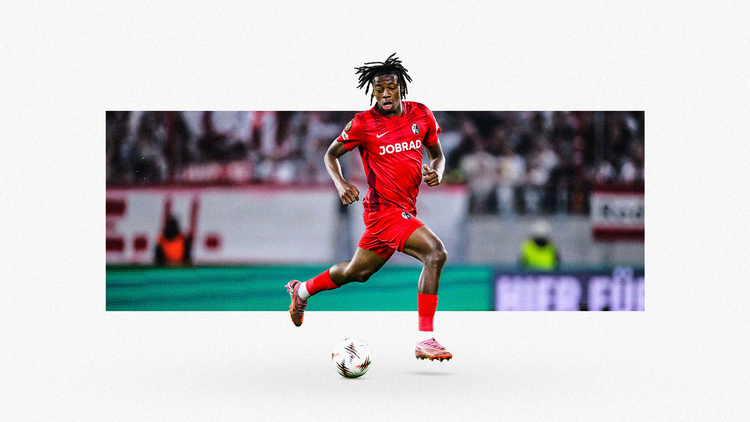
Jérémy Jacquet moving with the ball for Stade Rennais

Following a January of heightened speculation, Liverpool have secured Jérémy Jacquet's long-term services. They invested €75 million to do so, making him the biggest sale in Stade Rennais history and one of the most expensive centre-backs ever: he's joined the pantheon of Huijsen, Zabarnyi and Yoro.

Jacquet to Liverpool makes plenty of sense. Virgil van Dijk is winding down, Ibrahima Konaté is seeing out his contract, and Giovanni Leoni is an up-and-coming prospect recovering from a serious knee injury: they desperately need a centre-back with the surefire quality to assume an important role in the immediate term and the high-ceiling potential to be a pillar of title-challenging teams for the next decade. In Jacquet, they have found both.

In style, I see the Frenchman as somewhere between Van Dijk and Konaté. Jacquet's ability to cover big spaces and shut down wide areas are is similar to Konaté, whereas his crisp and fizzing passes are reminiscent of Van Dijk. Liverpool have signed a player to fill in for whichever of the two they lose first, and a foundation for a defence to succeed one of the greatest in the club's history. Such is the fate of a unicorn.