
Berserker: the Morgan Rogers Archetype

Théoden, son of Thengel, King of Rohan and Lord of the Mark, sits atop his castle and smirks. "No army has ever breached the Deeping Wall," he says, "or set foot inside the Hornburg." Rain patters against his armour. Below him, an endless stretch of roiling black comes onwards; the bowels of Isengard have emptied and spit out ten thousand devilish soldiers in wicked, flanged armour, and they've come to throw themselves pointlessly against the walls of his people's bastion, the legendary castle of Helm's Deep.
And so it begins. Théoden watches his pitiful group of defenders repel the monstrous assault and smirks again. "Is this it?" he says. "Is this all you can conjure, Saruman?" Atop the Deeping Wall, an impenetrable stretch of ancient stone, a ranger called Aragorn leads the defense. It's holding. He and his lithe blonde friend, the elf Legolas, throw ladders and attackers off the wall as soon as they summit, send them crashing back into the endless sea of flesh. More enemies stream forwards in their thousands, but Aragorn and Legolas could do this all night, and the Deeping Wall has never been breached, and cannot be breached.
Then he spots it. Out there in the dark, amongst the clattering armour and the slick mud and the rain that falls in sheets, Aragorn sees a spattering of light. A burning torch, like a giant sparkler, moves through the crowd, and the crowd parts to let it. Holding this torch is a big, muscled creature, an orc bred for one purpose. It sprints at the Deeping Wall.
Aragorn cries to his friend. "Bring him down, Legolas!" The elf shoots the orc, but it just twitches under the impact of the arrow, and keeps coming. "Kill him!" Another arrow, another twitch, and the orc keeps coming because it was built for this, put in this exact place by a tactician who spotted a weakness in the Deeping Wall nobody else had ever thought to exploit, a little drain in its centre which is now packed with flammable explosives - and this orc was built to go berserk, to be filled with arrows and keep going, keep going, sprint at the impassable defenses until the torch strikes a spark and the unbreachable is breached.
"Kill him!" Aragorn screams, desperate now, and a third arrow strikes the berserker, and then the Deeping Wall explodes.
"A host of dark shapes poured in. 'Devilry of Saruman!' cried Aragorn. 'They have crept in the culvert again, while we talked, and they have lit the fire of Orthanc beneath our feet.'"
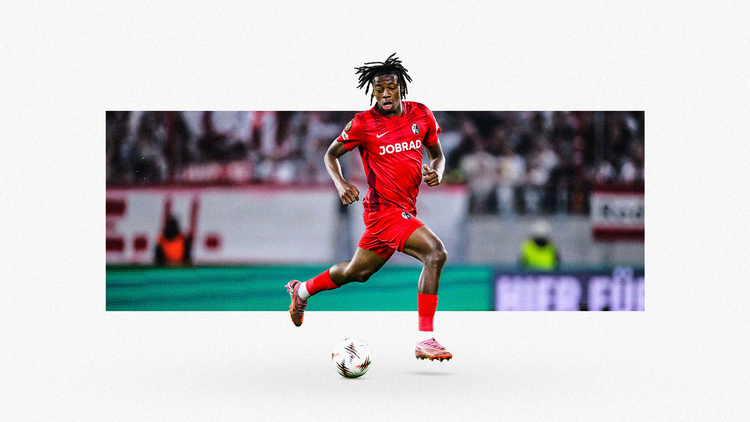
Morgan Rogers is having quite the season. Aston Villa sputtered into the early challenges of 2025/26; they failed to score entirely in the first 360 full minutes and by the time they did, in a tepid 1-1 draw with ten-man Sunderland A.F.C, they'd gathered three points from the opening five games. Mention of a title challenge would've been met with a hearty guffaw.
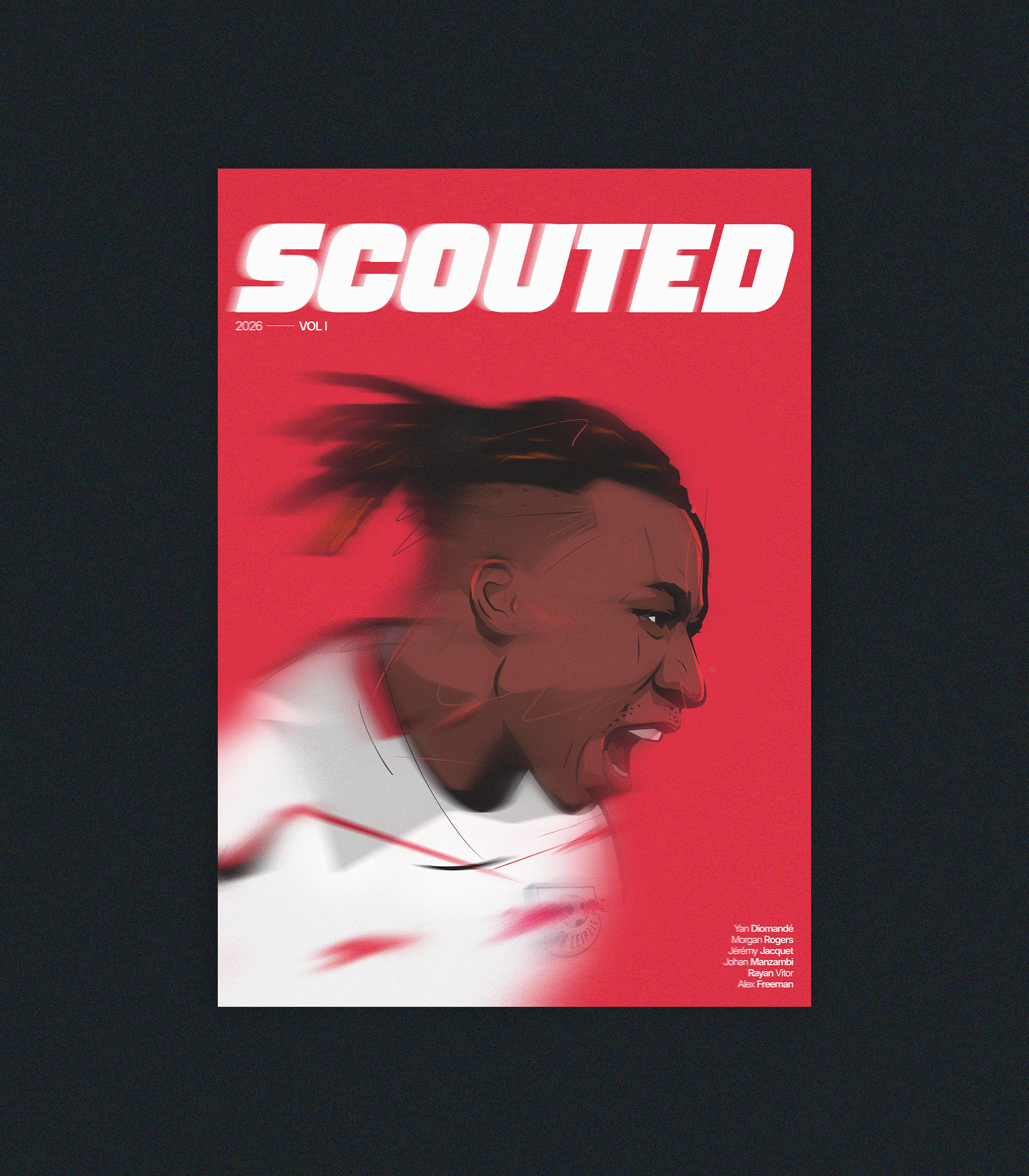
This story is free to read - you just need to join SCOUTED to read it.
SCOUTED publishes full digital magazines on the future of football, packed with stories just like this one.
Join for free to unlock this story - or choose a paid subscription to read (and download) the entire magazine.
Since then, they've won almost relentlessly. Rogers, the reigning PFA Young Player of the Year, has been at the heart of every one. The sight of him winding through midfields and shrugging off challenges has become one of the Premier League's defining images, and he has cemented last year's promise: he is now indisputedly one of the league's, and therefore the world's, most talented footballers. It is still less than two years since Villa plucked him from a promising but confused early career in the English Football League.
On August 24th, 2024, Aston Villa hosted Arsenal at Villa Park. The Gunners were hot off an outrageous end to the previous campaign in which they'd won 16 of 18 games since Christmas. They hadn't trailed in an away game for a single minute. They'd conceded the least goals, kept the most clean sheets, and lost the title to Manchester City by just two points. Arsenal's only defeat in that run was to Aston Villa, 0-2, at the Emirates. Villa had changed the destiny of that Premier League title and, in the August rematch, revenge was in the air. Arsenal were the league's immovable object, a reputation that has only grown in the time since; William Saliba and Gabriel Magalhães were the league's premier defensive wall and ahead they marshalled Declan Rice, who flew around the pitch like a loosed arrow, felling targets and bringing down threats. Arsenal could not be breached.
It's perhaps strange to use a game in which Villa failed to score, and lost 0-2 - Arsenal did, indeed, exact their revenge - as the genesis for a story on Morgan Rogers' quality. But that day hinged on moments. Ollie Watkins missed a tap-in from five yards. Amadou Onana hit the bar, and David Raya made a superhuman reflex save to deny the follow-up. Villa had matched and in some ways outclassed the league's away-from-home specialists. And this was the day the lightbulb lit up, that I got it. During the aftermath, I wrote about Morgan Rogers for SCOUTED for the first time. A personal obsession was born.

Against Arsenal, Rogers completed five of seven attempted take-ons, both a personal and game high. He embarked on seven progressive carries, his best total for any league match at that time. And beyond the numbers, the images were striking: Rogers blasted through Arsenal's immovable centre like a bowling ball, ragdolling opponents, leaving bodies scattered in his wake. Gabriel spotted the danger and screamed to Rice to bring him down, but even the danger-suffocating specialist struggled to keep up, to fill his opponent with enough arrows to be fatal. Rogers, 6'2" and 80kg, somehow tall and wide and stocky all, built like a lean but powerful rugby player, seemed that day bred for one purpose: to smash through an immovable wall, to keep going, to berserk, to light the fires of Orthanc beneath the defence that could not be breached. Although I didn't have the terminology at the time, in the back of my mind, an Archetype was being synthesised.
"Over the wall and under the wall the last assault came sweeping like a dark wave upon a hill of sand. The defence was swept away."
There's a funny quirk to Morgan Rogers' early career, during which he jumped relatively quickly between clubs in the English Football League: more than one of those clubs who signed him had recently faced him as an opponent. In April 2019, he played for West Bromwich Albion against Manchester City in the FA Youth Cup semi-final; four months later, City signed him. In January 2024, he played for Middlesbrough against Aston Villa, in the FA Cup; less than a month hence, he was a Villa player. It's almost as if, like me, these recruitment teams had been struck by the imagery Rogers creates, the mounds of bodies he leaves in his wake.
Before all that, Rogers spent nine years at West Brom. He was just 16 when he made his professional debut in the FA Cup, wearing 57, twisting and shrugging off challenges. City swooped, and a host of loan spells followed. Lincoln City, in League One, were first: Rogers lined up on the opposite flank to a young winger called Brennan Johnson. In six months together, the duo helped deliver the club to the League One play-offs, in which they finished runners-up.
Rogers was clearly ready for the Championship, and Bournemouth - then hardly the renowned talent-spotters we know today - offered the chance. Rogers spent a year on the south coast but found minutes difficult to come by. He managed just 392 with the Cherries, across 17 appearances, for an average of 23 per appearance. He returned deflated to Manchester City for the first six months of 2022/23, and was shipped out again to Blackpool in January. Another patchy spell followed. In 22 appearances he managed just one goal, one assist, and matched his goal contribution total with his two yellow cards. Whatever spark City had spotted was beginning to fade, battered by the rough-and-tumble of the EFL and the challenge of adapting to a smorgasbord of styles.
Rogers, for his part, credits this period for his modern-day adaptability and positional versatility. "The style of managers I've been with, they all demanded different things," he told the BBC in January. "Some were going for the league, some were going for play-offs, some where battling relegation. I think that all, in a washing machine, helped me become who I am." But at the time, an obvious and arresting talent was at risk of being lost in the melee; then Middlesbrough signed him.
During half a season on Teeside, Rogers became a mainstay in Michael Carrick's side and was most often deployed in the number ten role, and that platform allowed him to grow into himself. He scored two goals in 26 Championship appearances in his half-year there, but delivered five in six under the spotlights of Boro's EFL Cup run. And in the FA Cup, he ran headlong - literally - into Aston Villa, during a third round tie in January 2024. Jacob Ramsey, an England youth teammate and friend who played for Villa during the fixture, called Rogers after the game. Unai Emery, he told him, was infatuated. Less than a month later, Morgan Rogers lined up under the Spaniard for the first time. Seven months after that, he marauded through Arsenal's midfield, deployed as a ten, and all the world watched as he came alive.
I enjoyed following Emery's integration of Rogers during that first half-season immensely. For a player jumping from the Championship to a Champions League chaser, it happened quickly. From March, Rogers started eight consecutive games before a hamstring injury ruled him out of the final two. I made a little note to include him in my Fantasy Premier League next year regardless; Emery is a man who knows what he likes, and his immediate commitment to Rogers, I knew, meant he would be a constant selection when available: the Spaniard's fascination reminded me of how aggressively he pursued Wilfried Zaha for Arsenal. I felt in Rogers there was something still to be unlocked, some quality going undervalued and, in the following season, I finally put a name to it.
"The world changes, and all that once was strong now proves unsure. How shall any tower withstand such numbers and such reckless hate?"
When the BBC ask Morgan Rogers to describe his style, he pauses. "Unique," he says thoughtfully, after a moment of quiet. There's another, as if he's pondering whether one word was enough. It wasn't: "A little bit different to everyone else that probably plays in my position." He frames the statement like a question. "I like to see myself as someone that can do different things on the pitch when asked; I can be a number ten, I can be a winger, I can be striker… I can be anything."
He names Cristiano Ronaldo as his primary inspiration, which as an attacker growing up in the 2000s, is hardly surprising. Perhaps moreso is his fascination with Yaya Touré. "There's a few taller midfielders that have a lot of ability, a lot of running power," he says. "Those are players that are kind of similar to me that I can watch and look it... Especially Touré, the way he used to run from box-to-box and how good he was, how strong he was." Of course if you've watched Rogers' at all you'll understand Touré is hardly a rogue comparison, even if they play nominally different roles. And it's especially useful for this story, because it points to its heart. "Running power," Rogers said, which is the key to all this.
I began the SCOUTED Archetypes project in February 2025, when we published An Introduction to the Power Forward. The goal was to extend the vocabulary we used to categorise football players; terms like 'box-to-box midfielder' were still useful but not specific enough, and had emerged from a long-dead meta; I felt, with careful data analysis and thoughtful semantics, we could define more useful terms that better reflected the roles of the modern game. The Power Forward, inspired by Viktor Gyökeres, was first, but the seeds had been planted long ago, when I first watched Morgan Rogers. Central to each Archetype is a 'Superpower,' a particular repeatable skill that each does better (and more often) than anyone else, and each should be immediately identifiable on the pitch, reflected in the language we use to name the Archetype, and findable somehow in the data. For the Power Forward I chose the volume of Runs In Behind made by a striker, and the Speed at which they are made; the Power Forward makes lots of very, very fast, powerful runs off the shoulder of the last defender and matches that with powerful, violent finishing. That Morgan Rogers performance, against Arsenal, was the first time I began thinking about football in these terms, of Archetypes and Superpowers, and it seemed now was the perfect time to return to the project's genesis and answer the question that started it all: what is Rogers' Archetype?
Rogers' Superpower is, as he says, 'running power,' but we can be much more specific. It is the total obliteration of defensive lines through a combination of passing and carrying. It is the ability to absorb tackle after tackle, arrow after arrow, and keep moving. It is the quality to find the single point of failure in an otherwise impenetrable wall and blast through it. But even this might be misconstrued: Rogers doesn't simply break lines. "I think English players worry too much about making mistakes," he said. "Foreign culture is a little more free […] that's where you try to pick up and learn."

When the torch-carrying orc charged towards the Deeping Wall, there was no talk of efficiency, of perfect running form, of making every stride count: there was only the goal. When Legolas strikes him with a third arrow, enough to kill any normal soldier, he's travelling at such a speed and force that he jumps, and flies through the air, and lands amidst the explosives anyway. Going berserk means efficiency is thrown out the window, and only sheer effectiveness remains.
The BBC ask Rogers where he enjoys playing most. He thinks. "Wherever the space is," he says with a grin. Wherever the Deeping Wall might be brought down. This is the cornerstone upon which we'll build our new Archetype, the Archetype that inspired it all, and there's only one word we could possibly use to describe it: Berserker.
"They will break upon this fortress like water upon rock… Within these walls, we will outlast them."
Morgan Rogers breaks the second line by receiving the ball under pressure, absorbing that pressure, then blasting away from it. This is the foundation, the first thing that must happen for going 'berserk' to be effective; without this touch-and-turn catalyst, what follows is rarely as damaging. Once first contact has been established and defeated, Rogers - the Berserker - attempts to break the final line with a direct through ball or, if he has built enough momentum, by charging through it himself. The key word here is 'attempt'.
Since the beginning, Archetypes have been developed on a spectrum of efficiency and effectiveness. Does the role we're describing require near-perfect execution of a primary function, or should a player be given the freedom to attempt it relentlessly, come hell or high water? A Defuser, for example, should be measured by how efficiently they escape opposition pressure. Operating deeper on the pitch, in the build-up phase, ball retention is vital; a Defuser losing the ball will likely result in a goal. But for Rogers, the frenzied, unrelenting attempts are exactly what characterise his style. He knows it. "I'm a player that's always going to try," he said to Jamie Redknapp at the start of this year. "If I've given the ball away ten, fifteen times, I'm not going to take the easy option […] my risk of passes in-behind is going to be higher […] I'm not in the team to keep the ball. That's not my job." Rogers falls very firmly on the 'effectiveness' side of our spectrum, and so does his Archetype.
As a result of this freedom, turnovers from the Berserker are likely. Overhit passes are common and the simple may be ignored as an option entirely. This trade-off must be accepted by the coach and the players around the Berserker. Perfection would be a foolish pursuit anyway: the Berserker's Area of Effect* (AoE) is in central areas between the midfield and defense, the most congested and tightly controlled area of the pitch; accepting only faultless efficiency from those tasked with breaking through it would result in central progression never being achieved anywhere, by anyone. There are teams and managers at the very highest level who are unwilling to accept this risk, and as such almost ignore central progression entirely. Unai Emery is not among them.
Instead, Emery has built a team willing to accept ball-losses in high central areas. His side watch for potential turnovers and pounce on them. This season, Villa's famous high line has retreated slightly, but the distances between their players is still short. When Villa lose the ball, their opponents must act immediately, with perfect technical execution, or risk losing it themselves. Key to platforming an effective Berserker, then, is a brutal and immediate counter-press, in which the Berserker themselves should ideally be integral. It makes sense for a player with an on-ball profile built around powerful and destructive running to channel that same power into closing down opponents quickly. To lessen the negative impact of naturally losing the ball in dangerous areas, having the Berserker fly quickly into tackles - with the same disregard for efficiency evident in their on-ball profile - is key. Rogers himself is hardly an efficient ball-winner - his tackling is clumsy, to be generous - but he is relentless, and the bullish nature with which he blasts into opponents after a loss does at least disrupt their ability to quickly play through congestion: and if he does win the ball cleanly he can reload and go again, but this time likely in more space.
All this speed, this rapid-fire approach to turning the ball over again and again, naturally creates transitional game states in which the Berserker thrives: little pockets of frenzy in the middle of the pitch where chaos reigns. Yes, Rogers can and has broken down many a low block, but bursty sprints through the middle, when the final line must turn and run back towards their own goal, is where he's most destructive. His touch-and-go breaks the second line, which is now confused and sprinting backwards; players jump out of the final line to close him down and he shrugs them off, leaving gaps for teammates to sprint into; he keeps going, as arrow after arrow bounce off him, until all that's left is ruin.
This is the Berserker's 'Superpower' - creating and smashing through transitional game-states in central areas. And, as with any Archetype, team context is key. If Villa sat deep and were content to give Rogers the ball and watch him drive forward without support, his inevitable losses would feel much worse - we'd likely be talking about a talented but wasteful player. Instead they drive forward as he does, waiting and expecting him to lose the ball, prepared always to collapse on his position when he does, win it back, and go again. If you were data scouting and looking for a similar player, it's likely the low duel success rates typical of Rogers - both on the ground and in the air - would flag as issues. But consider the context of the gauntlets a Berserker is being asked to run: the likelihood of shrugging off two, three, four arrows alone extremely low. All of a sudden, a 30% success rate seems much more enticing.
"Maybe we shall cleave a road, or make such an end as will be worth a song – if any be left to sing of us hereafter.’"
As Archetypes are meta-contextual, it's worth discussing the tactical evolutions that have made the Berserker so valuable and effective. The centre of the pitch is a key battleground in football's evolving tactical meta, and has been for a while. In 2023, friend of SCOUTED Jon Mackenzie introduced the term 'hybrid pressing' to describe how many coaches were attempting to marry the benefits of both zonal and player-to-player pressing systems. Crucially, this approach leaves a little gap - Jon calls it 'the space between' - a tiny, near-impossible weakness to exploit, like a drain in the Deeping Wall. As a hybrid press jumps to reduce space behind their front line, a hole appears behind the midfield.
Of course, for the Berserker to leap onto the pile of explosives in this weakness, the explosives must first be placed. In 2024, Dharnish Iqbal detailed how Aston Villa were engineering the space for Rogers to burst into for Analytics FC. In build-up, they'd invite the opponent's press onto them, playing as deep as possible, before simply launching the ball long into midfield - directly into 'the space between'. Morgan Rogers, even when deployed nominally as a winger, was tasked with watching for this gap to appear, before darting into it.
Once the Berserker has the ball in 'the space between', they can blast forward until they trigger the explosion. Usually, this is a large distance to cover. The game-state is now transitional, the hybrid press has been baited into jumping and caught between zonal and player-to-player states, and 1v1 duels appear all over the pitch. The Berserker, built to shrug off arrows, is now the target of dozens, launched desperately his way. Every arrow fired is at the expense of space.
Another useful analogy to understand the Berserker's value was introduced by the analyst Callum Saunders, who used the term 'gates' to describe the space between pairs of defending players. A game of football is won by the team who can breach these gates most effectively, Saunders argues. I like to think of Archetypes as different solutions for different puzzles, different keys for different gates. The Berserker rejects keys in favour of the most brutal way of opening a gate: simply blowing it up.
That's not to say Rogers opens gates purely by carrying the ball through them. Once he has the ball in 'the space between' he falls into a frenzy in which anything and everything but the simple is tried. His carrying - the touch-and-go catalyst - is the spark but the Berserker is equally adept at breaking lines with passing, making off-ball runs himself or simply letting fly. The frenzy, the multi-dimensional threat, is crucial to setting the Berserker apart from other attacking Archetypes who damage teams through efficient use of a single key skill.
To pull all these myriad threats into a single term, we can use the concept of 'push,' as introduced by the analyst who goes by the handle 'Meia Armador' online. "To put it simply," Meia Armador wrote recently, "push dynamics are what push the defensive line deeper… pull dynamics are what pull the defensive line higher. This is the crux of stretching any defensive block vertically." Whether an attacking player offers push or pull is largely dictated by whether they play on or against the side of their strongest foot. "As a general rule, strong-footed players offer more 'push' dynamics, while wrong-footed players offer more 'pull' dynamics." Crucially, understanding this dynamic, Meia Armador writes, is "the most effective way to condition individual intentions and, consequently, team intentions."
Whenever I discuss Morgan Rogers publically, I say he's best playing centrally or on the right - he's right-footed. Of course the detail-oriented reader will point out the many great moments Rogers has produced from the left, to which I'd say: yes, he's very good at football. He has the ability to pull players towards him, beat them, and be effective from anywhere. But to platform his absolute best qualities - to accentuate the level of 'push' he can offer his team - it's best to play him where his right foot can offer the most drive. This orthodox orientation conditions his intentions to charge towards the opposition, pushes them back into a pile of bodies he can trample over, and ensures the defenders scrambling to stop him have a near-impossible job. Push raises a team's attacking tempo, as Rogers does to a frenzied level for Aston Villa, and turns his drive into an unstoppable force. To unlock a Berserker, engineer their runs to be long, vertical and with a flat angle of approach, from penalty spot to penalty spot. Enable them to penetrate the final line face on, with the greatest force of push they can conjure.
"Where now the horse and the rider? Where is the horn that was blowing? They have passed like rain on the mountain, like a wind in the meadow."
In just over two years, Morgan Rogers has risen from a confused, stop-start career in lower divisions to one of the most effective and dangerous attackers in the world. Michael Carrick - his coach at Middlesbrough - and Unai Emery deserve immense credit for understanding how damaging he could be in the right hands - but how, when and where do we spot a Berserker in the wild?
Rogers' carries blow the game wide open from central areas. All events in a Berserker's highlight reel, then, will take place at the very least within the width of the 18-yard box. But Rogers was not always deployed as a central, attacking midfielder. We've mentioned the Area of Effect (AoE) concept already; we've also discussed relentless, powerful, vertical ball-carrying at length. From a data scouting perspective, then, any metric that helps identify that effectiveness is useful. Progressive carries, progressive carrying distance, the length of the largest progressive carries, carries into the box, passes into the box, through balls - but these metrics can be extremely noisy. The likes of Jérémy Doku, Michael Olise, Lamine Yamal and even Volume I cover star Yan Diomandé dominate them, and none fit our Berserker search. So, in addition to AoE and those metrics, it's important to consider a player's Angle of Approach (AoA) and Point of Entry (PoE).
If you're watching a winger, take a closer look at where their carries take place and how they unfold. A balletic dribbler weaving through small gaps is beautiful, but it's not a Berseker. An explosive wide player blasting to the byline to cut the ball back is effective, but it platforms a different skillset. The Berserker marauds through the pitch in straight lines: this is their Angle of Approach. They work on a 180-degree axis; they receive through the lines, turn, blast through the next one. There is no interest in going around. They can manipulate the ball and dribble past defenders, but the truer the AoA, the more direct the player and the greater their momentum. Their Point of Entry, then, is at the top of the box, rather than the side. Whether penetrating the area through an extension of a momentous carry or playing a through-ball to an advanced teammate, a Berserker will enter the box head on; they will penetrate through the arc on the edge of the box or at the very least across its top-side width. To characterise Rogers I scoured maps of his Progressive Carries and Progressive Passes after Carries, dotted red lines drawn across diagrams of the pitch, and compared them to those of Yan Diomandé. The Ivorian winger enters the box at an angle, penetrating its corners and sides; Rogers arrows are very straight, begin in central areas, and drive straight through the box's heart.
To discover a Berserker, look for players securing a central bridgehead for their team. Look for players injecting frenzy into their team's tempo. Look for players receiving on the half-turn and pushing forward. Look for players taking the ball in the middle third and into the final third while under pressure. Look for players with stiff, strong arms, players grabbing fistfuls of shirts, players throwing opponents to the floor. What separates these players from Power Forwards, as the statistical profiles might be similar at first glance, is their reception of the ball in tight spaces, the amount of pressure received, and the final action. Both profiles share the ability to cover large distances at great speed, but the Berserker does so more often with the ball. The Power Forward's speed, strength, verticality and power characterises their off-ball running and violent finishing. The Berserker's frenzied attempts to progress and penetrate happen with the ball at their feet.
"Forth Eorlingas!"
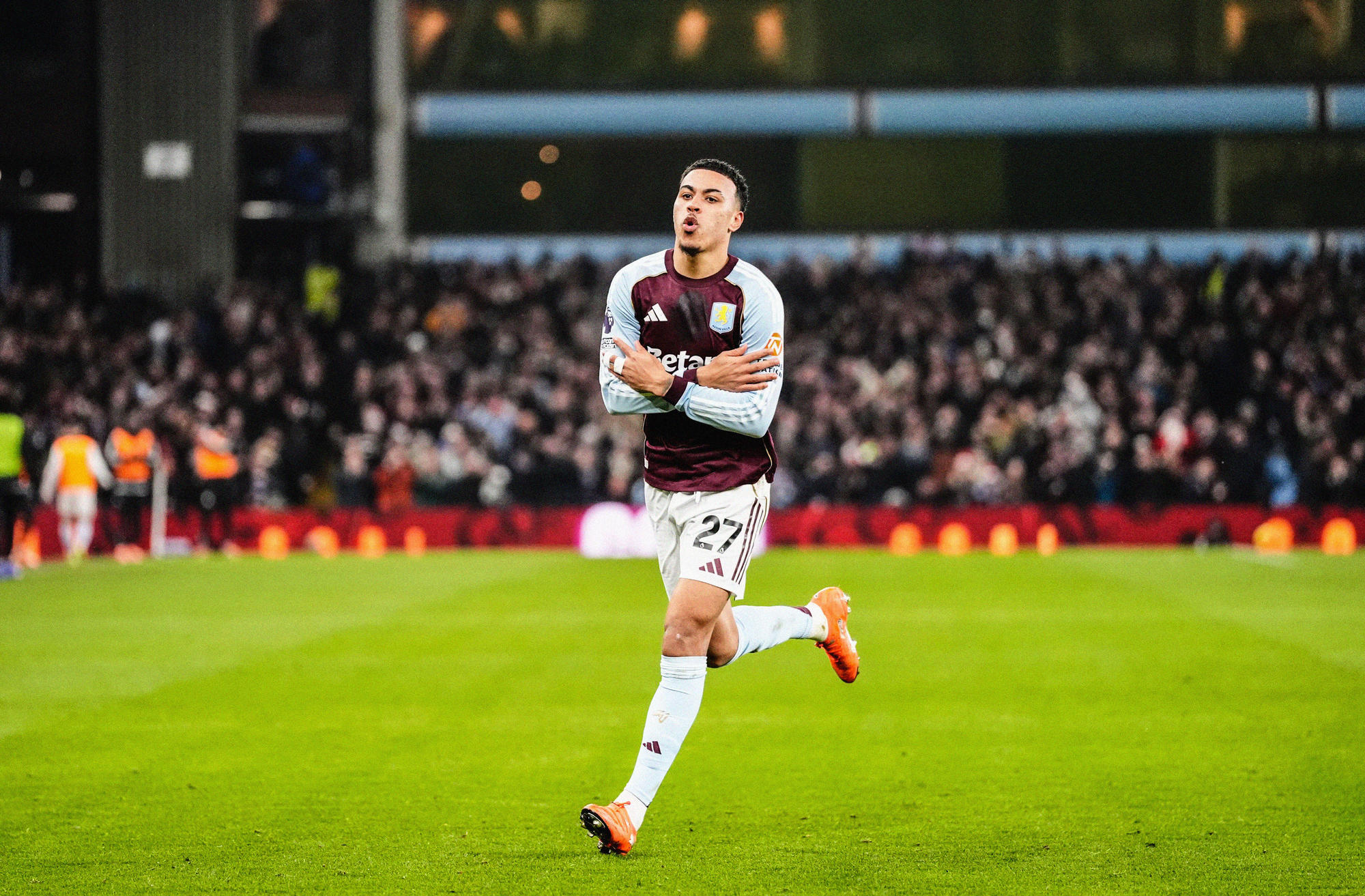
When he was a child, Morgan Rogers took part in summer camps with the junior football club Halas Hawks. The Claret and Blue podcast got a hand on his player reports from those camps. His Under-7s report celebrated his ability to "strike the ball with tremendous power and accuracy with either foot." A year later, his Under-8s report explained his "ability to run at great speed with the ball, and his immensely powerful shooting saw him score a total of 42 goals, the highest in the squad." They also noted something else: "Morgan is as tough as they come, and can tackle ferociously."
Morgan Rogers has been a Berserker since day one. Halas Hawks coach Pauline Hickman, when asked about his most impressive traits, singled out the cornerstone of his Archetype: "He's one of the players that runs forward all of the time. He never passes back and you always feel a bit of excitement when he's got the ball." Unless, of course, you're stood watching from the Deeping Wall, as the Berserker comes charging towards you, and all the impenetrable defence you've mustered comes tumbling down: then it's terror, and a feeble desperation.
The battle for central areas will continue to define football's new age for years to come. Siege towers will be thrown up, arrows will be loosed, and the Berserker will continue to blast through it all. Bring him down - if you can.


Member discussion