Tiwizi Dreams: the Morocco Story
A 50-year wait has never been closer to ending.


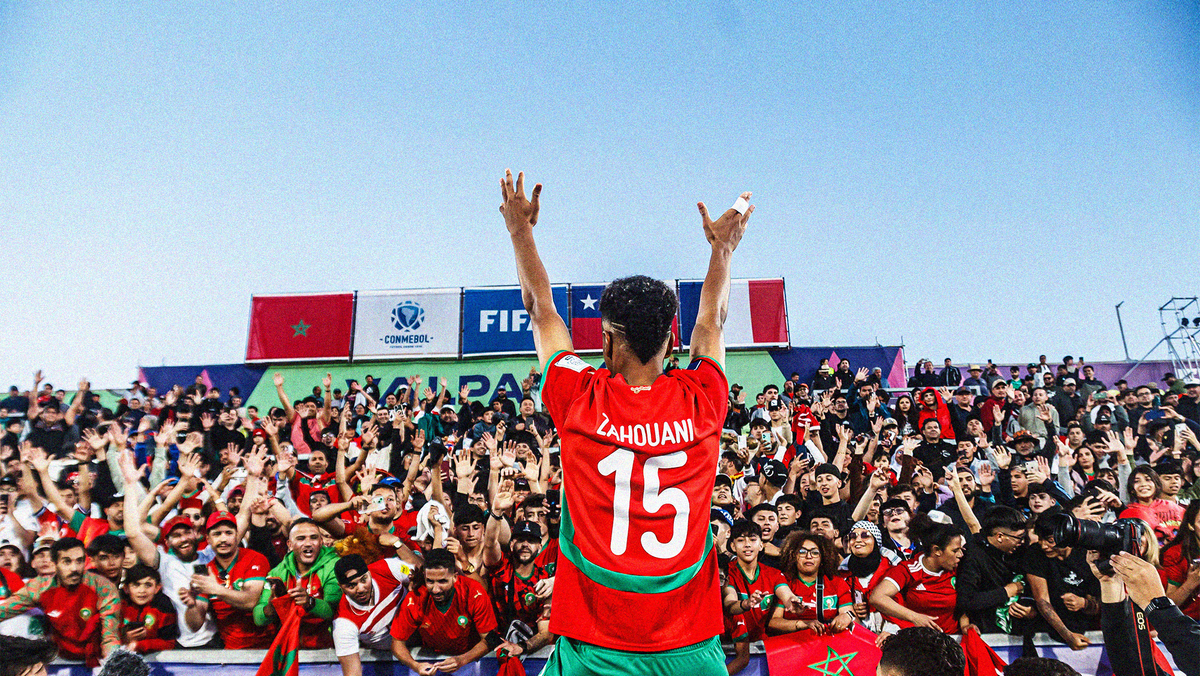
"It's Diaz…and he's dinked it straight at Mendy! A woeful penalty! Absolutely woeful! A shake of the head from Pape Thiaw…what is he doing? What is Brahim Diaz doing?"
The word 'douar' derives from the Arabic word الدوار [dwa:ʀ]. Translated literally, it means ‘round about.’ Historically speaking a douar was a camp of tents, arranged in a circle 'round about' a central area, and inhabited by the indigenous Amazigh people of North Africa. Douars were designed to be mobile or semi-sedentary, autonomous self-sufficient societies that were not just physical camps but robust economic, social and political units. Stories of douars are scattered through the histories of North Africa and the land which today is called Morocco. Under the Sa'adian dynasty of the mid-to-late 1500s, the expansionist sultans chronicled their frustrations with how impossible rebel tribes were to conquer, organised as they were, in their douars: imperial armies would move into the deserts, and the rebel douars would simply melt away, reforming unbothered somewhere else. The colonial French found the same, centuries later. There was simply nothing to conquer, no capital to seize or power structure to break: douars were built to move and bend under pressure, both physically and socially, the way skyscrapers are built to sway gently in the wind. Anything firmer would snap.
Today, the same word is given to rural clusters of habitation throughout Morocco. Despite their significance as defenders of natural heritage and preservers of ancient culture, douars still exist outside of any formal administrative framework and have no official status. And when disaster strikes, the douars bend, but don't break.
This story was published in Volume I.
Unlock this article, and the full magazine - yours to download and keep, forever - by subscribing.
As a limited-time offer to celebrate the launch of Volume I., you can get your first month for 60% off. Join the club!