
The new Georgian maestros
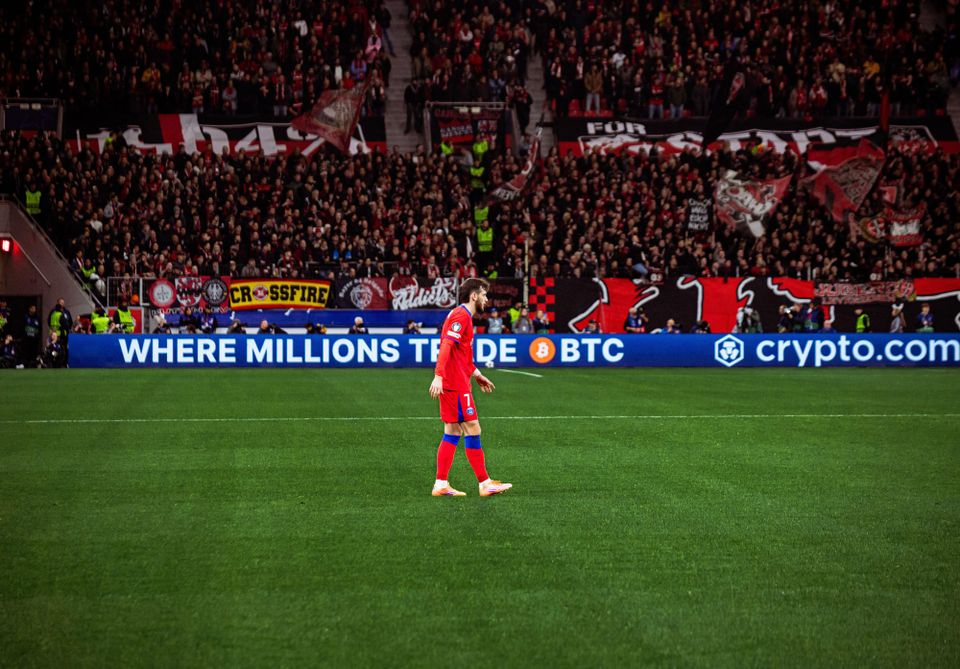
In the spring of 2019, a young man named Khvicha Kvaratskhelia lived alone at Lokomotiv Moscow’s training ground. He was a teenage winger, precociously talented but yet to find the stable footing required to break into the mainstream. Early interest from Bayern Munich had sputtered into nothing; his parent club, FC Rustavi, were a second-division side from his homeland, Georgia. He’d come to Moscow on loan, a lonely speck in a foreign metropolis, his only nightly company the club’s security guards. When his teammates went home for the day and the lights were dim he’d head back out, claim the empty pitch for his own, and spend hours dribbling through the dark.
For those who fell in love with football during the nineties, Kvaratskhelia’s achievements since those days in Moscow have been tinged with nostalgia. Eastern Europe once produced a kind of footballing maestro with a specific aura: Gheorghe Hagi, Dejan Savićević and Robert Prosinečki were individualists, mavericks who dictated matches on their own terms, and a far cry from the system players we’ve become accustomed to watching. But in the years following the fall of the Iron Curtain, as European tactics shifted toward hyper-compact lines, aggressive pressing, and spatial efficiency, the room for unscripted flair shrank, and the Eastern maestro gradually faded away.
This slow death was not entirely a deliberate tactical crusade - it was also the gradual casualty of economics. When the state-sponsored sports machinery of the Soviet Union evaporated, the money vanished with it. Clubs were thrust into survival mode. The luxury of patient player development disappeared as playing assets were sold off prematurely to keep the lights on. The global game evolved, grew faster, more compact, and the East simply lagged behind - particularly in coaching and infrastructure. In a desperate attempt to bridge the gap and ensure their academy prospects remained attractive to Western buyers, clubs eventually began mimicking the industrialised youth models of Western Europe. They traded creative freedom for systemic compliance. The street baller was treated as a luxury the modern game could not afford; it was slowly squeezed out by standardised youth development and rigid positional discipline. In the rush to replicate Western efficiency and produce reliable athletes, Eastern Europe inadvertently engineered the magic out of its own players.
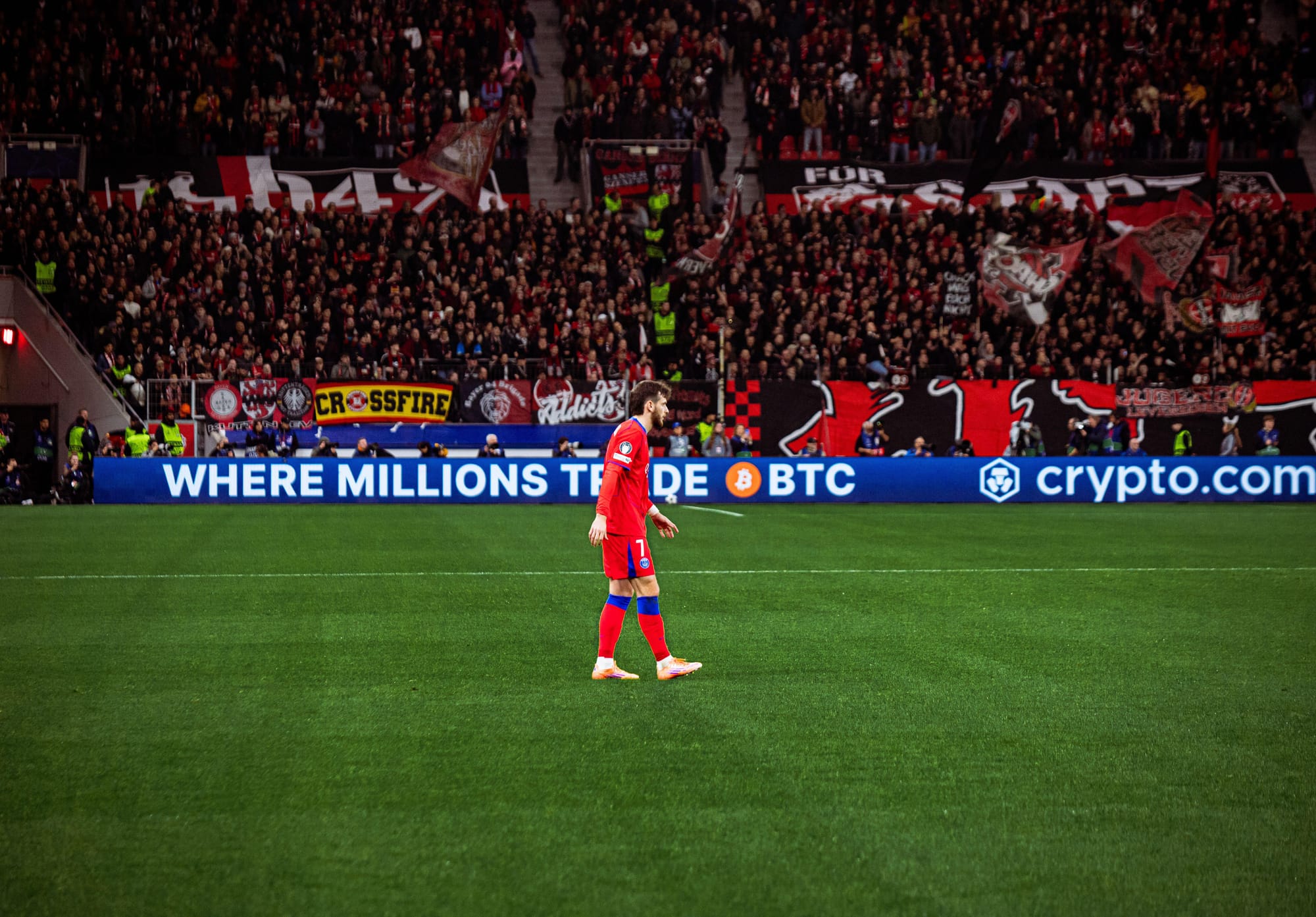
Then came Khvicha. In Moscow, alone in the dark, Kvaratskhelia found a quiet space away from the crushing micro-management of modern player development. He filled the vacuum of his isolation with endless experimentation and refinement so that when the lights came back on, his muscle memory was absolute. It’s hard not to draw a parallel between those lonely days and the streets of Tbilisi he spent his youth on. Now at Paris Saint-Germain and inarguably one of the best players in the world, Kvaratskhelia is obviously the star of Eastern Europe. But his nation, Georgia - a country of just four million - is leading the quest to preserve the maverick Eastern creator on a wider scale. Khvicha’s story is a tale of persistence and outlandish talent, but he is no glitch in the matrix; he is the natural product of a nation finally re-learning how to unleash its mercurial heart.
"If you were to have a walk around different districts in Tbilisi,” Georgian journalist Luka Lagvilava told SCOUTED, “you’d notice at least one 5-a-side football pitch within every three to four housing blocks." In the context of its country, Tbilisi is gargantuan. It is home to over a quarter of Georgia’s population and is an architectural and cultural melting pot, reflective of Georgia’s history as a key historical trade hub along the Silk Road, the political instability it suffered in the vacuum of the collapsing Iron Curtain, and the centuries of twists and turns in-between. In 2003, non-violent protests erupted along Tbilisi’s streets during the Rose Revolution, which removed the last vestiges of Soviet authority from power and catalysed Georgia’s transformation into the market economy we know today. As a result, the country was briefly but significantly invaded by Russia. Today, Tbilisi is a mass of Stalinist tower blocks juxtaposed against its medieval and neoclassical history, all overlaid with the modern developments the city has committed to since the 2008 war. It has been ruled by tsars, shahs, kings and khans. It's famously beautiful. And peeping from every crack is a caged football pitch.
Wanted: new readers
SCOUTED is a magazine full of ideas about football's future. To secure our own, we desperately need your help.
Become a paid subscriber to unlock this story, our entire archive, digital copies of our magazines, and a discount on future print editions.
Most importantly, help keep independent football writing alive.
As in other concrete hotspots of footballing talent, like south London or the banlieues of Paris, Tbilisi's environment engineers a very specific profile. Children who spend their formative years in tight city cages develop mechanics that ultimately scale up to the professional game: close ball control, sharp ambidexterity, a lightning-quick change of direction. Watching Khvicha Kvaratskhelia or Giorgi Chakvetadze - a technical Georgian forward who is now at Udinese - manipulate the ball in tight spaces is essentially an exercise in watching five-a-side problem solving translated to a Champions League pitch.
Mikha Gabechava, now a Technical Scout with Burnley in the English Championship, was once the Head of Scouting at Dinamo Tbilisi. He sees Tbilisi’s local infrastructure, and its physical flaws, as a crucial hidden asset. "We don’t have too many full-sized pitches in good condition that are easily accessible," he told me. "Most kids play on five-a-side pitches, but because many are damaged, kids are forced to invent small-sided games with custom rules on the fly. It forces them to play in restricted spaces, adapt constantly, and figure out how to beat opponents 1v1." This organic street culture traces its lineage all the way back to the elegant David Kipiani and his legendary 1981 Dinamo Tbilisi side which, as the Soviet Union began to degrade around them, won the European Cup Winner’s Cup.
Sorry about the paywall. SCOUTED survives solely on reader subscriptions: which means no ads interrupting the reader experience, no corporate interests, and writers with the time - and pay - to do great work. Sign up to get every long read and player direct to your inbox.
In the rest of this story:
- Notes on how to spot technical ability, from a Georgian technical scout
- The psychological profile that makes a maverick star
- An introduction to Tornike Kvaratskhelia, Khvicha's younger brother - and Andria Bartishvili, the stylish midfielder set to join Arsenal