The centre-back crèche
Why Ligue 1 clubs should double down on their appeal to the English market by partnering their homegrown prodigies with EFL prospects

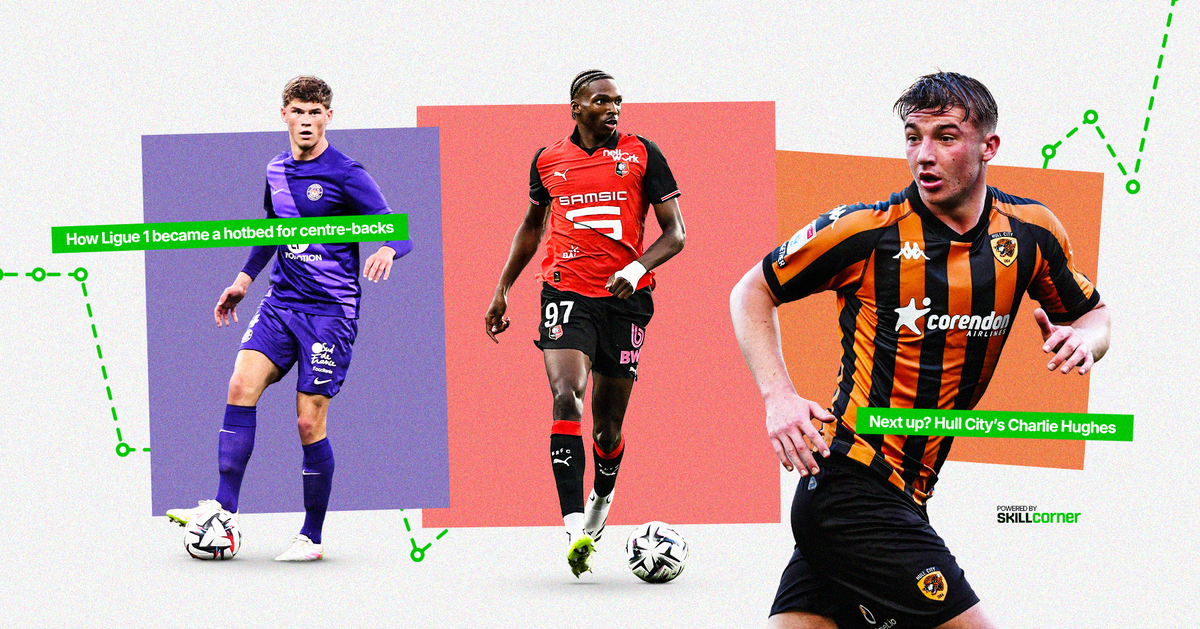
France is the premium exporter of centre-backs. That’s a fact.
This summer alone, Jean-Clair Todibo, Bafodé Diakité, Jaydee Canvot, Nathan Zézé and Mamadou Sarr - who has since become a Senegalese international - all completed permanent transfers for a combined €132m - while the likes of Leny Yoro, Benoît Badiashile, Wesley Fofana, Jules Koundé, Castello Lukeba and William Saliba were all sold for at least €30m before turning 23 years old. No country has the centre-back selling power to match the ‘League of Talents’.
Such demand for French defensive talent represents an enormous opportunity for Ligue 1 clubs to continue developing and selling the next generation. But what makes them so desirable? How can we spot them? And where should Ligue 1 clubs go shopping for prospects to develop them alongside their own prodigies and diversify their centre-back portfolio?
With SkillCorner data in hand, let’s define exactly what makes French centre-backs so special, explore the player likely to be the next massive sale, and suggest a blueprint for replacing him.
In this article:
- The tidal wave of teenage talent and the Toulouse model
- The duality of centre-back profiles: spear and shield
- The next mega-money French centre-back export
- The EFL Championship prospects to replace him
Support SCOUTED
This analytical epic is free to read courtesy of SkillCorner, our data partners. Subscribe now to keep in-depth content like this coming your way.
Subscribe for free
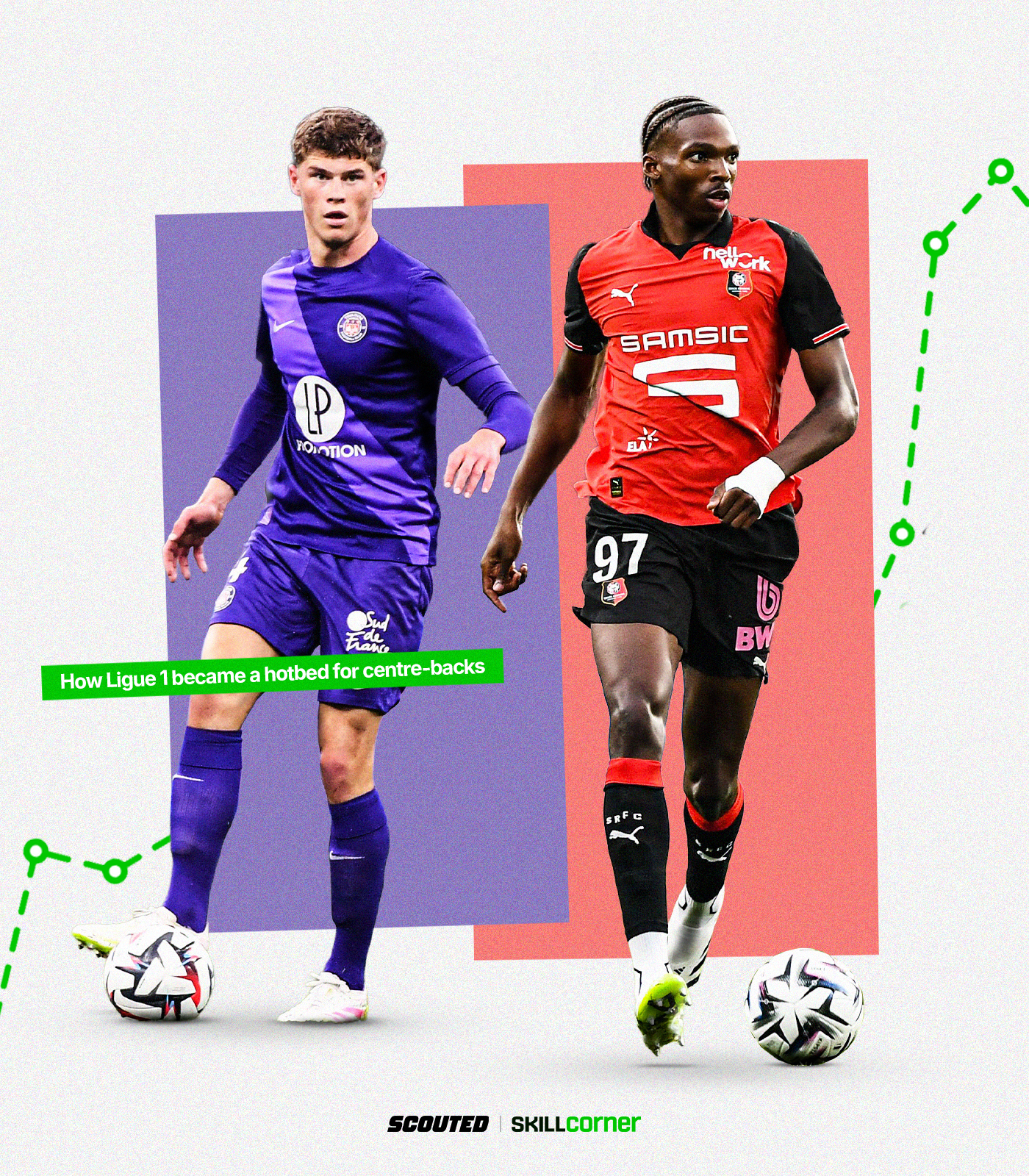
How Ligue 1 became a hotbed for centre-backs
During the 2024/25 season, 38 teenage defenders (based on their position as defined by Stathead FBref) made at least one appearance across the big five leagues - at least seven more than any other season in the modern era. In terms of minutes given to these players, Ligue 1 blows the Big Five Leagues out of the water.
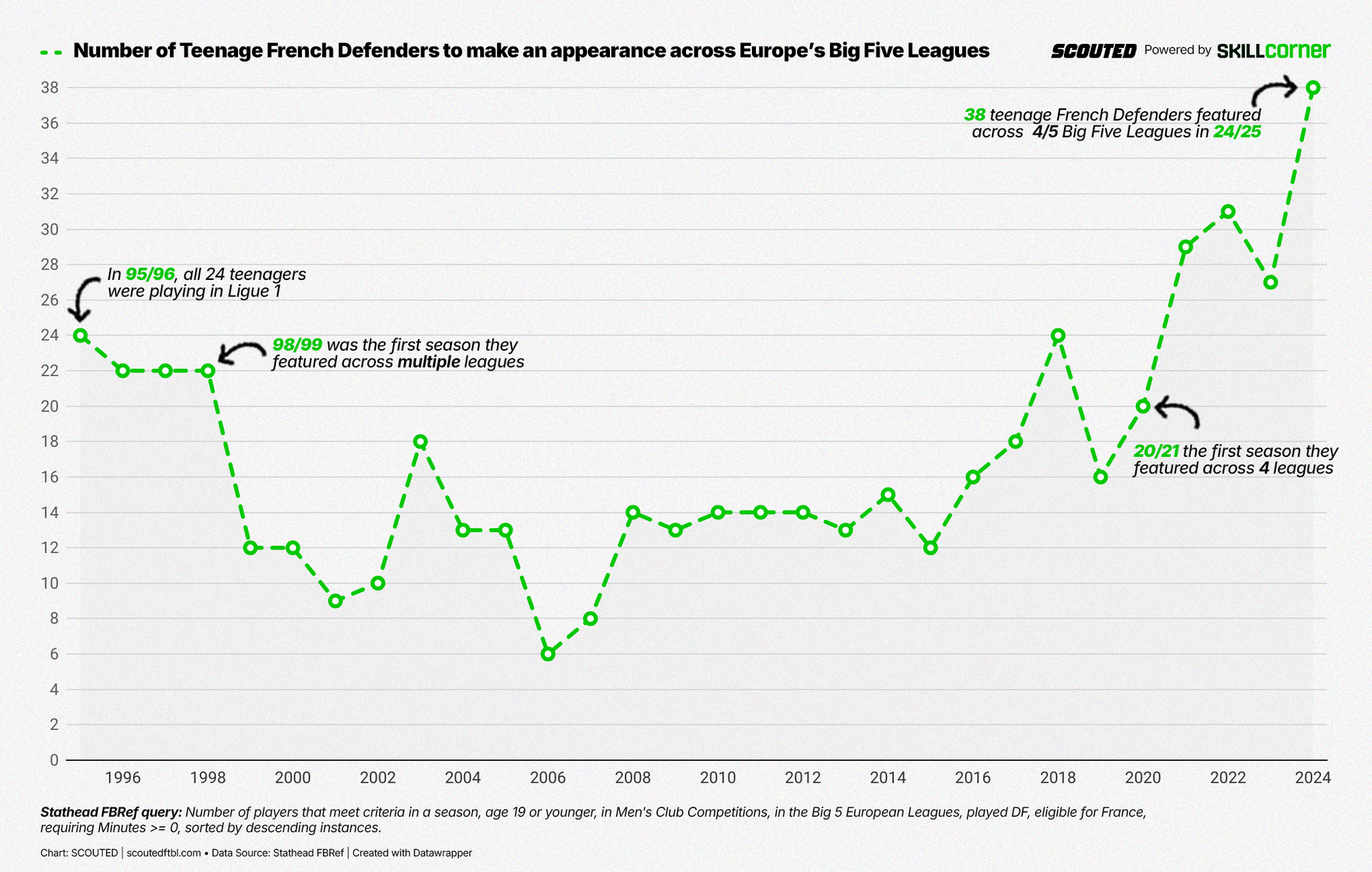
If France is a hotbed for centre-backs, Île‑de‑France is the molten core. Contemporary Franciliens include Ibrahima Konaté, William Saliba as well as the aforementioned Canvot and his new Crystal Palace teammate Maxence Lacroix. The volume and density of its population means the talent overflows and spills out to the rest of the country. PSG and Paris FC cannot accommodate the enormous supply of players, so other cities share the load. Like Toulouse.
Toulouse are at the forefront of centre-back development. Four of their top five most expensive exports are centre-backs. All four were sold at the age of 23 or younger. Issa Diop and Christian Mawissa were born in the southern region of Occitania, of which Toulouse is the prefecture. But Costa and Canvot were born in the Île‑de‑France.
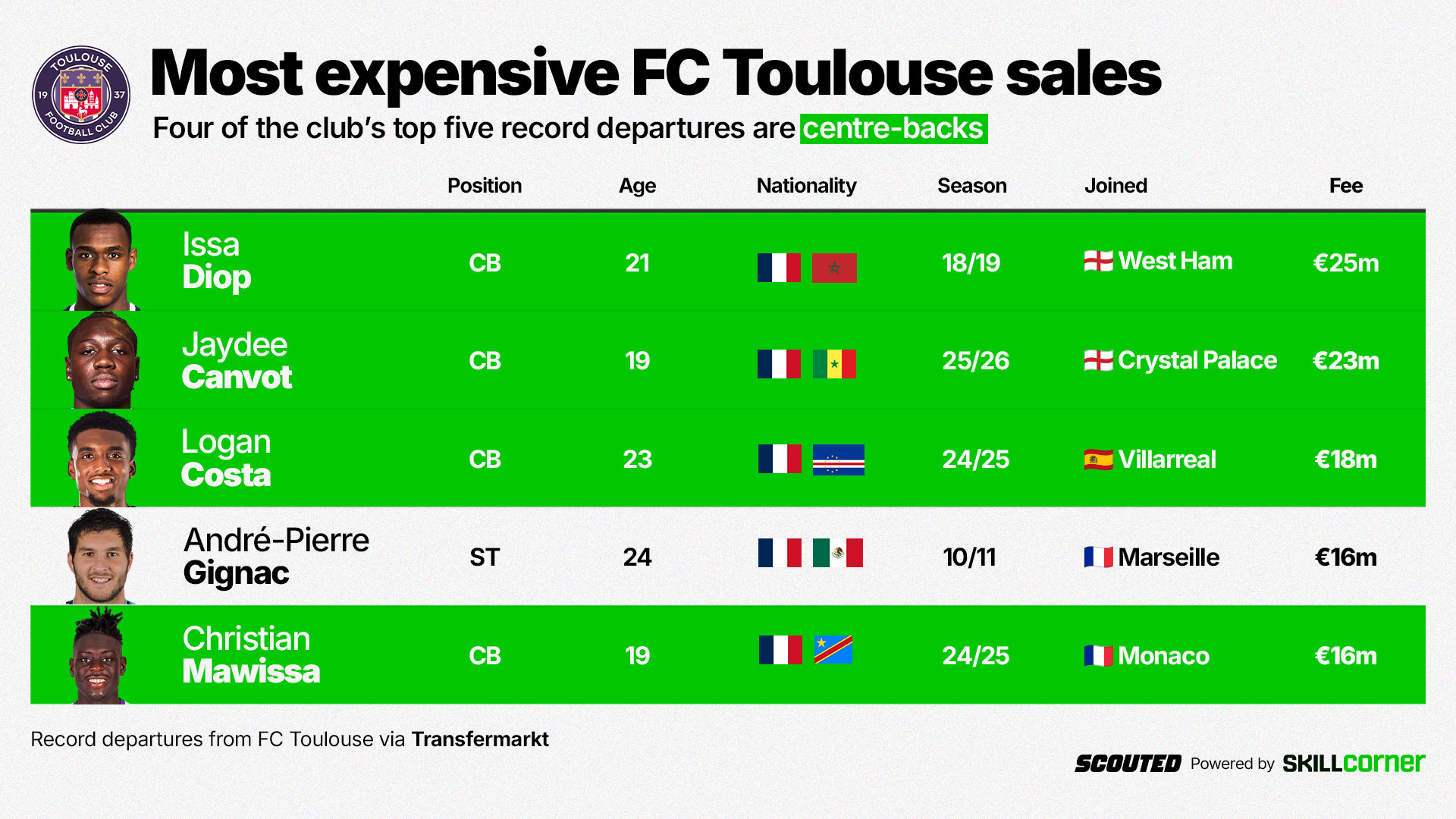
Diop and Canvot, the club’s only €20m+ sales, were sold to Premier League sides at 21 and 19 years old respectively. This is indicative of a growing trend.
England represents France’s primary market for incoming transfers both in terms of the number of signings and spending. FIFA reports 48 incoming transfers at a spend of $326m. France did not spend more than $52.8m in any other partner association.
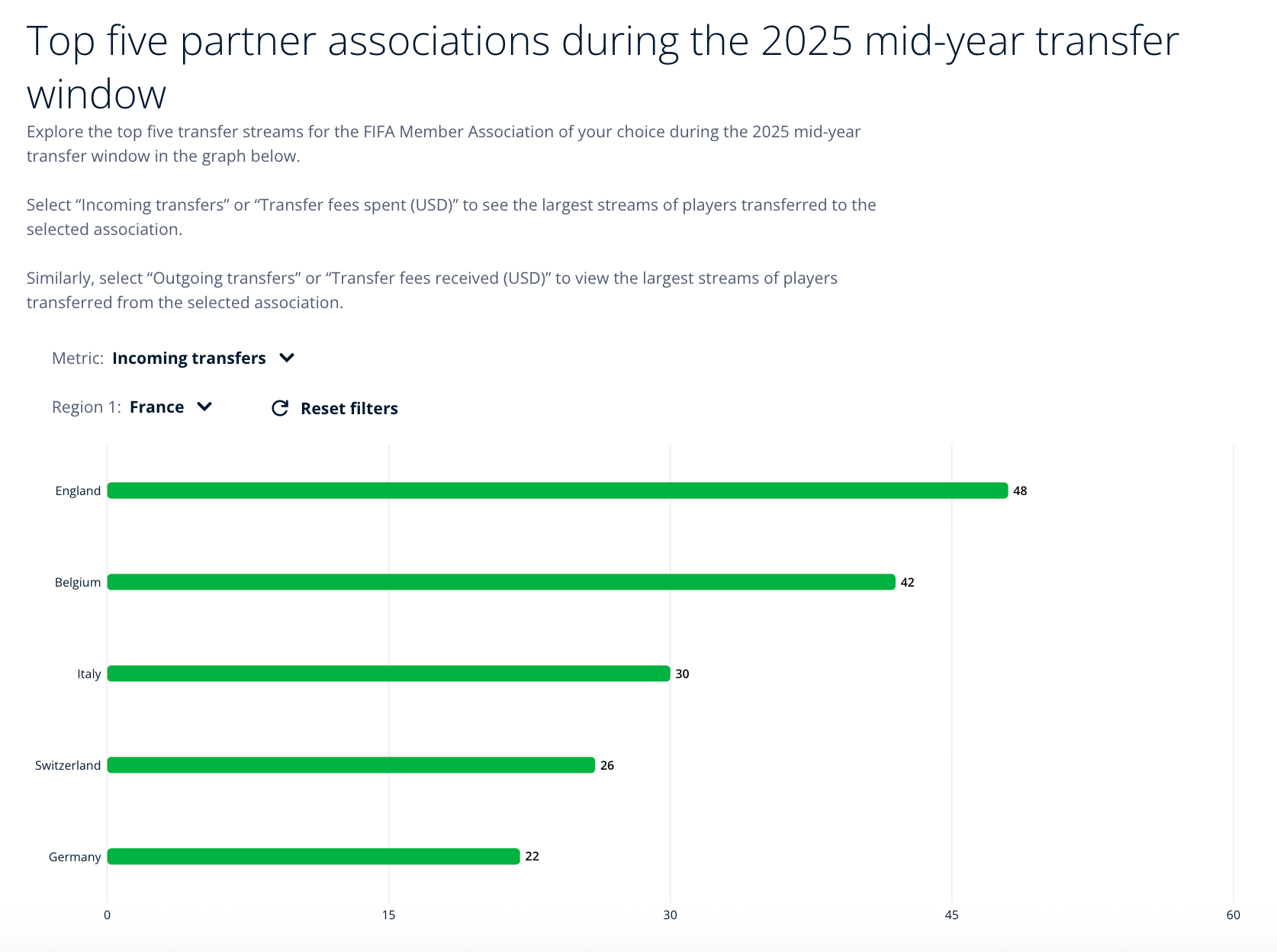
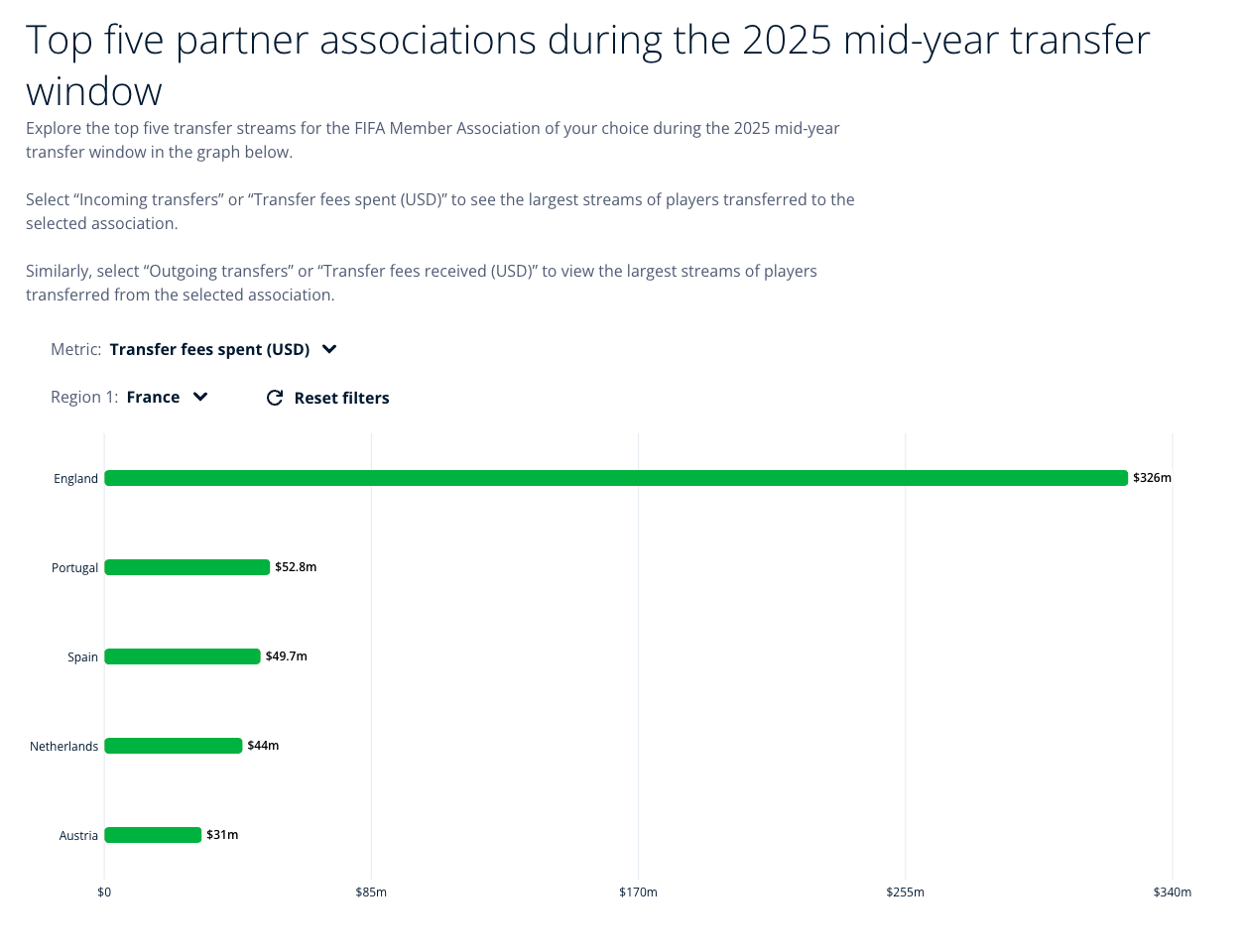
Meanwhile, England spent $565m in France - second to the $893m spent in Germany - while only Scotland and Wales contributed more incoming transfers. A trade cycle is developing.
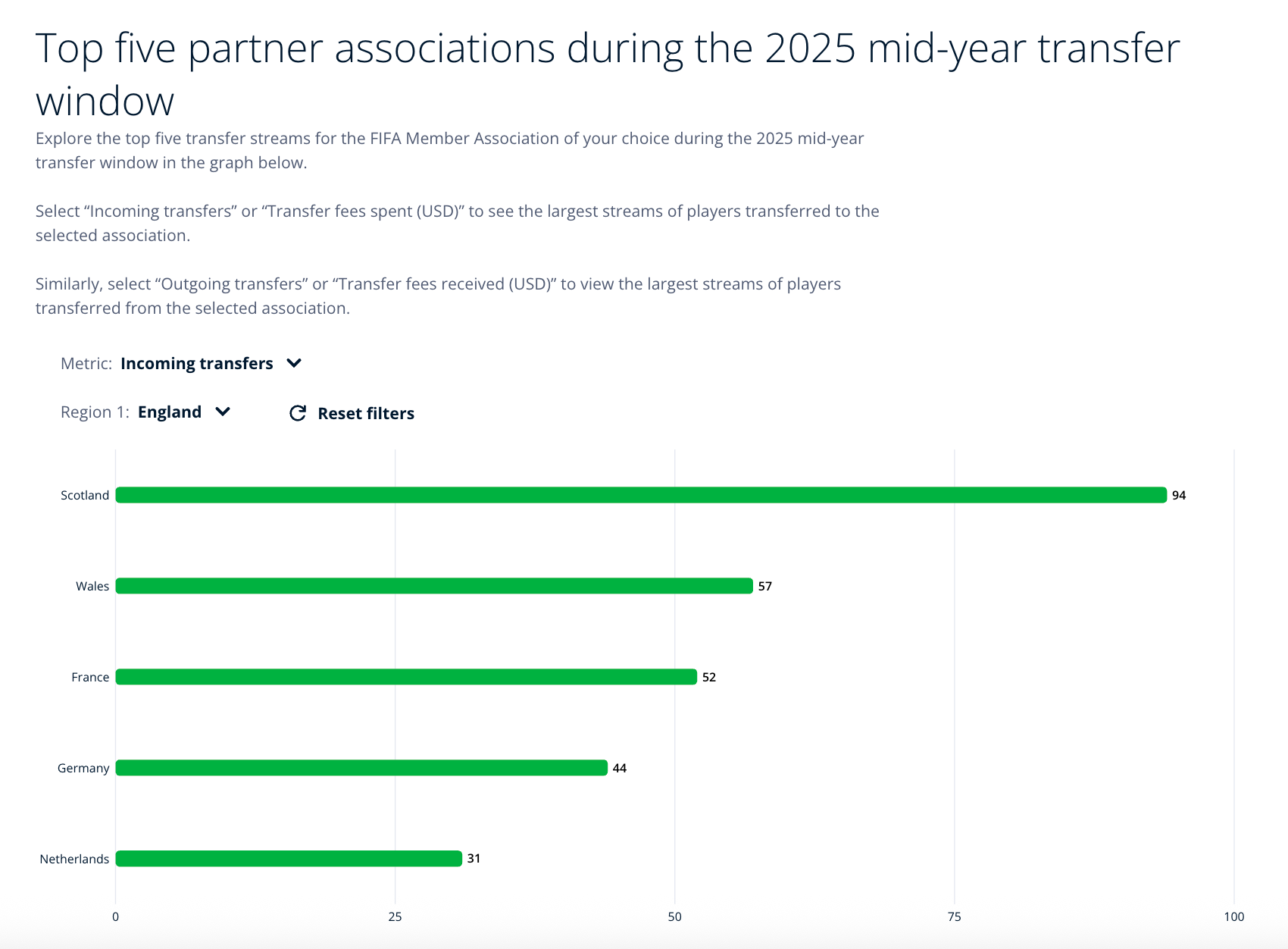
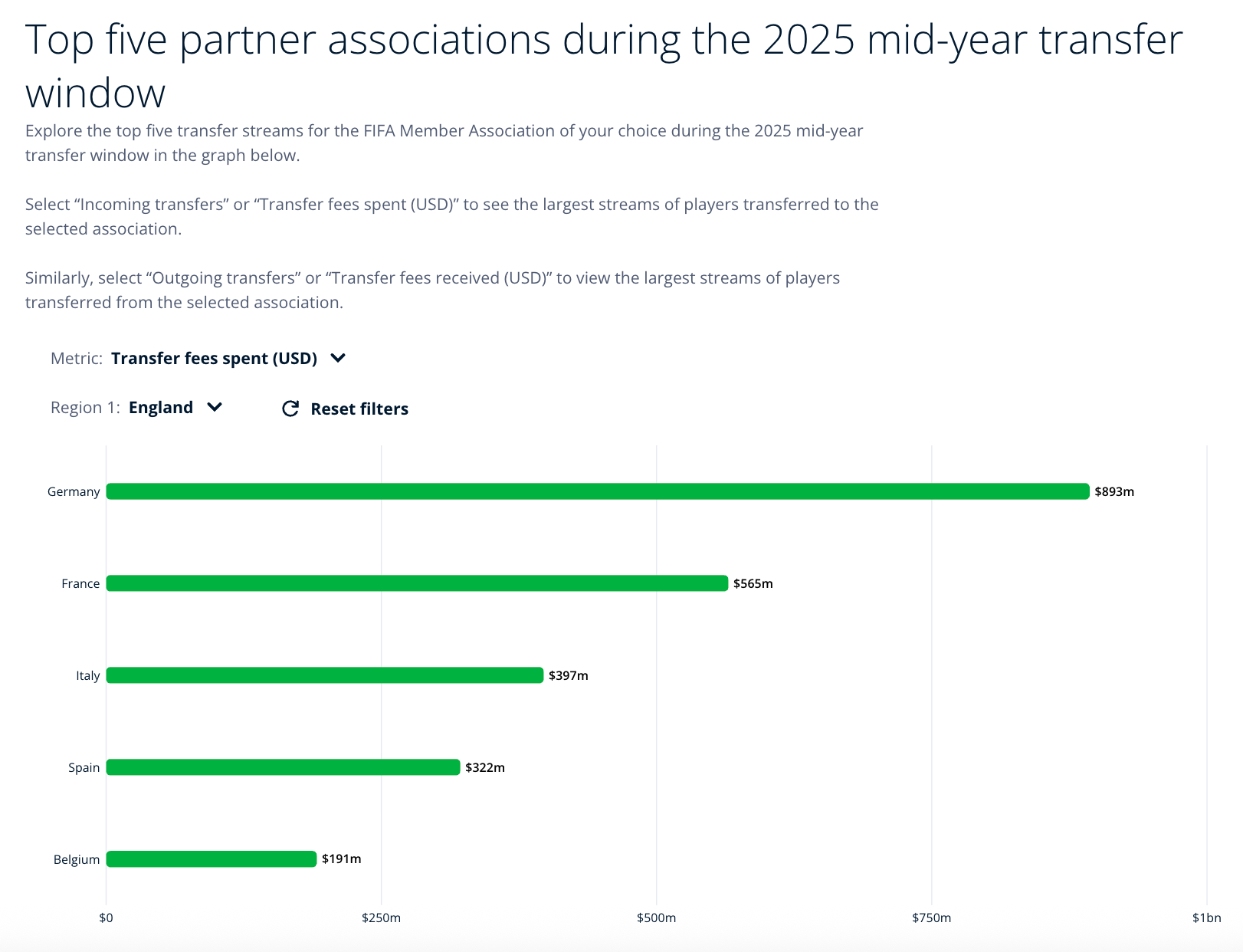
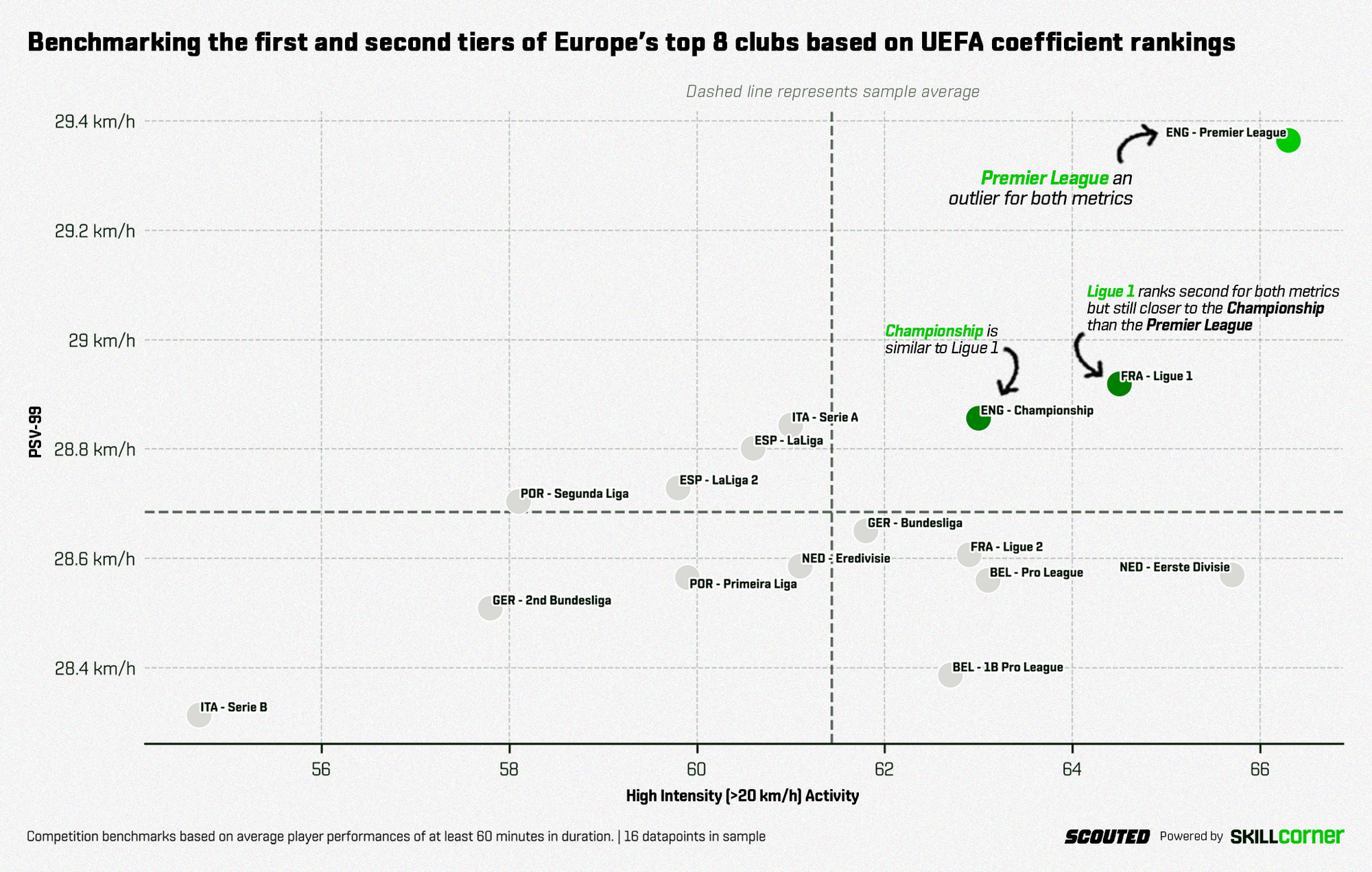
You might assume France is just buying Premier League veterans, but Ligue 1 clubs are increasingly investing in younger players in the second tier. This makes sense: when compared to the top 8 top-flight leagues in Europe and the EFL Championship, Ligue 1 is closer to England’s second tier than it is to the first. However, the reason why France is a popular market for Premier League clubs is because it’s the best match for Physical output; prospects are better-prepared for the Premier League environment.
As an example of this evolving transfer strategy, consider Marseille’s business this summer. Although they signed Nayef Aguerd and Emerson from West Ham in addition to Pierre-Emile Højbjerg and Neal Maupay from Tottenham and Everton respectively, they did also sign two under 23 players from the EFL Championship. Jonathan Rowe - who was later sold to Bologna - and CJ Egan-Riley, a centre-back at the heart of Burnley’s record-breaking defence. Toulouse did something similar when replacing Costa last summer.
The €18m sale was followed by the €4.5m acquisition of Charlie Cresswell from then-Championship side Leeds United - enough to rank in the top 10 for their record arrivals. Cresswell has since become one of the standout defenders in Ligue 1 for the same reasons he was awarded the SCOUTED Golden Ball at the U21 EURO: his ability to head a comet back into orbit and his dominant presence in both penalty areas.
Why Ligue 1’s centre-backs are so valuable
Charlie Cresswell’s success can help us understand why exactly Ligue 1 is developing so many great centre-backs - and build a model for spotting more.
Toulouse have provided the perfect platform for Cresswell’s skillset to shine. He plays in the middle of a back three and is able to flex his aerial prowess through attacking set-pieces and making clearances in an efficient block. In 2024/25, Toulouse ranked second for both Percentage of Low Blocks and Percentage of Medium Blocks leading to an opposition shot. They also spent a larger proportion of their time In Possession in the Set Play phase than any other Ligue 1 side.
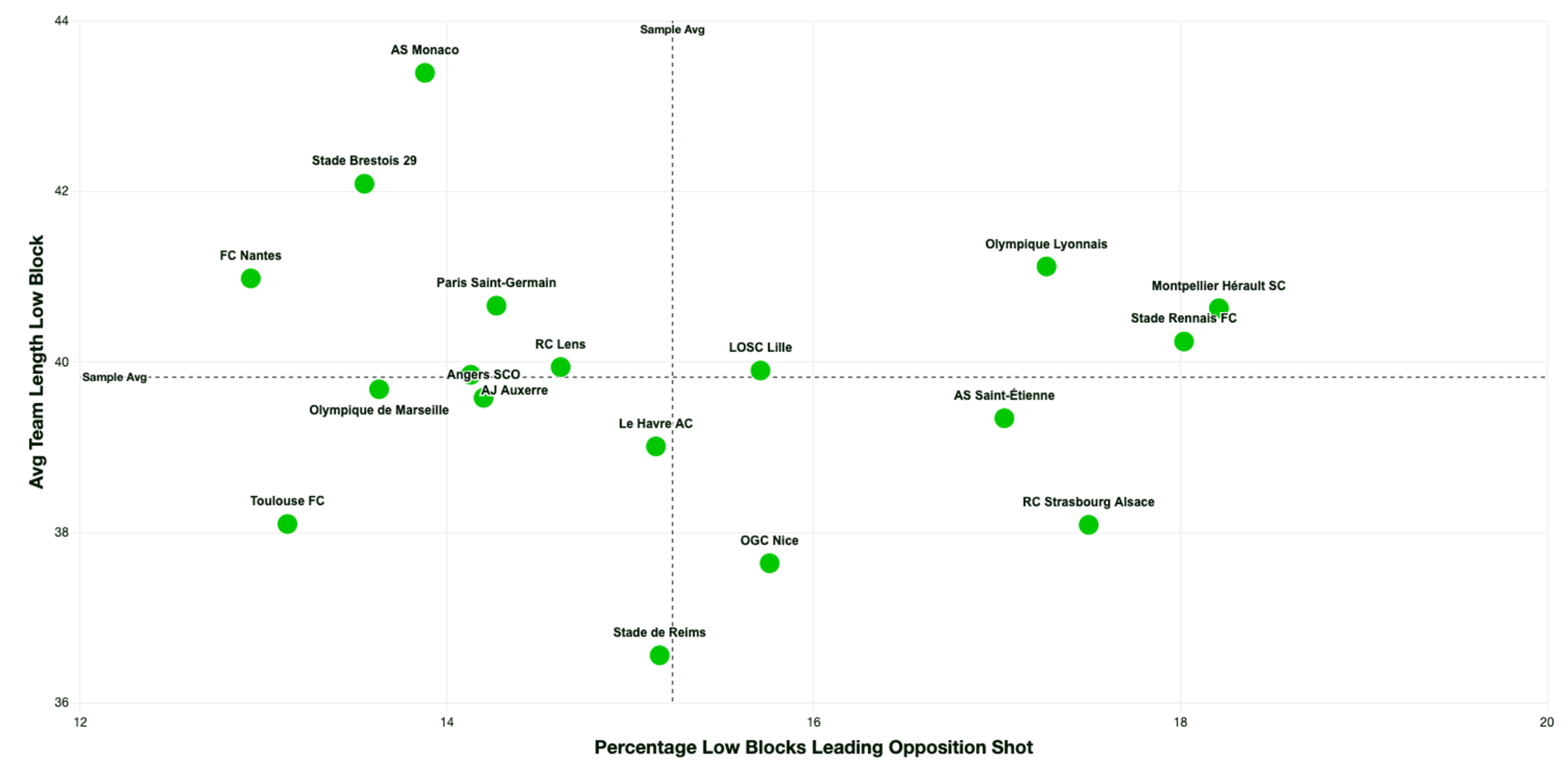
On his right, he was often flanked by Canvot. Comparing their Physical Output is an immediate and stark illustration of the contrasting characteristics of two centre-back profiles best explained by the ‘shield and spear’ concept I have discussed with data analyst Spencer Mossman.
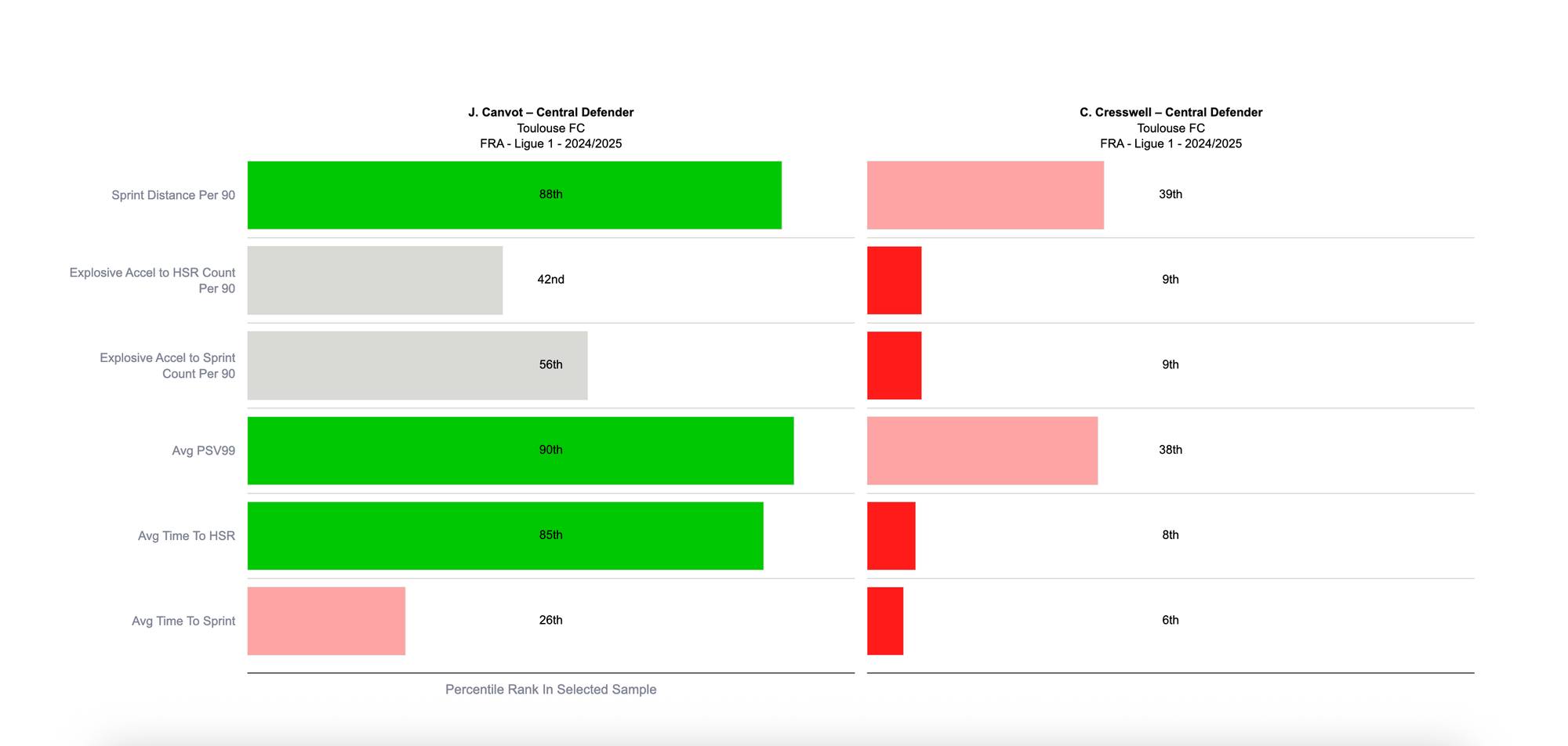
It makes sense, then, that when looking at SkillCorner’s On Ball Engagement Data, Canvot is far more active in his attempts to engage the opposition. Spear and shield.
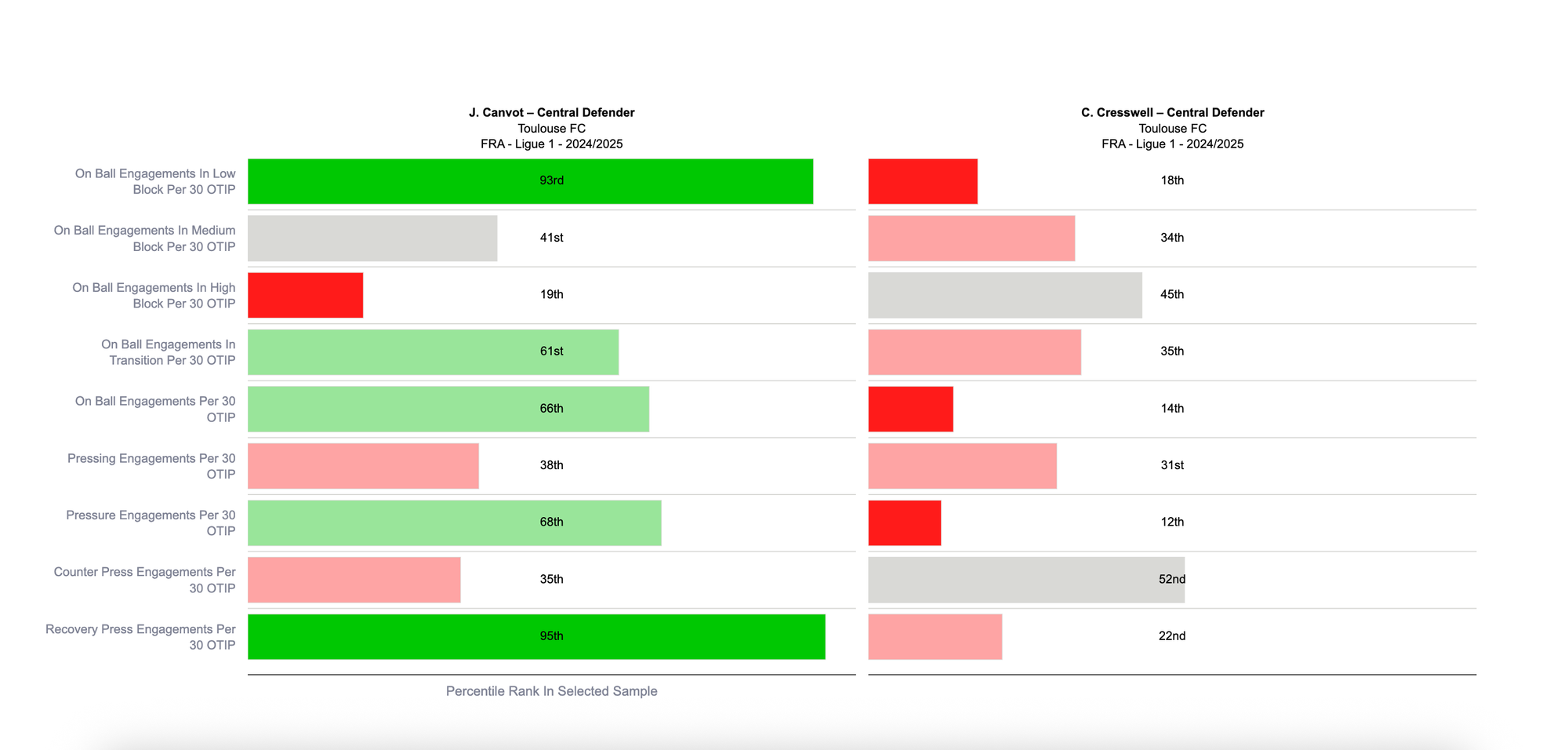
How do we translate the shield’s function into SkillCorner data? This is where the switch from effectiveness - volume, jabs, thrusts - to efficiency becomes important.
The most valuable metric when looking to discover and evaluate potential shields is Percentage of OBEs that Stop or Reduce Danger. Other efficacy metrics that help illustrate this shield-like quality are Got Goal Side Percentage, Force Backward Percentage and Indirect Disruption or Regain Percentage. While the spear looks to be front-footed and proactive in attempts to win the ball, the shield is used only when necessary.
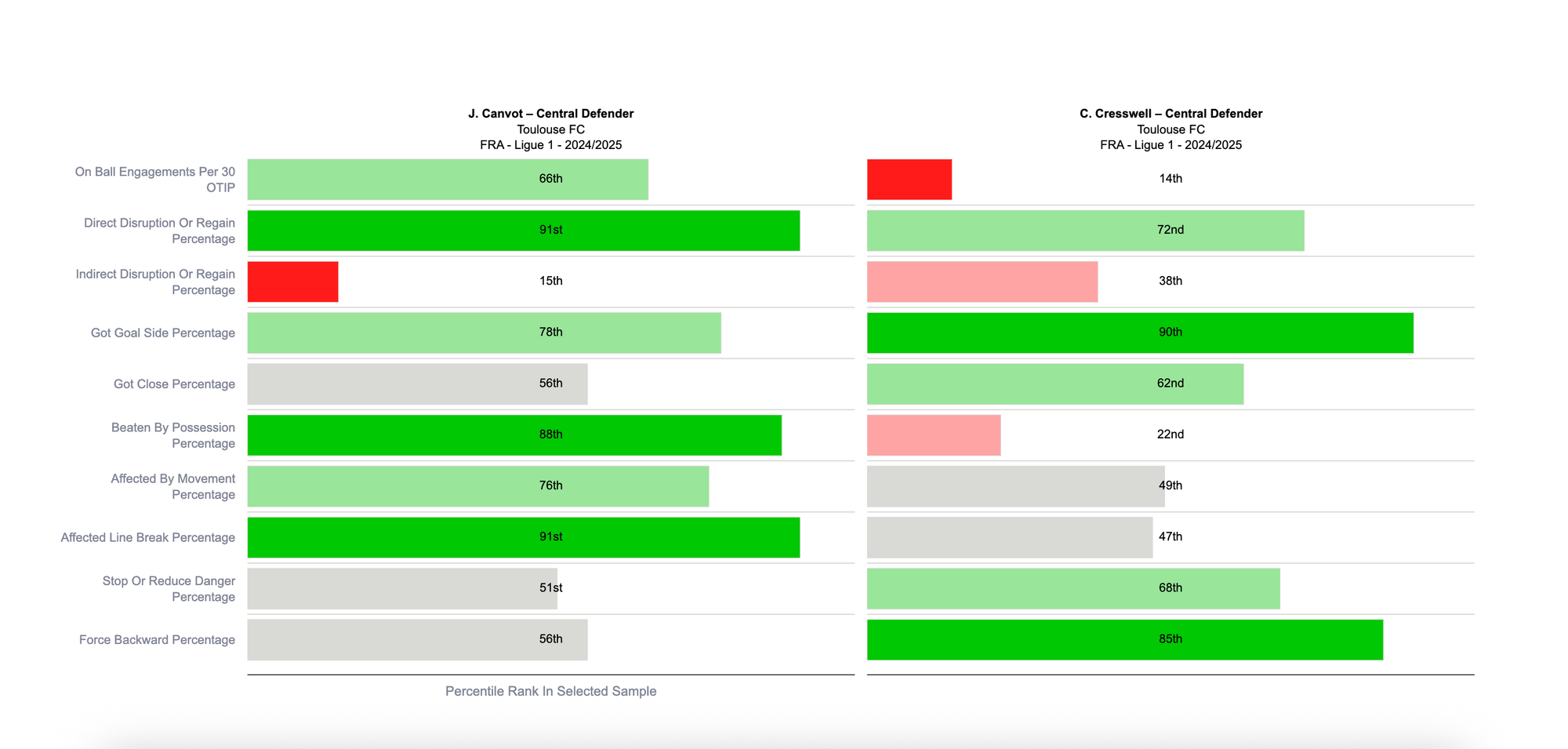
This is not an exact science. Both Canvot and Cresswell show aptitude for outcomes associated with each other’s profile. However, there is still a visible balance of strengths and weaknesses, as well as the obvious disparity in volume. This is evident when looking at another team-specific case study.
Why the Red Bull group loves French centre-backs
The depth and quality of France’s centre-back talent pool is illustrated by the Red Bull Group’s consistent investment in it. In the current squads, RB Leipzig signed 20-year-old Castello Lukeba for €30m from Lyon and spent €15m on an 18-year-old El Chadaille Bitshiabu from PSG. Red Bull Salzburg, meanwhile, signed Joane Gadou at 17 years old before he had even made a senior appearance for the Parisians. Just as they did with Dayot Upamecano and Ibrahima Konaté, they will expect to sell one, if not all three, to a club highlighted above.
Dialling in on the Physical attributes that best-equip a centre-back for the spear-like role, four of those five Red Bull alumni profile as effective exponents of that profile when ranked within the context of their own divisions in 2024/25.
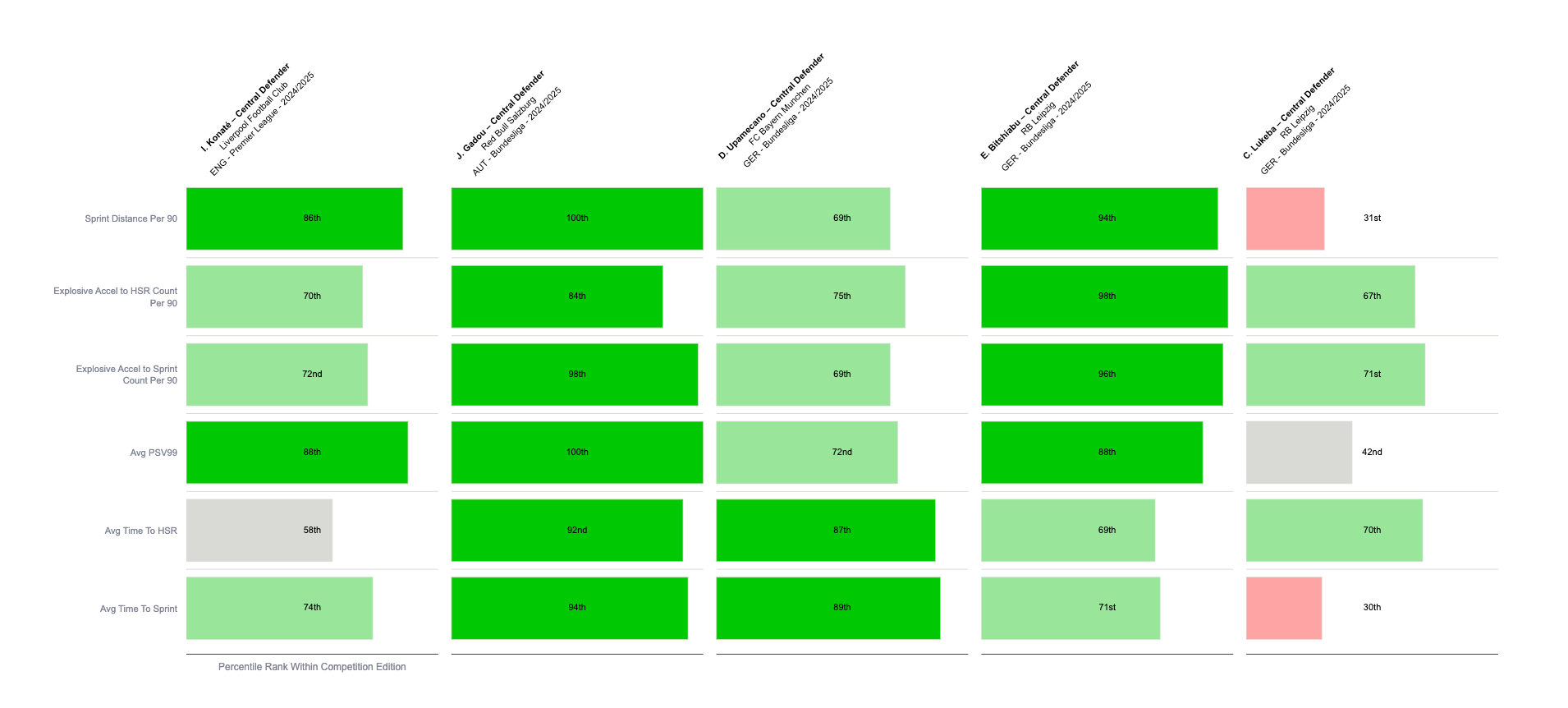
There are other tell-tale signs of a player being asked to fulfil this function. But remember, just because a player does or does not do something, it does not mean they can or cannot do it. This is especially important for centre-backs.
In the SkillCorner WebAppLab, On Ball Engagements (OBE) in Transition and Recovery Engagements are core metrics to help spot this profile in action. Combining them with Direct Disruption and Getting Close helps to spotlight and evaluate this profile.
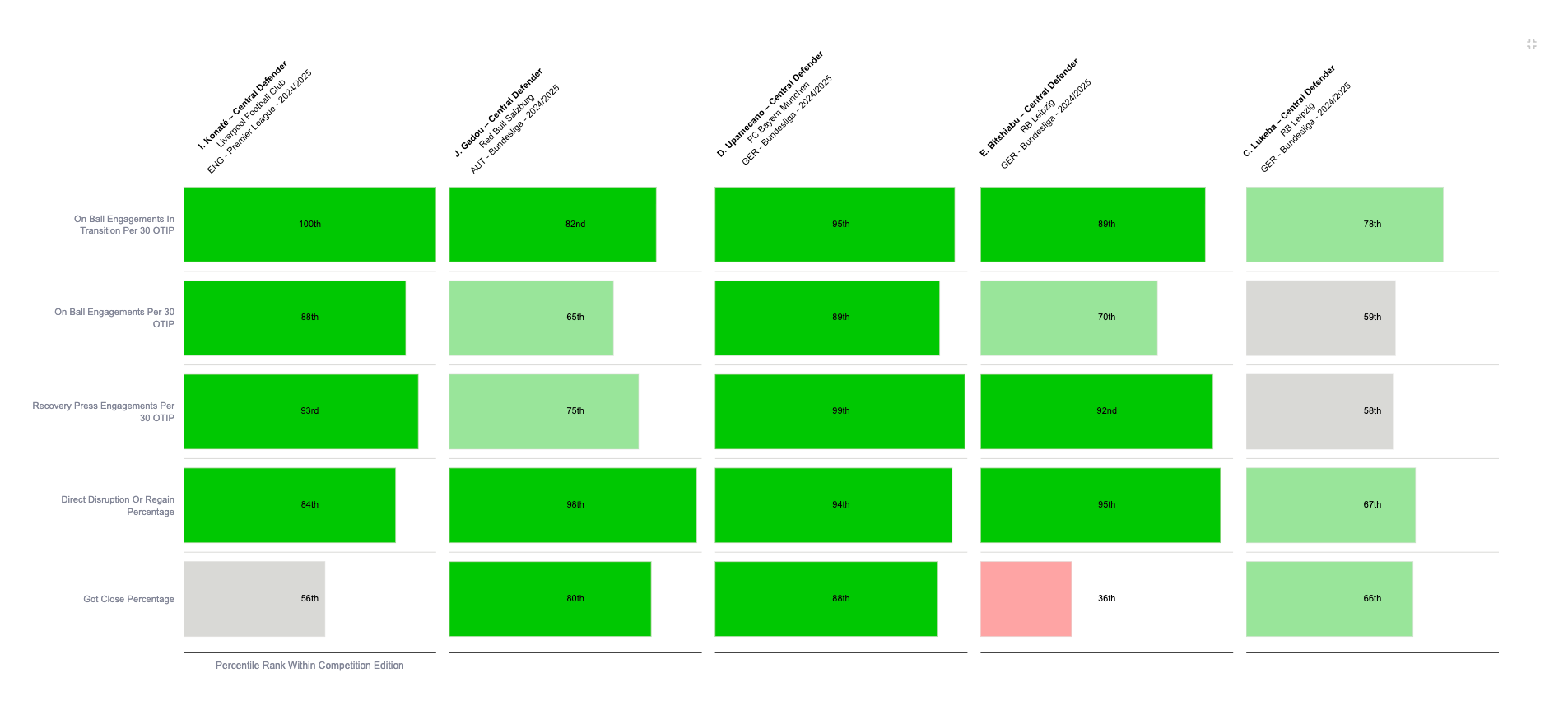
Again, Lukeba does not stand out as much as the other four. And unlike our Toulouse duo, RB Leipzig teammates Lukeba and Bitshiabu rarely play as centre-back partners so this is not indicative of a shield-spear relationship on the pitch. Instead, it could illustrate how Bitshiabu’s athleticism gives him the ability to perform more spear-like actions. A direct comparison of these two further highlights the contrasting strengths and indicators for the two profiles.
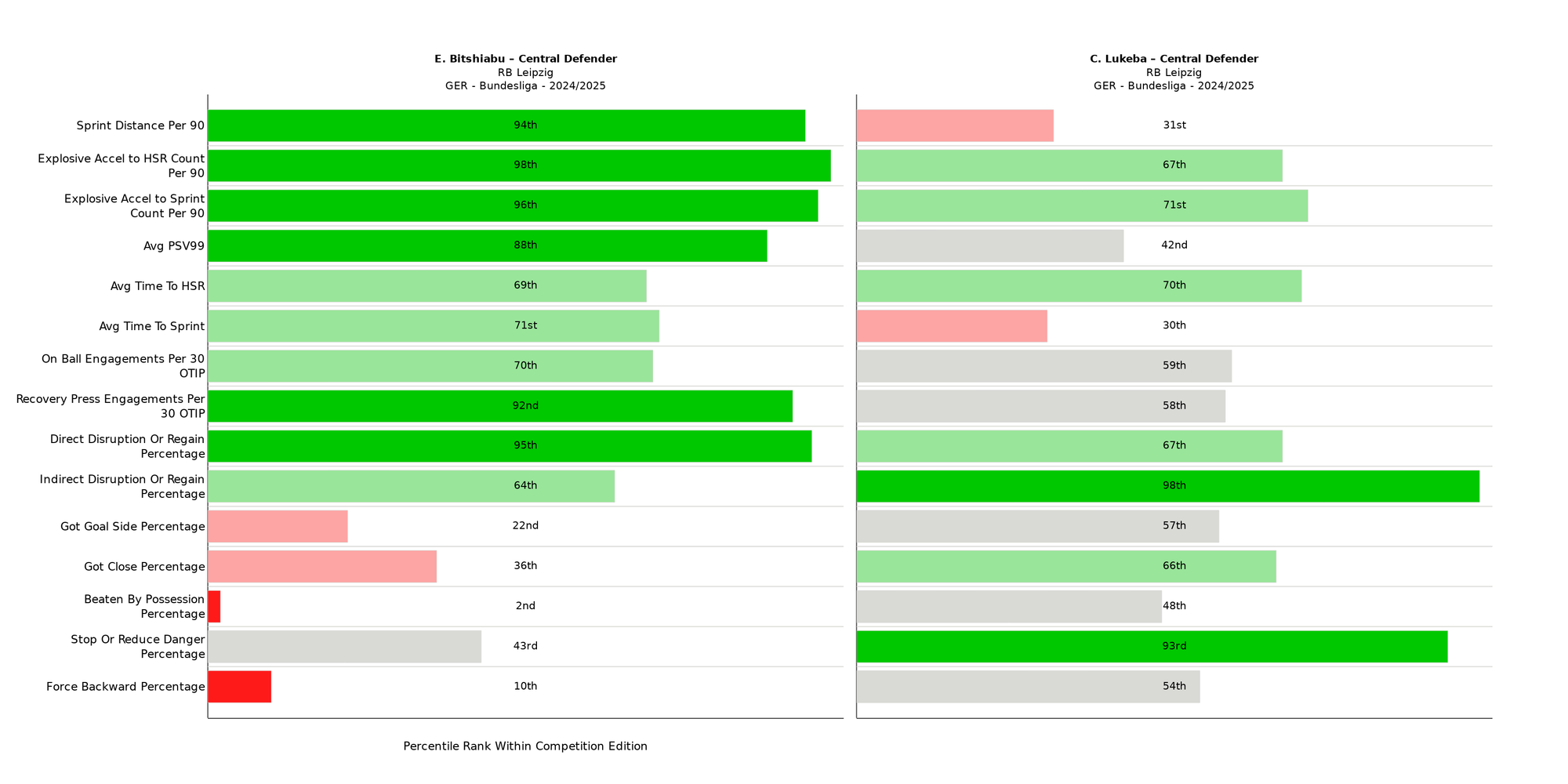
Lukeba is hyper-efficient at Stopping or Reducing Danger when necessary, as well as indirectly Disrupting and Regaining. By contrast, Bitshiabu is a super-effective recovery defender due to his elite speed and efficiency at directly Disrupting and Regaining.
The reason France is a world-leading exporter of centre-backs is that they develop players that can fulfill either role - shields and spears. As the game becomes more direct and the importance of attacking and defending set-pieces continues to increase, it’s optimal to have at least one of each. But one is more valuable - in terms of transfer fees, not on-pitch duties - than the other.
The ability to recover in transition, spot danger and explode into action allows teams to push up high with the knowledge a defender capable of dealing with counter-attacks and sweeping up danger is policing the space left behind them. Big teams want spears.
As you might expect, spears are an important profile for hyper-dominant teams like Manchester City, Liverpool, Arsenal, PSG and Bayern. The teams that spend a larger proportion of time in the final third, leaving fields of open grass behind them - the teams that have the most money.
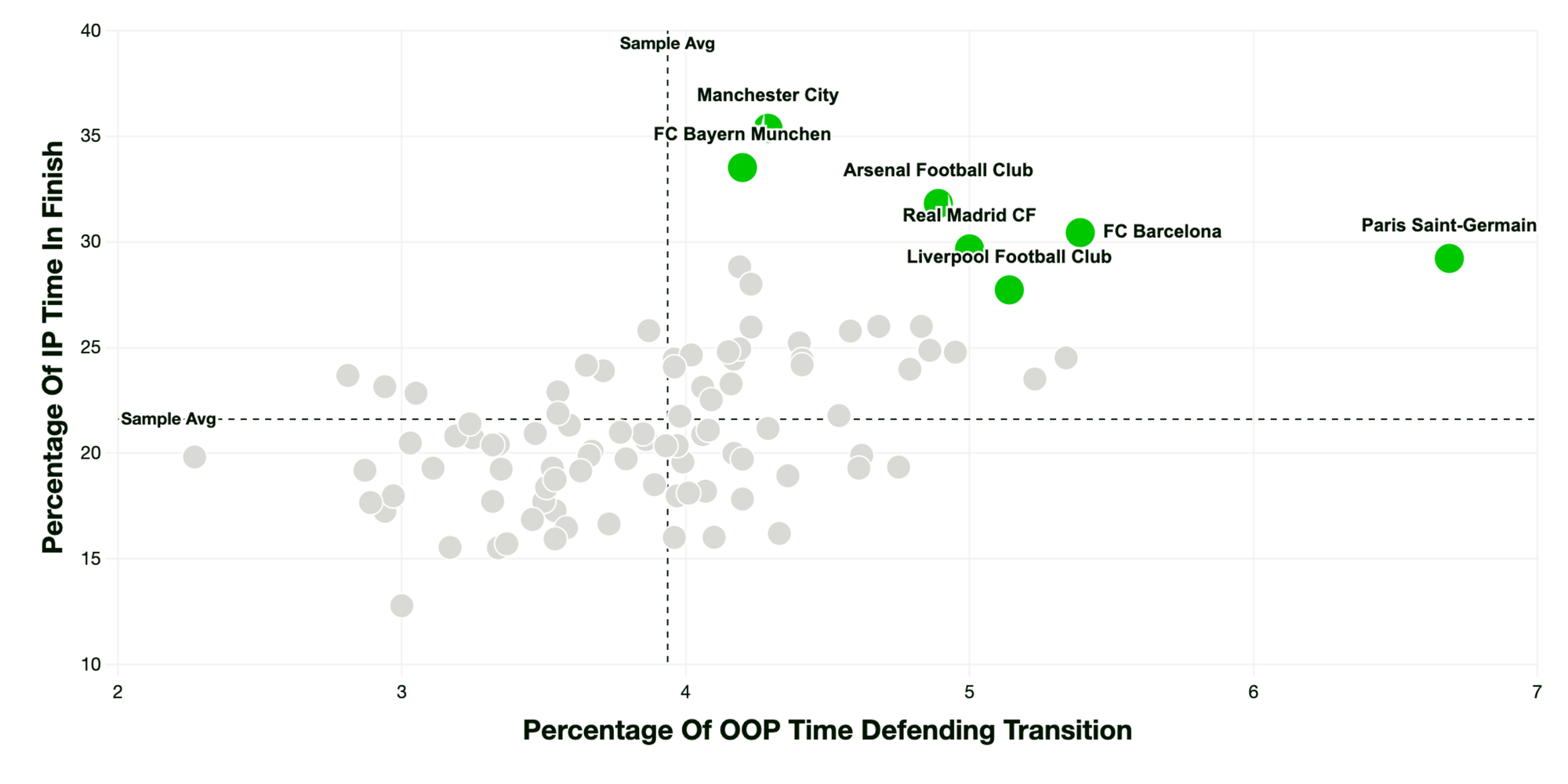
Ironically, although the most extreme outlier is based in the hottest of hotbeds, PSG do not have a French defender in their backline.
The next premium centre-back export
The next French centre-back that these dominant, rich clubs will be fighting over is Jérémy Jacquet. The Stade Rennais academy graduate returned to his boyhood club at the start of the year and emerged as one of the most effective spears in Europe. In basic event data terms, he averaged more interceptions per 90 than any other under-23 player across the big five leagues.
That front-footed approach is also captured by his SkillCorner data profile. Like Canvot, he was most often used on the right side of a back three last season and excelled.
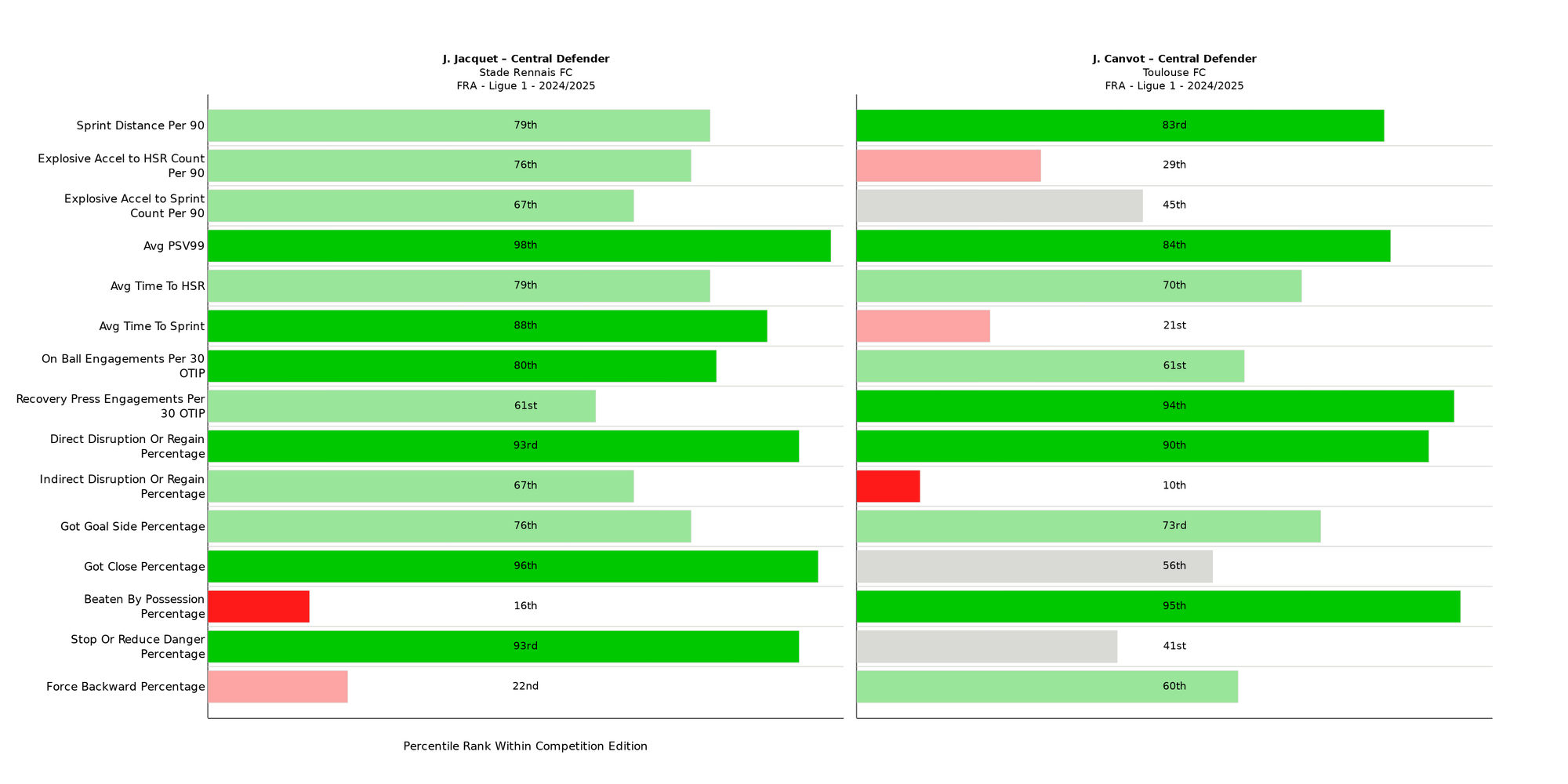
Jacquet’s top 10% ranking for PSV-99, Direct Disruption Percentage and Got Close Percentage indicates his effectiveness and efficiency in a proactive or recovery role. Unlike Canvot, however, he also displayed shield-like qualities, with a 93rd percentile ranking for Stopping of Reducing Danger.
Those qualities have seen him deployed in the centre of the Rennes’ back three more often this season. As a result, he profiles more similarly to the shields we have highlighted throughout.
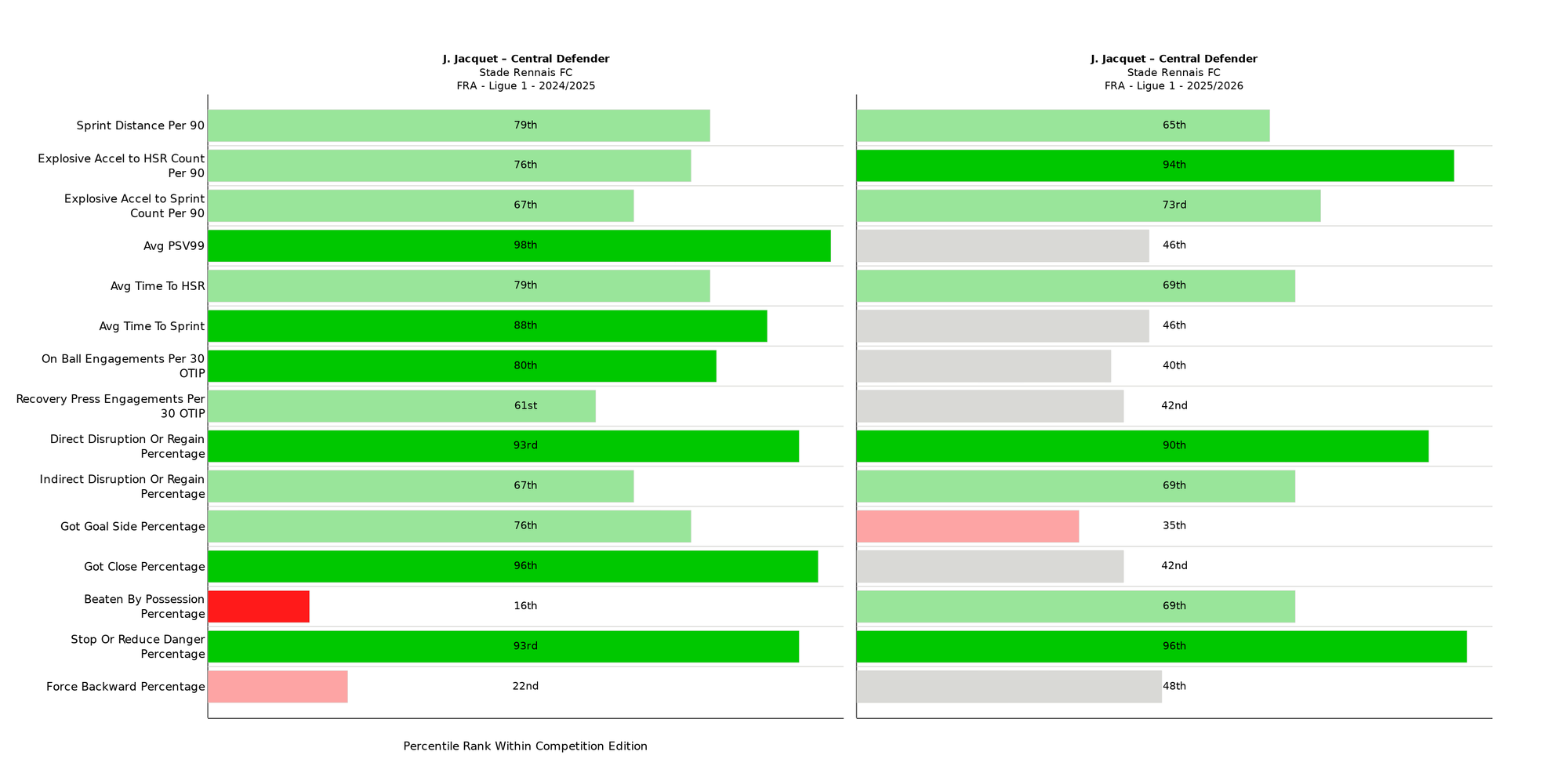
Recording fewer OBEs has led to an increased efficiency at Stopping or Reducing Danger. While the fewer Recovery OBEs could explain the drop in PSV-99. The longer-distance sprints towards his own goal have switched to sharp bursts across shorter distances - as evidenced by the jump in Explosive Accelerations to HSR.
Jacquet is a premium export among premium exports because of his ability to dual-class. He will be attractive to those rich clubs highlighted because of his ability to defend large spaces. But he would equally thrive at a team in the bottom left of the previous graph due to his ability to stand tall and repel threats.
Finding shields and spears in the EFL Championship
So, when the inevitable happens and Rennes make tens-of-millions from another academy graduate or Toulouse dip back into the market for a longer-term Canvot replacement than Djibirl Sidibé, where should they go looking? In the same place Toulouse found Charlie Cresswell, the place at the centre of the blossoming trade relationship: England’s second tier. We can apply our learnings about shields and spears directly.
For the wide centre-back role that both clubs often use, Charlie Hughes profiles well. Like Toulouse, Hull City have a great track record with centre-backs. Jacob Greaves became their record sale when he joined Ipswich Town for £18.3m at the start of last season. Once upon a time that record belonged to Harry Maguire.
With the likely fee they will receive for Jacquet, Rennes should be able to afford a bid for Hughes. Last season, he ranked in the top 10% of Championship centre-backs for Explosive Accelerations to Sprint, Direct Disruption or Regain Percentage and Got Close Percentage. Plotting the first two metrics together plonks Hughes in the centre of a trio of Rennes centre-backs - Jacquet, Alidu Seidu and Mikayil Faye - and one of Toulouse record sales we saw earlier, Christian Mawissa.
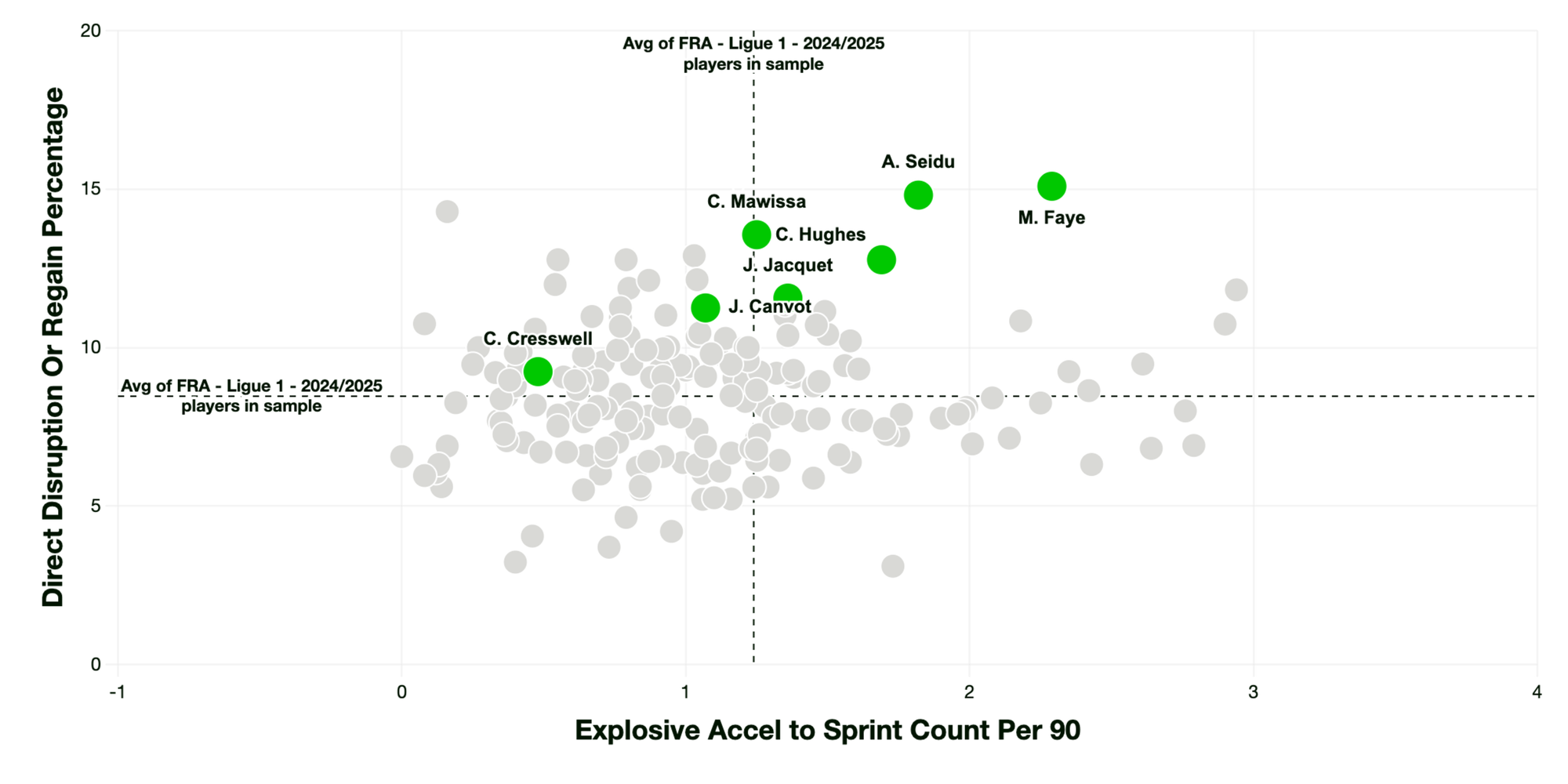
Hughes is equipped with the key Physical attributes to fulfill a similar role on the right of the Rennes defence and is aggressive in his approach to winning duels both on the ground and in the air. Signing him and platforming these abilities could make a similar level of profit to Jacquet when selling back to England due to the homegrown value, even if the talent ceiling is lower. This is the key reason for investing in Championship talent.
As for the shield-version of Jacquet, or another Cresswell, or even a replacement for 2008-born Tylel Tati at Nantes, Callum Doyle stands out. He ranks first for Stop or Reduce Danger Percentage and Force Backward Percentage in the Championship this season, but has played fewer minutes.
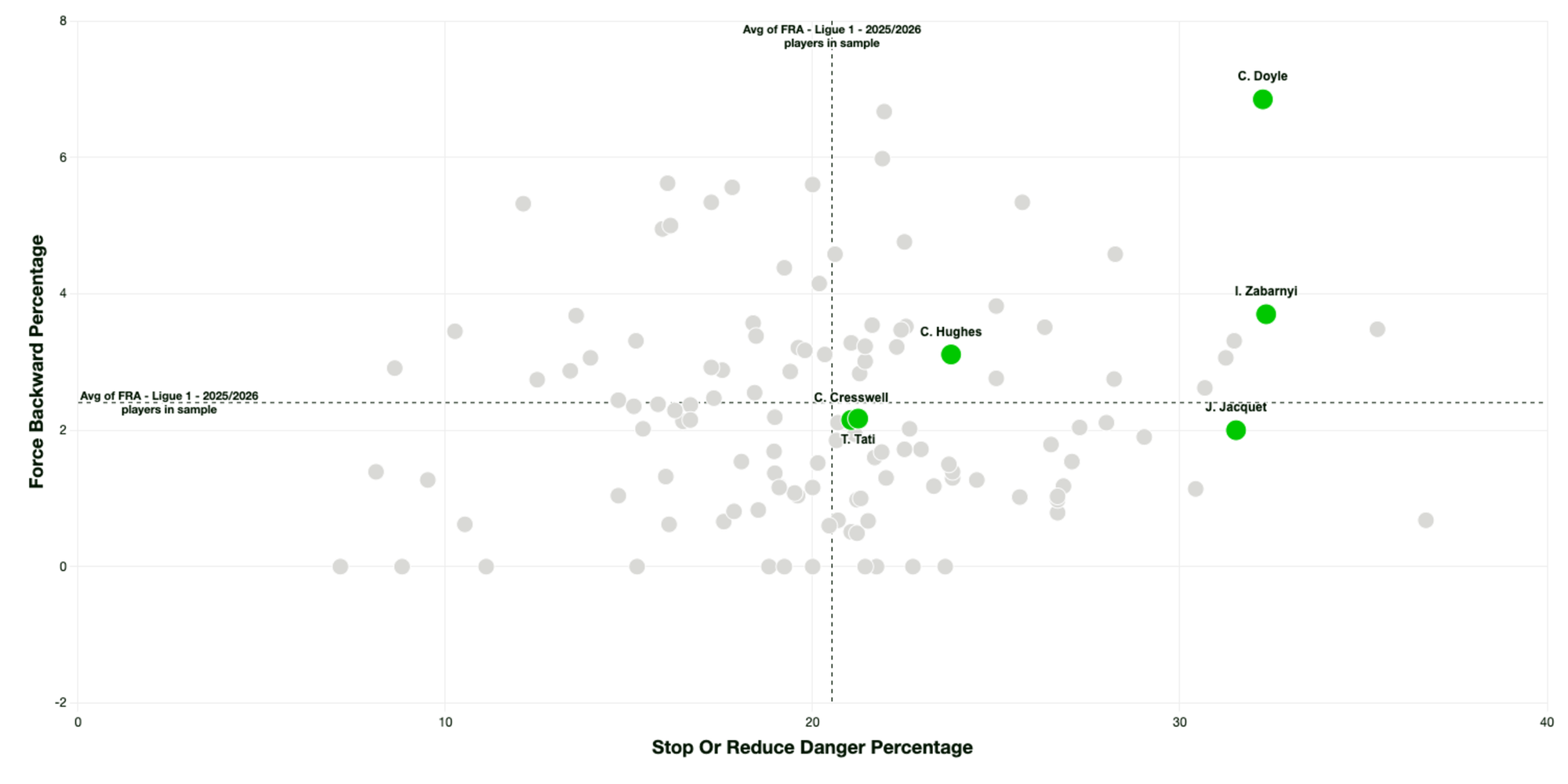
Manchester City reportedly have a buy-back clause for him, but a move to a Ligue 1 side could boost his value even more - so they might be open to negotiating a new sell-on clause.
French clubs are selling more players than ever before at an even earlier stage in their development. The opportunity to reinvest the profit generated from these teenage sensations into robust centre-back prospects learning their trade in the Championship is one they should capitalise on.
Embracing their position as a crèche for development could not only lead to continued profit for their homegrown centre-backs but also for the EFL talent they help nurture, making them the number one destination for multiple reasons when the richest English clubs go shopping for a spear or a shield.
This newsletter was produced under a commercial collaboration with SkillCorner, SCOUTED’s official data partners. Their tracking and performance data is used by more than 150 of the world’s biggest clubs, leagues and confederations.