
Cavan Sullivan, American mythmaker
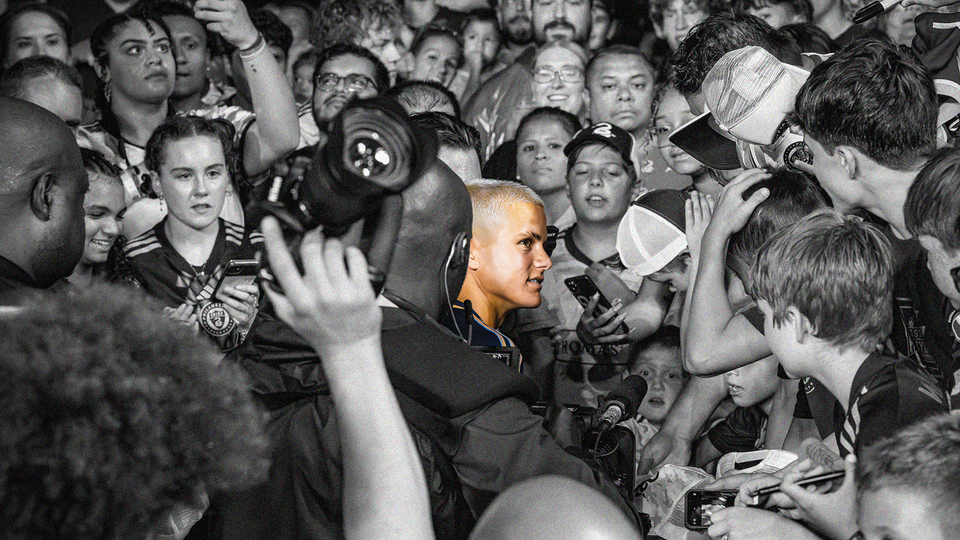
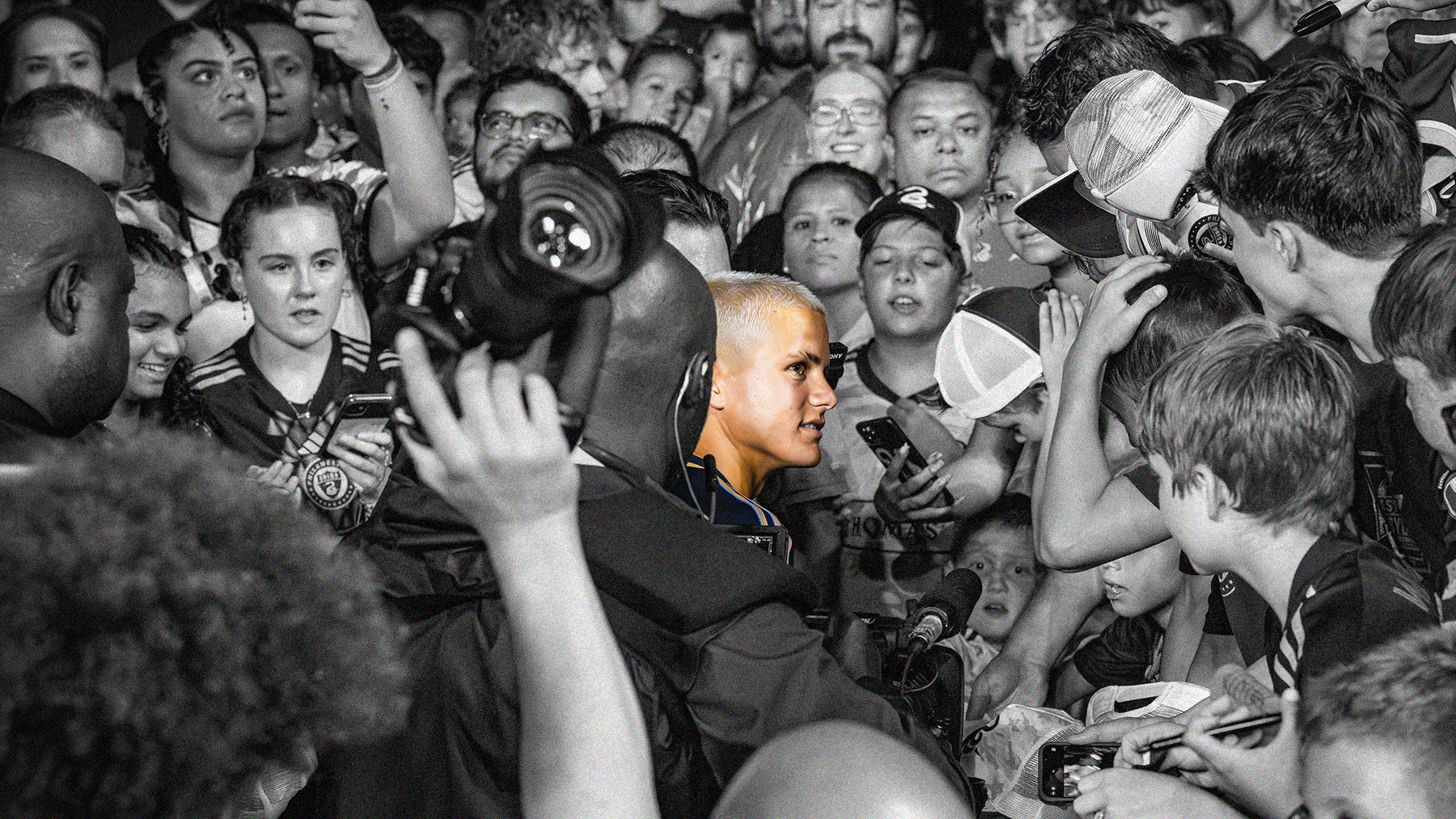
The 18,554 people at Subaru Park in Chester, P.A. were already on their feet. His substitution was cheered as if the Philadelphia Union had scored and, as he jogged onto the pitch to make his MLS debut, the cocky, boisterous smile he’d been sporting just twenty minutes prior, as the stadium cameras followed his warm-ups, gave way to something else: the face a 14-year-old makes when he’s nervous and trying to hide it.
The first thing you must know about Cavan Sullivan is that although he plays for the Union, he no longer belongs entirely to them. A stipulation in his first professional contract, signed the spring before his debut, guaranteed a move to Manchester City upon his 18th birthday, which at the time was still four years away. The second thing you must know is that he is the youngest of four children, the son of two football players, and the second Sullivan to play for the Philadelphia Union, after his brother Quinn. He has followed strict family regimens since middle school: 4:00am alarms, extra training with his dad, and an emphasis on education. Sullivan joined YSC Academy, a soccer-focused private school that works closely with the Philadelphia Union, in 2020, jumping from 4th to 7th grade in the process. Skipping two grades isn’t usual, especially for a footballer, but according to a 2023 interview with the then-14-year-old, “it really wasn’t that difficult.” The third thing you should know about Cavan is that he aspires to play like Lionel Messi.
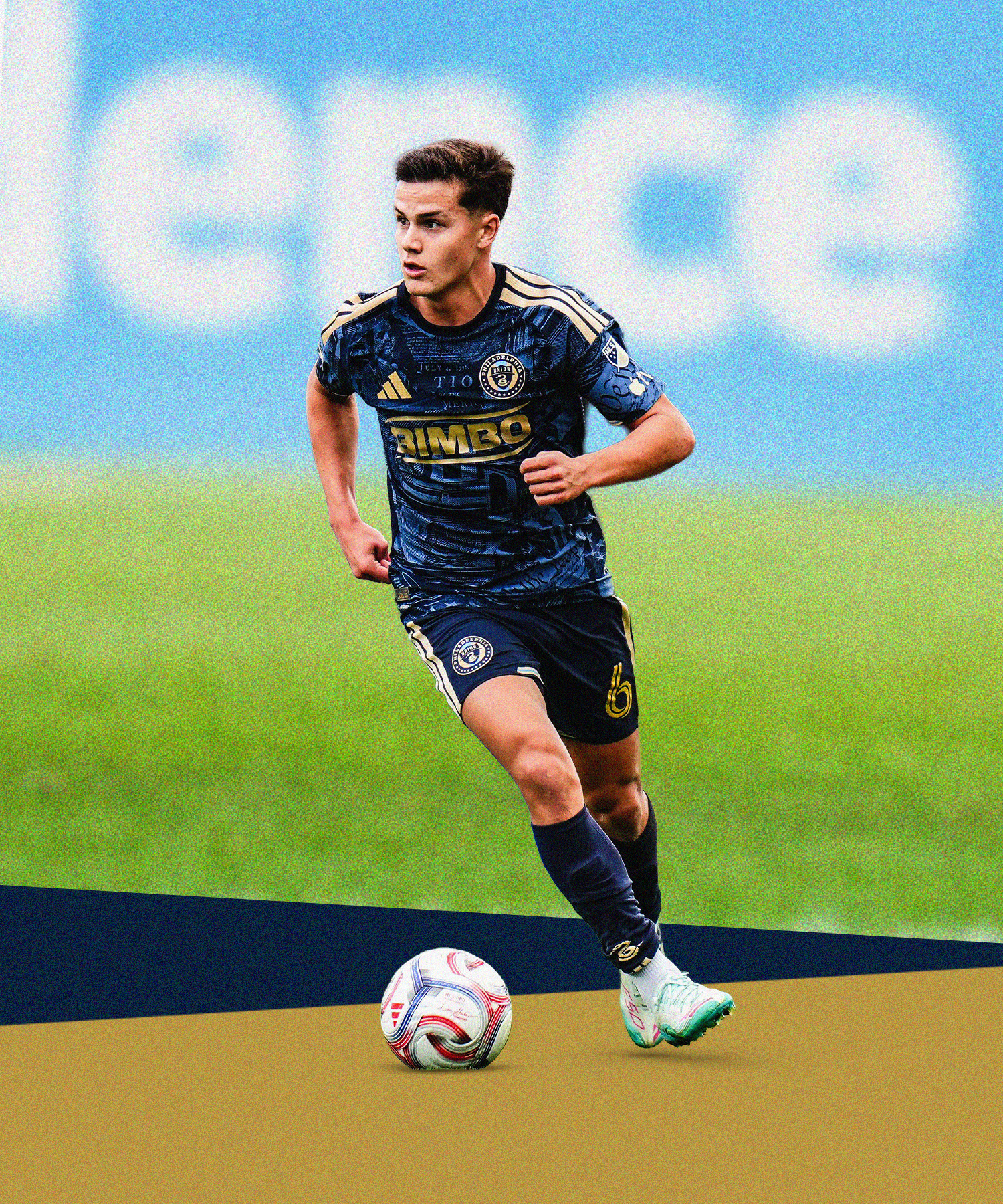
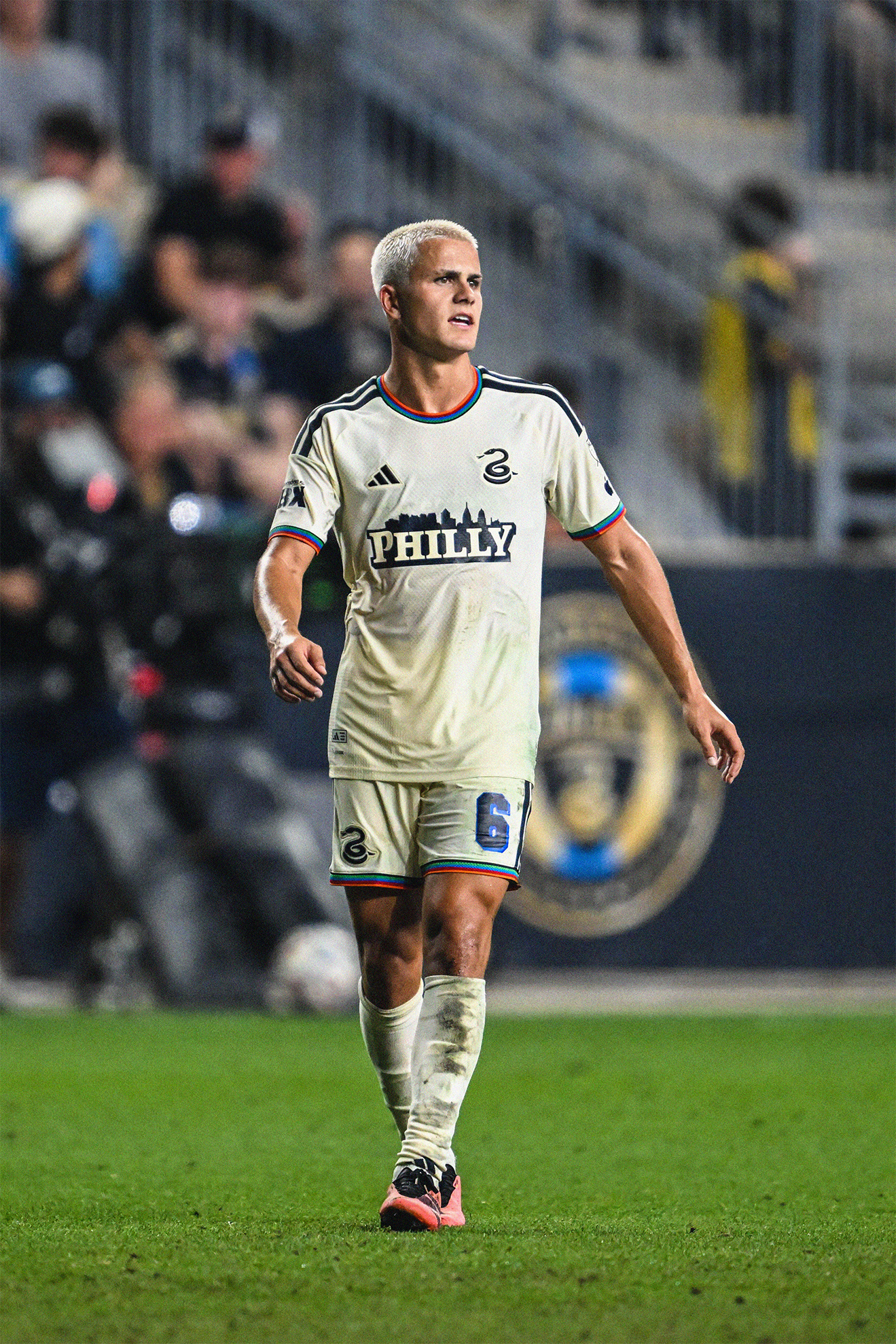
Now 17, Sullivan is brash, competitive, and incredibly confident. He has every right to be. After being controversially sidelined by a now-fired coach, Sullivan is finally playing first-team football consistently; he’s accumulated over 1,600 minutes this season, with most of those coming in his last ten games, in which he’s logged seven goals and five assists. In that stretch, he’s become one of the best players in the league. Every week his legend grows. He used one of LeBron James’ celebrations after scoring. Against Messi’s Inter Miami, Sullivan received a red card after defending his brother in a fight, and became the youngest player to be dismissed in league history. The red card was later rescinded. Then, when the U.S. Men’s National Team roster was released for the September international break, Sullivan’s name was on the list for the first time, and immediately eclipsed those of Christian Pulisic, Weston McKennie and others of the ‘golden generation’ in strength of discourse. His family has been profiled in The Athletic, he’s appeared in national newspapers, garnered comparisons to Michael Olise, and even been the center of Real Madrid and Barcelona transfer rumours, despite the Manchester City agreement. No one knows what to do with him, how to define his role with the Union, or how to talk about him. Even the data analysts like me are stumped — Sullivan’s closest statistical comparison is Lamine Yamal.
All this confusion becomes understandable in the light of American soccer’s history. There are things we can say about Cavan Sullivan that are true. That he is better than anyone to emerge from the nation in the past 20 years, for example; that he is one of the best prospects the United States has ever produced. He’s already the face of the national team. Every step of his journey has felt unbelievably monumental and entirely inevitable. He is American soccer’s prince, destined to fulfil a prophecy he wasn’t alive to see written. He has a fuzzy beach-blonde buzz cut. He’s widely considered a saviour, a demigod, a superstar. He’s a teenager with three eyebrow slits who listens to The Smiths.
All of these truths are difficult to speak, as if we might ruin them if we do. This is the final thing you must know about Cavan Sullivan: his story is not his own. It belongs to America, to the millions who have watched their domestic football crash, burn, and rise from the ashes, and the stories they have told to construct a national identity around a sport that has always felt imported. Even this early, the two versions of Sullivan – the boy and the icon – face reconciliation by a nation who have written similar prophecies about staggeringly young sportspeople before and watched them do untold damage, and who have always longed for a homegrown superstar to call their own. Now he’s here, and to understand why America is having such a hard time deciding how to talk about him, you must understand all they have spoken about before.
PART I
The year is 2004. MLS is in its ninth season, and the SuperDraft is about to commence. Two months ago, the Dallas Burn were forced into trading the first overall pick to D.C. United; tonight is simply a formality. The moment comes, and MLS Commissioner Don Garber climbs the stage to pose with the chosen player and his newly official D.C. kit. History is made. The player is a 14-year-old called Freddy Adu, and his time has come.
Adu moved to the United States when he was eight. He joined a friend’s team on a whim, and instantly became the urban legend of D.C.’s youth soccer circuits. Coaches heard whispers of free kicks and hat-tricks, and his mysterious origin only helped grow his mystique. When he was ten, Adu traveled with the U.S. Olympic Development Program to a U-14 tournament in Italy, and played so well that Inter Milan made his mother a six-figure contract offer. They rejected it, and soon Adu was training at the premier U.S. soccer academy — IMG — in Florida. When he was 12, he was running circles around professional players; when he was 13, Sir Alex Ferguson was asking reporters for his phone number. When Nike signed Adu to a $1 million contract in 2003, Phil Knight claimed he could be bigger than LeBron James, Michael Jordan, or Tiger Woods.
Then came the 2003 U17 FIFA World Cup, where Adu scored four goals — more than David Silva and one less than Cesc Fàbregas — and soon after, the MLS contract. Then a Sierra Mist ad shoot with Pele, where the legend proclaimed “God gave Freddy the gift to play soccer.” The kid from Tema, Ghana, whose family won a coveted U.S. visa through a lottery, had made it. He was an immigrant child, a self-sufficient older brother, and had a $500,000-a-year contract. For a short while, he was the epitome of the American dream.
Many books have been written about American soccer’s long and winding journey. In today’s modern consciousness, American soccer begins in 1994, with the FIFA World Cup. Prior to the world’s biggest competition entering American borders, the only home for players hoping to compete in the U.S. was the North American Soccer League (NASL). NASL had begun operations in 1968, following the success of the ‘66 World Cup, with 17 teams. The league built legitimacy by engaging with the outside world — the year of its inception, one NASL team, the Dallas Tornado, toured the globe, playing friendlies against Aston Villa, Real Madrid, and Pele’s Santos. Manchester City came to the U.S. to play several friendlies, losing three times in three games. Few records remain of these fixtures, but we know the NASL began to struggle soon after.
Subsisting on $25,000 expansion fees to keep the league afloat, club owners did their best to sell soccer to American fans, often by changing the literal rules of the game. For a period, it began to work: by the 1970s, teams were beginning to average over 10,000 in attendance, and in 1975, Pele joined the New York Cosmos, rocketing the league into global notoriety. Other legends soon followed, like Johan Cruyff and George Best. So began American soccer’s love affair with the superstar. But by the ‘80s, a U.S. economic downturn and the over-expansion of the league meant the NASL was bleeding money. In 1984, the only remaining teams — there were nine — took the field for the last time. The NASL folded, and the ‘dark age’ of American soccer began.
Between 1984 and 1996, the only major professional leagues in the United States were the MISL (Major Indoor Soccer League) and the APSL (American Professional Soccer League, which would later become Division II). By the time the ‘94 World Cup rolled around, most of the USMNT’s players entered the tournament without a professional club contract. “The majority of the team was in camp for basically two years leading up to the World Cup,” Alexi Lalas told SB Nation in 2014. “We had only played international soccer so it was a very backwards way of doing things, but a necessity at the time.” The players were on monthly contracts, but were required to travel the globe eight months out of the year. Bora Milutinovic, the U.S. coach at the time, had to resort to alternative methods to scout players. He would attend high school games, rely on the U17 squad for talent, and hand out first-team caps like they were candy. In 1991, Milutinovic called up a trio of teenagers, Mike Silvinski, Mark Jonas, and Nelson Vargas, who all debuted for the national team in a friendly match. The three rank behind Freddy Adu as the youngest players to ever debut for the USMNT — Cavan Sullivan only surpassed one of them when he made his USMNT debut against Peru on September 26.
The U.S. bid to host the ‘94 World Cup was accepted by FIFA with a stipulation: a new professional league must be created in the country. That league became Major League Soccer, which kicked off in 1996 with ten teams. The original owners of MLS learned from the NASL’s mistakes, and pursued a single-entity structure, where clubs bought into a shared central league that managed all operations, including a salary cap. After the chaos of the NASL, the owners decided the clubs themselves could not be trusted to run sustainably; now, whenever a player signs with an MLS team, they technically sign a contract with MLS first, before being “allocated” to the particular club. This structure, though foreign to non-American sports fans, is the same structure that rocketed the NFL and NBA to their respective heights. It did not prove to be the same silver bullet for MLS. By 2002, only ten teams remained. By 2004, the year Freddy Adu was drafted, MLS had only been operating for eight years; David Beckham and the Designated Player rule were still three years away; average attendance remained just above 15,000.
When Freddy Adu joined D.C. United, he was a child who had been playing against inferior opponents for years. After joining MLS, he was forced into the spotlight at the professional level, playing against U.S. soccer veterans with chips on their shoulders. MLS was desperately in need of a superstar; the public yearned for a prodigy, too. Just two years prior, LeBron James had burst onto the scene in high school basketball, earning himself an infamous Sports Illustrated cover story titled The Chosen One by the late reporter Grant Wahl. Wahl would later reflect on his role in Adu’s own ascendancy in a 2020 podcast series called American Prodigy.
After the success of James, soccer turned its eyes towards Adu, willing him to take similar form. Though it’s common for young players in Europe and South America to be spotlighted far before maturity, the ‘prodigy’ feels like a distinctly American obsession. The weight of this national story was heavy. At D.C., Adu was a creative No.10 forced into a system that would not — could not — fully contort itself to his needs. He had never learned how to defend — he was the best player on every pitch before the professional level, and no coach would reasonably ask him to track back when he might instead score another hat-trick — and this irked his D.C. teammates. The American game was not built for a player like Freddy.
In the early MLS, a league wracked by turmoil and trying to escape a history of national failure, there was little room for the luxury players revered in Europe or South America. Grit, determination, and fight defined a player’s value, and the soft smile of a wizardly 14-year-old did not fit that definition. Famously, Adu struggled. Within two years he was traded to Real Salt Lake and failed a trial at Manchester United. Then he joined Benfica, where he hardly played. In four consecutive European loans across four seasons, he played just 34 games. When he returned to MLS in 2011, then 22, Adu was no longer a prodigy. From afar, it seemed the hope he would be soccer’s LeBron James had broken him. He last played in 2021 after making just 215 league appearances. Today, he is a cautionary tale for children, coaches, and journalists. Quietly, American soccer shrunk away from its idolisation complex.
Heroes still emerged from America in the period after Adu, but they were markedly different. Clint Dempsey and Landon Donovan both had exciting spells in MLS before being transferred abroad. They were the prototypical American player: strong, hard-working, and scrappy. They were knights, not kings, considered regular men who achieved far beyond expectations. And here we must leave behind the objective timeline and talk subjectively, about how it felt watching MLS grow and change in America as a young, soccer-mad person, and feeling the timbre of the public consciousness change with it.
This new story – of the scrappy, all-American warriors – took hold of the zeitgeist. If in the popular imagination Adu had been gifted his skills by god, Dempsey and Donovan were commoners who fought to the top, which is a different but incredibly potent form of the American story. But both players were distinctly fallible — Dempsey only ever played 29 Premier League games for Tottenham and Donovan spent most of his time at LA Galaxy, despite short but memorable stints at Everton. Both were admired but never revered, but that was enough: the path to Europe was finally open.
After Donovan and Dempsey came what many consider the ‘golden generation’ we know today. Christian Pulisic, Weston McKennie, Sergino Dest, and Antonee Robinson all made their professional debuts in Europe, and each plays today in one of the world’s leading leagues. The unimaginable had happened: within 25 years, America had gone from homing no professional league to fostering players at Juventus, Barcelona and Chelsea. American soccer had what it wanted, but there was an element of hesitancy in the public sphere. When the Europe-based Americans trickled into USMNT camps, the culture began to shift, and the stories told in the American consciousness with it. Pulisic was monikered ‘Captain America’ and considered, like Adu, to be the new Lebron James, but he never had the homegrown feeling of Donovan or Dempsey. By and large, it felt like the USMNT was no longer based in the U.S. and, depending on who you ask, that was either the best thing to ever happen to American soccer, or the worst.
To the casual American soccer fan, European football can feel distant and untouchable. Institutions like the Champions League, Premier League, and La Liga are massive spectacles for American TV audiences, and the fact American players are now embedded in these competitions still feels extraordinary. It is true that most soccer fans in the U.S. watch the Premier League more than they do MLS — it wasn’t until the late ‘00s that MLS truly broke out into major cities across the country. This has led to a sort of online faction in American soccer fandom referred to as ‘eurosnobs.’ The prevailing extremist view in eurosnobbery is that every top American prospect should play in Europe, and no player in MLS is worthy of playing for the USMNT.
This European football fetish is likely born of a self-hatred baked into American soccer culture. Because of the failed leagues, the folded teams, the rollercoaster nature of the American soccer world that went from peak to trough in an instant, pessimism is rampant, MLS is derided, and it often feels like much of American soccer’s hope lives in Europe. It is the trauma response of a nation that believes every effort to build sustainable soccer at home will fail. We even celebrate the players at big European sides even if they are not regular first-team players. Zack Steffen, Matt Turner, Gaga Slonina, Alphonso Davies (yes, we celebrated him even though he was Canadian), Gianluca Busio, Tyler Adams — these are all players who played in MLS before ‘making it’ across the Atlantic, even though some are hardly more than a name on a roster.
When every international camp is announced, the same narrative is repeated here at home: “the USMNT lacks fight.” We love the Europe-based Americans, but we speak about them as if they were born to a higher class, one that lacks the grittiness of the true American spirit. This dislocation has fostered a disconnect between fan and player. Pulisic went from Borussia Dortmund to Chelsea to Milan, a journey that has kept his image aloof from the common American. Thus, the relationship forged by Dempsey and Donovan — the kids who went abroad, succeeded, and came home to build a better world — has splintered. Folarin Balogun is the ultimate culmination of this story. He is beloved by eurosnobs and regular fans alike; to land his allegiance, as a multi-national also capable of choosing England or Nigeria, felt like a landmark achievement in U.S. soccer history. But he was raised entirely in London, and was only born in America – and therefore granted birthright citizenship – because his mother was barred from boarding an airplane home while pregnant. Regardless of how Balogun feels about America - we can’t know - superficially his allegiance might appear a sporting decision rather than a cultural one, driven by career prospects rather than identity. Whether this summary is true or fair is not really the point, because it exists in the American zeitgeist, and shapes the stories we tell about Balogun and the Europe-based Americans like him. And of course his place in the cultural conversation is also shaped by a different, and much more deeply rooted, factor.
Cavan Sullivan, like Dempsey and Donovan before him, is a boy of the people. He is a prince destined for Manchester City but also a teenager from a working-class part of Pennsylvania. He grew up in the U.S. rather than Europe, and now plays in MLS during his career’s infancy. American soccer is dominated by conversations of ‘growing the game’, increasing MLS’ relevance and boosting the talent of the USMNT. Since Adu there has been a desire for a prospect coveted by the European elite but raised at home: someone Americans can watch on Saturday nights in Philadelphia rather than from afar.
In founding myths, prophesied saviours are born not into privilege but obscurity, and ascend to the throne without forgetting their roots. This general shape was given name by the American writer Joseph Campbell in The Hero with a Thousand Faces: he called it the monomyth or ‘Hero’s Journey’, and argued it’s evident in mythologies, folklore and storytelling across cultures both ancient and modern. In the monomyth, a hero or protagonist leaves home for adventure, arrives in a new world as an outsider, is changed by their experiences, and returns home triumphant. America’s relative newness means many of the stories that feel foundational to its collective identity are literary or pop fiction rather than mythical, and different forms of the monomyth are obvious in those published both before and after Campbell popularised the term in 1949. Star Wars is the most famous example: Luke Skywalker is a farmboy drawn into adventure when his home is destroyed; he gains a mentor, transforms into a warrior and later returns, triumphant. Even apocryphal stories of real figures like George Washington are given something approximating this shape: his legend often mentions his upbringing on a family farm with a cherry tree, from which he left to become a Founding Father. Parallels to the kind of soccer story American audiences crave are obvious. If Europe is the adventure, the protagonists must be outsiders to it, to begin in America and travel there, before returning home.
If the monomyth is the shape of many of America’s founding stories, they share even more in theme and content. Washington’s legacy and mythology have been reevaluated in recent decades; the Founding Fathers were also slave owners, and that aspect of their stories cannot be dismissed. It is impossible to talk about the history of America, and therefore American soccer – the narratives of “fight and grittiness”, the way Adu was treated and how his age and playstyle were questioned, the complicated relationship with Balogun today – without talking about race. The story of American soccer is also the story of America; the sentiments surrounding Adu and Balogun are reflections of racist ideals deeply embedded in the stories that have formed American national identity. During the World Cup this summer, Balogun inadvertently became the centre of attention, lifted as an emblem of birthright citizenship as the concept itself was under attack from the incumbent government. But just two years ago, Balogun, Chris Richards, and Timothy Weah were subject to racial abuse after a 2-1 loss to Panama. Twenty years before that, Adu was undeniably viewed through a lens tinged with exoticism: he came from Ghana, was considered by some as “African” rather than “African-American”, and his talent was a spectacle.
He was, additionally, fighting for a place in soccer as a Black child. In the United States, soccer was and is a predominantly white sport. “While soccer has boomed in the US, becoming a staple of suburban life, it has barely made a ripple in African American communities,” Les Carpenter wrote for The Guardian in 2018. “It’s a picture that’s repeated across the country. One of the world’s most democratic games, played on streets and in alleys around the globe, would seem a natural fit for America’s predominately black inner cities, where basketball thrives on playground courts. Instead, it’s almost non-existent.” Carpenter spoke to Robert Russ, a Black coach working in Washington D.C. “Soccer, everyone had told him, was either for white children in the suburbs or Latino immigrants, not kids like him […] As a kid Russ could look up to Tim Howard, the Black player who was the US goalkeeper through three World Cup cycles. But Russ, a keeper himself, knows the great American breakthrough star will have to be be a playmaker, someone dynamic. Someone like Lionel Messi.” This was fourteen years after Freddy Adu’s debut. Adu was an idol for America and for Black America: the pressure was multifaceted and enormous.
That ‘someone dynamic’ is here now. If Cavan Sullivan’s legend has benefited from the fact he is white, it’s obviously not his fault. It’s uncomfortable to discuss such a young person like this, but to examine anyone’s position in the American public consciousness without doing so would be close to negligence. Like Adu, James, Dempsey, Donovan, Pulisic and the thousands of other sportsmen and women who have become public figures in America, Sullivan’s story is so much larger than him already, and exists in the vast melting pot of cultural ideas, ideologies, histories and narratives that make up the American zeitgeist. Soccer has its own version of these legends, but they are all deeply attached to the story of America itself. The American idol has changed in form and function as prospects have come and gone, but it still exists, and now its spectre has settled on a teenage boy who might have the best chance yet of emerging from its shadow.
PART II
Whatever narratives we construct around football, there is always a gap to reality. Cavan Sullivan’s story will undeniably be shaped by its place in America’s sporting history, but the reality – the things he does on the pitch – will, thankfully, always remain his own. So far, his reality is simple to summarise: he is an extraordinary soccer player.
Jared Micklos, Chief Strategy Officer at YSC Academy, saw Sullivan grow into that player. “Cavan has some unique qualities as a young player,” Micklos told me. “What's so amazing is that every time a new bar gets set or a new challenge happens, he seems to keep meeting it as he progresses through the levels.” The Academy, where Sullivan spent six years, plays a key role in how players are nurtured off the pitch, as well as on it. Micklos emphasizes that YSC provides not just schooling, but a support system. “They've got people checking in with them. Not to say, did you do your math homework today, but to say, how are you doing?”
When Freddy Adu first broke into the public consciousness, he was thrust into the spotlight before he could legally drive. At YSC, protections exist to guard against the threat of Adu’s premature fame, and that begins with putting everyone on the same level. “Everyone's given the same attention and opportunity, because it's youth development, and we don't know what's going to happen at twelve [or] thirteen,” said Micklos. “We don't know when and how and where each student is going to develop. So you've got to give them all the tools and resources they need.” Additionally, the well-trodden nature of these pathways means they’re deeply refined. Many had come through YSC prior to Cavan’s arrival in middle school, including his older brother; the pressure of ‘being the first’ that swamped Adu is much less sharp. While with YSC, Sullivan played academy and youth national team games, performed with the Union’s development side in MLS Next Pro, and made his momentous MLS debut two years ago. In 2026, he graduated from YSC with a high school diploma, and entered the professional world.
“Minutes are the best predictor of a young player’s future success” is a common refrain in the analytics world. The idea is the more experience a player earns early, the better they will play in the future, and that often the ability to get on the pitch is a better reflection of a player’s talent than the data they output in those performances. In the season of his debut, Cavan totalled 19 minutes, including stoppage time. The next, he managed 320. This season, Cavan is at 1,626 minutes and counting across 24 MLS appearances, with six more appearances in Leagues Cup and CONCACAF Champions Cup. On minutes alone, the signs are good.
The case for Adu staying in MLS versus going abroad all those years ago revolved around his ability to accumulate minutes – the argument being he’d play vastly more in America than at a high-profile European club. Yet, in his first two seasons, he failed to eclipse 1500 minutes, and it wasn’t until his 16-year-old season that he became a real starter. Then it all fell apart. Minutes at Benfica, and then in his subsequent loans, were hard to come by. A benefit of Cavan’s homegrown contract is that it keeps him in Philadelphia, accruing crucial minutes, until his move to Manchester City in two years’ time.
Other benefits come with staying at home. Learning a new language, private living in a new city, and even learning to cook: all the usual challenges of moving out for the first time are acute for footballers under immense professional pressure. “A player that's on a development pathway… it's going to look more like a rollercoaster than it is a forty-five degree line up and to the right,” said Micklos. “[Support structures] are tested not when things are going well, but when a player hits a challenge, an injury or a setback or they're not playing. Then it's who's around them [that helps them] succeed when the times are tough.”
Adu stayed in D.C. thanks to the engineered first overall pick trade, but in MLS’ early days, few institutional structures existed to support him at the club level. “The league twenty-five years ago was just in a totally different spot,” Micklos said. “We can only begin to imagine what might have been a challenge for a player like Freddy.” That Sullivan has benefited from academies like YSC is a reflection of how far American soccer has come in the past two decades. “The growth of emphasis on what's happening in talent development in this country has made great strides,” Micklos added. “That's the goal of all this. Creating systems so that players at clubs across the league are having opportunities to play in MLS, and to move on if that's the right next move for them.”
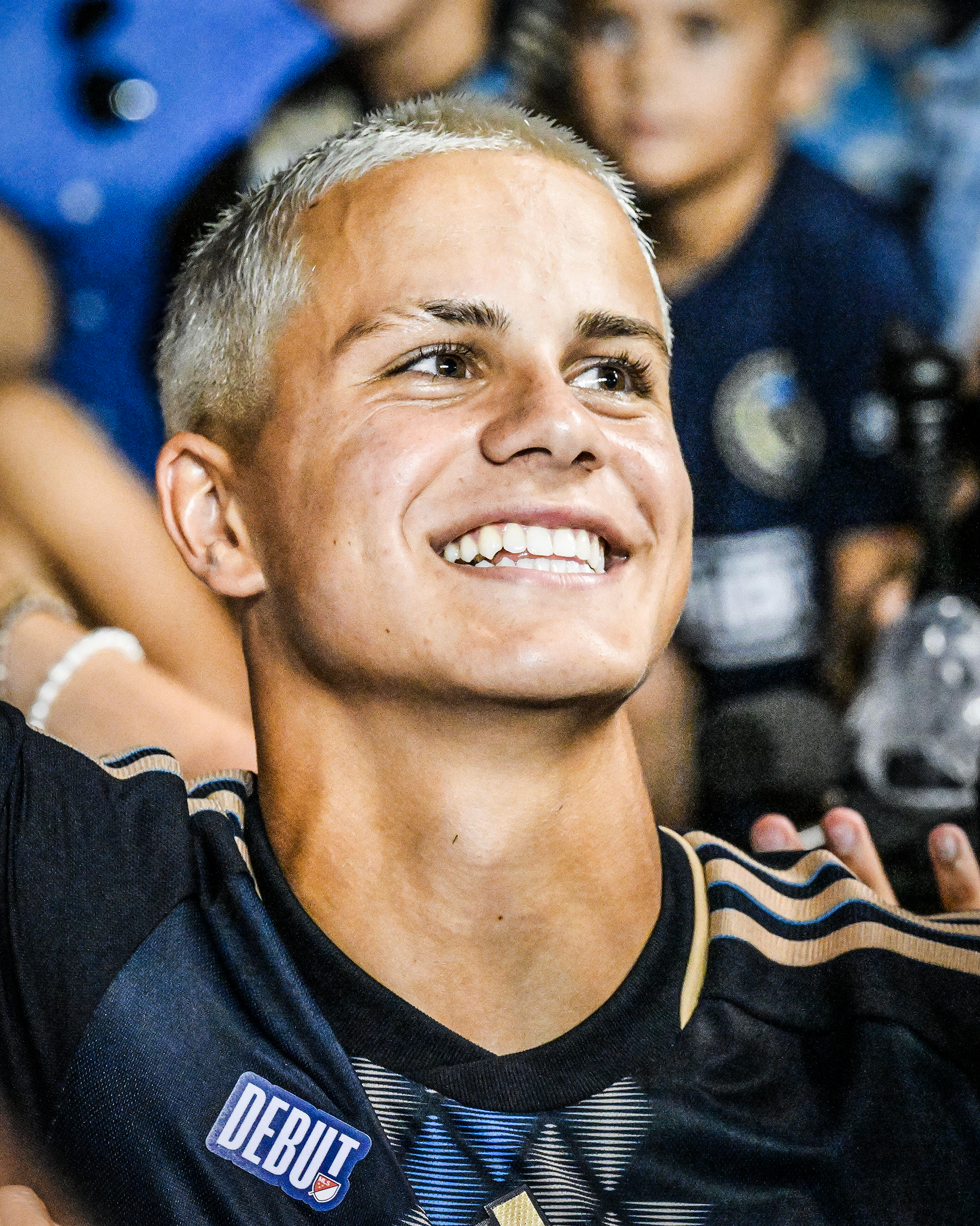
Moving on is surely Sullivan’s destiny, and not just because he’s contractually obliged. In his 1,600 minutes this season, he’s been a revelation. He’s as good a creator as he is a goal threat; he can cut in to play a square ball and set up a shot; he can take on a defender one-v-one before sending an attempt at goal. He’s always running; he may not be the fastest sprinter in the league, but his ability to make the right back-post run, blitz through lines to get on the end of a give-and-go, and casually run at a defender is too obvious to be ignored. The “grit” that is so often talked about in American soccer culture is evident, particularly in his dribbling. Mazy maestros risk falling foul of America’s hatred of “flopping”, a craze most notably crystallised in the general animosity between fans of MLS teams not located in Miami and the pink-clad Lionel Messi. But rather than fall under a soft challenge, Sullivan keeps going, kicking out at the ball from the ground and creating plays in the grey area between shoulder height and the ground.
Without the ball, too, he is relentless. His angle of attack may not always be the most effective in the press, and his stature means he’s frequently outmuscled, but his running still wins him the ball. He ranks 17th among MLS players in terms of total high-press balls won with 67 – tied, ironically, with Lionel Messi and others (futi). He’s a pest without the ball; with it, he becomes magnetic. MLS sides have quickly learned that Sullivan must be double-teamed, and the scenes have been almost comedic: of a 16-year-old child, “5′ 7″ tall, surrounded by towering defenders who cannot dispossess him for love nor money.
Plenty of clips illustrate this absurd phenomenon, but one has immediately become my favourite. In the 45th minute of a game between Philadelphia and Red Bull New York, the Union are up by a goal. Frankie Westfield is on the sideline, ready to take a throw-in in the attacking half. He targets Bruno Damiani, but the throw is short and bounces, and as Damiani is pushed from behind, he manages to head it into the path of a running Sullivan. Cavan extends his left leg to receive the ball, and is now squarely in the right half-space with five defenders ahead of him and only one teammate in their midst. Milan Iloski is open, but an oncoming defender off Cavan’s left shoulder gives him pause, so he takes a touch to the right, but finds himself in more trouble: the defender from earlier is now right behind him and challenging for the ball, while another has stepped towards him and stands ready to steal it. Sullivan keeps going. He touches it around the waiting defender, escaping the one behind him, and grants himself a slim half-second before his momentum forces him to his knees. In that brief moment of freedom, he scrambles forward on his hands, reaching a right leg around from underneath him to poke the ball towards Iloski, preserving possession before his teammate’s shot flies way off target. This is Cavan Sullivan in a nutshell: savvy perseverance and complete insanity, often in the same split second.
His understanding of the game is palpable, too. As we’ve established, he knows how to run, and his charismatic effect on defenders applies even when he isn’t on the ball. Watch him sprint forward without the ball in transition: he’ll drift out wide or make a darting run in-behind, fully knowing that he won’t receive possession. The double-team follows him anyway, and a hole opens for another Philadelphia attacker to run into. He follows the game closely, knowing when to become a box crasher or clean-up man, always a few feet away from a loose ball.
With the ball, he’s an orchestrator. He leads Philadelphia in Key Passes, Expected Assists (xA), Progressive Carries, and Box Entries in Transition. This suits the Union’s style of play, which is among the most direct in the league. The club also ranks first in xG Generated from Set Pieces, with Sullivan playing an important role; the 16-year-old is second in the squad by Set Piece xG, trailing only Danley Jean Jacques.
He’s only become a starter over the last ten games or so, but it isn’t an exaggeration to say he’s among the team’s most important players. The idolisation in the comparisons, stories and headlines is not smoke without fire, nor is it just the result of a nation desperate for a star. Sullivan is already the engine of the Philadelphia Union, and his goalscoring rate has solidified his underlying numbers. Areas to improve remain, of course, as they do for any young player. He likes to dribble too often, and like any winger with an affinity for take-ons, can frequently lose the ball. His pass completion rate lies below 70%, and despite that aforementioned determination to fight through challenges, his ability to protect the ball from players much larger than him could improve.
It’s hard to say what kind of player Manchester City will receive in two years — or even if they will receive him at all. Rumours about an alternate sale to a different superclub, which would no doubt incur a slew of questions and lawyers, have been whispered, and will only grow louder in the wake of September’s news that City have been found guilty of significantly breaching the Premier League’s fiscal regulations. I asked Micklos where he sees Cavan in five years’ time. He understandably deflected, and pointed to international experience as a key next step, especially with the 2028 Olympics in just a few short years. “[It’s] hard to tell,” he said. “He’s getting better every time we watch him.” If that remains true, a Cavan Sullivan even better than he is today is a dangerous prospect. Defining his style of play is a difficult challenge: he’s not entirely Phil Foden, as some have suggested – he’s too direct, and Foden lacks some of Cavan’s determination; he’s not really Rayan Cherki, either, for a lot of the same reasons, even if their numbers appear similar. Sullivan isn’t Jeremy Doku, Christian Pulisic, Alexis Sánchez — his childhood idol – Michael Olise, or even Lamine Yamal. He isn't a Quinn Sullivan, or a Freddy Adu. Cavan is Cavan, even if the story that follows him is not.
Understanding Cavan Sullivan and what he means to U.S. soccer is impossible without understanding the history of the American game and the heroes that defined it. To understand Pulisic, you must understand Donovan; to understand Donovan, you must understand Adu; to understand Adu, you must understand his D.C. United teammates, the birth of MLS, the downfall of the NASL, and Pele’s arrival in 1975. You must understand the multitude of changes that have occurred in the past twenty years — how youth setups transformed, how MLS’s public image changed, how American soccer fandom learned to come to terms with itself. Cavan is the product of everything that came before him, all the tales America has told about itself and its heroes, all the wrinkles and failures and endings. Cavan Sullivan is an icon, a hero, a story a nation is desperate to finally tell.
Cavan Sullivan is also a young man. And all these stories threaten, as they have before, to eclipse what is real: his extraordinary talent, and his agency as a person. He is the same boy who walked out that summer night in Chester, Pennsylvania, to a crowd who roared as if they’d scored a goal, a night that came 20 years, three months, and 14 days after Freddy Adu made his teenage bow. We can only hope, as the world decides how to talk about Cavan Sullivan, it keeps the memory of all that has come before close, and chooses this time to let a young American idol make his own fate.
Catalina Bush is a data analyst and writer who primarily covers men’s and women’s football in America.
Interview edited for clarity.
Member discussion